


 Преглед в реален мащаб
 Сподели
 Сподели
 Подробности
 Ръководство

 Изтегляне
 Подобни артикули
 Рентгенова снимка
 Слайдшоу
 Статистика
Haikko Jetty in the Moonlight

 Разгърни целия текст
Жикле / Художествен принт
Giclée печат или принт върху платно с музейно качество, бързо производство и гъвкави опции за завършен вид. ( Поръчайте ръчно рисувано репродукция на този колекционерски предмет Превключване към дигитално изображение)




P118B $10

P118H $10

P118W $10

P438Z $10

P508JH $12

P508YH $12

P805H $10

P805Z $10

P919BZ $10

P919G $10

P919XJ $10

P959ZH $10

P968JZ $12

W106C $8

W218G $10

W218JH $8

W218Y $10

W307PJ $10

W316G $10

W316PJ $8

W316Y $10

W398PJ $8

W4111J $10

W500HY $15

W500JH $15

W692G $12

W849H $8

W940BG $15

W953PJ $8




Изберете от нашите предварително зададени размери, които съответстват на оригиналните пропорции на произведението.

Можете да въведете собствени размери, за да паснат на конкретна рамка или пространство. Ако избраният от Вас размер не съвпада с пропорциите на оригиналното изображение, ние ще изрежем произведението или ще разширим изображението с огледален или едноцветен ръб. Дигитален макет ще бъде изпратен за Ваше одобрение преди започването на производството.
Моля, имайте предвид, че предпрегледът на екрана не отразява реалното изрязване или разширяване. Само макетът ще покаже точно финалната композиция.
Въпреки че са налични персонализирани размери, препоръчваме да изберете размер от предварително дефинирания списък, за да запазите оригиналните пропорции.
Доставка по целия свят () в рамките на 2 седмици вместо стандартните 4/5 седмици. (24 Септември)

Безплатна експресна доставка по целия свят

Висококачествено ленено платно

Пълно застраховане на доставката

Гаранция за възстановяване на митнически такси

Гаранция за пълно съответствие на цветовете

Политика за връщане в рамките на 100 дни (само при дефекти)

100% Гаранция за връщане на сумата

Отстъпка при поръчка на повече произведения
 Опцията със стъкло е налична само за размери под 110 см

Haikko Jetty in the Moonlight
Жикле / Художествен принт
Размер на репродукцията
-


Крайна цена
$ 62
A Nocturne of Finnish Tranquility: Haikko Jetty in the Moonlight by Albert Edelfelt
The painting “Haikko Jetty in the Moonlight,” executed by Albert Edelfelt in 1894, embodies a quintessential vision of late nineteenth-century Finnish realism—a genre characterized by meticulous observation and an earnest desire to capture the spirit of its subject matter. More than just a depiction of a seaside harbor at dusk, it’s a profound meditation on familial connection, rural beauty, and the melancholic charm inherent in fleeting moments of serenity. The scene unfolds over Haikko Bay, a location that held particular significance for Edelfelt's family; they had purchased a villa there in 1880, establishing it as their cherished summer retreat until his untimely demise in 1905. This personal investment undoubtedly fueled Edelfelt’s artistic fervor and resulted in numerous canvases celebrating the region’s breathtaking vistas—a testament to his unwavering devotion to Finland. As Katri Reitz notes, “In Jetty in the Moonlight (1882), Albert Edelfelt (1854–1905) depicted an idyllic scene over a bay at night.” Edelfelt's masterful technique is immediately apparent upon examination. Employing oil on cardboard—a common medium for plein air painting during his era—he achieved remarkable luminosity through careful layering and blending. Visible brushstrokes contribute to the texture of the water, conveying its coolness and movement with palpable immediacy. The artist skillfully rendered reflections from the full moon, casting an ethereal glow over the jetty and illuminating the boats moored along its shoreline. This impressionistic approach prioritizes capturing the sensory experience—the visual beauty—above precise anatomical detail. Symbolically, “Haikko Jetty in the Moonlight” speaks to themes of domestic harmony and nostalgia for simpler times. The solitary wooden boat resting on the shore serves as a poignant reminder of human presence within the vast expanse of nature. Its mirrored reflection underscores the importance of introspection and contemplation amidst the grandeur of the landscape. Furthermore, the jetty itself represents a connection between past and present—a tangible link to Edelfelt’s formative years spent in Haikko and his enduring appreciation for Finnish heritage. The painting's palette leans heavily into cool blues and greens, mirroring the tranquil atmosphere of a summer night. The subdued tonal range enhances the emotional impact, evoking feelings of peace, solitude, and wistful remembrance. While Edelfelt’s signature remains unobtrusive in the lower right corner—a detail that lends an air of authenticity to the artwork—the painting's enduring appeal lies not merely in its technical prowess but also in its ability to transport viewers back to a bygone era and resonate with their deepest sensibilities. It stands as a timeless masterpiece, capturing the essence of Finnish identity and offering a glimpse into the soul of one of Finland’s most celebrated artists.Свързани произведения


Биография на художника
Albert Edelfelt – Pioneer of Finnish Realism
Albert Gustaf Aristides Edelfelt (1854–1905) stands as one of Finland’s most celebrated artists, recognized for his unwavering commitment to realism and his profound ability to capture the spirit of his homeland through vivid depictions. Born in Porvoo, Sweden, on July 21st, 1854, Edelfelt descended from a Swedish-speaking aristocratic lineage – his father, Carl Albert Edelfelt, was an architect who had established himself in Finland since his youth, and his mother, Alexandra Edelfeldt née Brandt, possessed a keen interest in literature and art. Despite facing considerable financial hardships following his father’s untimely death, Alexandra steadfastly encouraged Edelfelt's artistic inclinations, enrolling him at the Drawing School of the Finnish Art Society in Helsinki where he honed his skills under Adolf von Becker’s guidance.- Early Artistic Influences: From a young age, Edelfelt demonstrated an innate talent for drawing and painting, nurtured by his mother's unwavering support. His fascination with art propelled him to pursue formal studies at the Drawing School of the Finnish Art Society in Helsinki and later at the Royal Academy of Fine Arts in Antwerp, Belgium.
- Antwerp Years – Mastering History Painting: In 1873-74, Edelfelt immersed himself in the study of history painting at Antwerp, absorbing the stylistic principles championed by Jean-Léon Gérôme. This formative period solidified his understanding of artistic technique and cemented his dedication to portraying historical narratives with meticulous detail.
- Parisian Breakthrough – Impressionism’s Embrace: Recognizing the dominant influence of Impressionism in Parisian art circles, Edelfelt relocated to Paris in 1874, seeking inspiration from fellow artists like Jules Bastien-Lepage. He embraced plein air painting—capturing landscapes and scenes directly from nature—a stylistic choice that would define his artistic output for years to come.
Notable Works – A Reflection of Finnish Identity
Edelfelt’s oeuvre is characterized by a remarkable sensitivity to the nuances of Finnish culture and landscape, reflecting his deep connection to his homeland. His paintings are not merely aesthetically pleasing; they serve as powerful visual records of Finland's history, traditions, and natural beauty. Among his most iconic creations are:- Portrait of Louis Pasteur (1886): This portrait exemplifies Edelfelt’s mastery of capturing the essence of his subject—Louis Pasteur—a renowned French biologist whose groundbreaking discoveries revolutionized scientific understanding.
- Young Woman in Her Boudoir (circa 1878): Executed with exquisite detail and imbued with a palpable sense of intimacy, this painting portrays a young woman in her private sanctuary, capturing the subtleties of feminine grace and emotion.
- Under the Birches (1883): This landscape masterpiece embodies Edelfelt’s signature style—a harmonious blend of realism and lyrical beauty—depicting a serene Finnish birch grove bathed in dappled sunlight. It is considered one of Finland's most beloved paintings.
- The Inauguration of Turku Academy (1896): Commissioned by the state to commemorate the founding of Turku University, Edelfelt’s monumental fresco showcases his artistic ambition and technical prowess—a testament to his enduring legacy as a Finnish artist.
Influence and Legacy – Shaping Finnish Art
Edelfelt's artistic vision profoundly impacted subsequent generations of Finnish painters, fostering a movement known as Finnish Realism. Artists like Akseli Gallen-Kallela and Gunnar Berndtson acknowledged Edelfelt’s influence, adopting his stylistic approach and exploring themes rooted in Finnish folklore and landscape. His unwavering dedication to portraying the natural world with honesty and sensitivity established him as a cornerstone of Finnish artistic heritage—a figure whose work continues to inspire admiration and scholarly study today.Museum Collections – Preserving Edelfelt's Artistic Heritage
Edelfelt’s paintings are proudly displayed in prominent museums across Finland, including Ateneum Museum in Helsinki, where visitors can immerse themselves in the splendor of his artistic achievements. The Ateneum houses a comprehensive collection of Edelfelt’s works—spanning portraits, landscapes, and genre scenes—providing invaluable insight into his creative process and artistic sensibilities. His legacy is commemorated through various initiatives, including a €100 commemorative coin issued in 2004 to celebrate his 150th birth anniversary – ensuring that Albert Edelfelt's contribution to Finnish art history remains vividly remembered for years to come.
Алберт Еделфелт
1854 - 1905 , Финландия
Бързи факти
- Artistic Movement Or Style: Realist
- Artists Or Movements Influenced By This Artist: ['Akseli Gallen-Kallela']
- Artists Who Influenced This Artist: ['Jean-Léon Gérôme']
- Date Of Birth: July 21, 1854
- Date Of Death: August 18, 1905
- Full Name: Albert Gustaf Aristides Edelfelt
- Nationality: Finnish
- Notable Artworks:
- Portrait of Louis Pasteur
- Young woman in her boudoir
- Under the birches
- Place Of Birth: Porvoo, Finland
Свързани статии

Топ 25 шедьовъра на Пол Сезан: Открийте вечния гений в изкуството и декора
Открийте 25 шедьовъра на Пол Сезан – импресионизъм, постимпресионизъм и революционен стил! Разгледайте историите зад картините, техниките и вдъхновението. Купете висококачествени репродукции за вашия дом на ArtsDot.com.

Топ 10 шедьоври на импресионизма: История, артисти и красота за вашия дом
Потопете се в света на импресионизма с нашия списък от 10 шедьовъра! От Моне до Реноар, разкрийте историите зад най-емблематичните картини. Вдъхновете дома си с изкуство – купете репродукции на високо качество на ArtsDot.com

Albert Charles Lebourg: A Study in Atmospheric Impressionism & Rural France
Explore the serene landscapes of Albert Charles Lebourg, a master of the Rouen School Impressionists. Discover his atmospheric paintings of the Seine and enduring legacy in 19th-century French art.

Akseli Gallen-Kallela: Shaping Finnish Identity Through National Romanticism & Symbolism
Explore the captivating world of Akseli Gallen-Kallela, Finland's iconic National Romantic painter. Discover his symbolic landscapes, Kalevala illustrations & lasting impact on Finnish identity. Expert analysis & high-quality reproductions at ArtsDot.
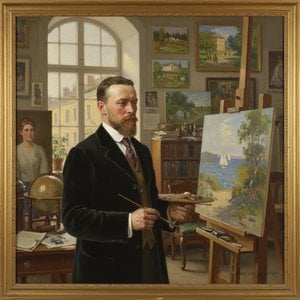
Albert Edelfelt: A Pioneer of Finnish Realism & International Impressionist Circles
Explore the life & work of Albert Edelfelt, a pioneering Finnish Realist painter who bridged Impressionism & national identity. Discover his masterpieces and lasting influence on art history.
