

 Преглед в реален мащаб
 Изпрати
 Сподели
 Детайли
 Ръководство

 Изтегляне
 Подобни артикули
 Рентгенова снимка
 Слайдшоу
 Q&A
Q&A Статистика
Cavaliers

 Прочети повече
Жикле / Художествен принт
Giclée печат или принт върху платно с музейно качество, бързо производство и гъвкави опции за завършен вид. ( Купете ръчно рисувана картина Превключване към дигитално изображение)




































Изберете от нашите предварително зададени размери, които съответстват на оригиналните пропорции на произведението.

Въведете необходимата ширина и височина, за да паснат на вашата рамка или стена. Принтовете могат само да се изрязват, но никога не могат да бъдат по-големи от оригиналната картина, така че при размер с различен формат част от изображението ще бъде загубена. Преди да започнем печат, ще ви изпратим дигитален мок업 за одобрение. Изображението, показано на тази страница, не показва реалното изрязване — само мок업ът го показва.
Доставка по целия свят () в рамките на 2 седмици вместо стандартните 4/5 седмици. (2 Ноември)

Безплатна експресна доставка по целия свят

Висококачествено ленено платно

Пълно застраховане на доставката

Гаранция за възстановяване на митнически такси

Гаранция за пълно съответствие на цветовете

Политика за връщане в рамките на 100 дни (само при дефекти)

100% Гаранция за връщане на сумата

Оферта за отстъпка при поръчка на повече бройки
 Опцията със стъкло е налична само за размери под 110 см

Cavaliers
Жикле / Художествен принт
Размер на репродукцията
-


Обща цена
€ 55
Подобни произведения


Биография на художника
Adolf Schreyer - A Life Immersed in Equine Grace and Eastern Light
Adolf Schreyer (1828 – 1899) stands as a singular figure within the Düsseldorf School of Painting, renowned for his captivating depictions of horses—particularly Arabian warriors—and his masterful renderings of landscapes imbued with the spirit of the East. His artistic journey began amidst the intellectual fervor of Frankfurt’s Städel Institute, followed by formative studies in Stuttgart and Munich, establishing him upon a foundation of classical principles that would inform his distinctive style for decades to come. However, it was Schreyer’s expeditions—most notably his association with Prince Maximilian Karl of Thurn and Taxis—that truly propelled him toward artistic greatness and cemented his place as one of the era's most celebrated painters.Early Influences and Artistic Formation
Schreyer’s initial training at the Städel Institute instilled in him a deep appreciation for academic tradition, exposing him to the works of artists like Anton Raphael Mengelsdorf and Wilhelm Leibl—figures who championed anatomical accuracy and tonal gradation as cornerstones of artistic expression. These influences would prove invaluable as he honed his skills at Stuttgart’s Kunstakademie and Munich’s Königliche Akademie der Künste, where he studied under Johann Baptist Wilhelm Amman and Franz Xaver Winterhalter respectively. Amman’s emphasis on meticulous observation and Winterhalter’s mastery of portraiture further refined Schreyer's technique—skills that would serve him admirably throughout his prolific career.The Crimean War and Battlefield Sketches
A pivotal moment in Schreyer’s artistic development arrived with the outbreak of the Crimean War in 1854. Assigned to document the Austrian army’s maneuvers across the Wallachian frontier, he gained firsthand experience of military life—a formative encounter that profoundly impacted his artistic sensibilities. Unlike many artists of his time who sought to glorify warfare, Schreyer approached the battlefield with a keen eye for detail and an unwavering commitment to realism. His sketches captured not merely the physical spectacle of combat but also its psychological intensity—the fear, determination, and camaraderie of soldiers striving for victory. These sketches foreshadowed the dramatic artillery charges that would become hallmarks of his oeuvre, demonstrating Schreyer’s ability to convey emotion through visual representation.Orientalist Voyages: Egypt, Syria, Algeria
Schreyer’s artistic passion found its fullest expression during his voyages into the Orient—specifically Egypt (1856), Syria (1856), and Algeria (1861). Driven by an insatiable curiosity for diverse cultures and landscapes, he embarked on expeditions that would transform his artistic vision. He immersed himself in Arabic language and customs, befriending Bedouin horsemen and documenting their nomadic life with unwavering dedication. Unlike many Orientalist painters who relied on idealized depictions—often filtered through European prejudices—Schreyer sought to portray the East with honesty and nuance. His canvases captured not only the grandeur of desert vistas but also the subtle beauty of everyday life—the faces of Bedouin men, the intricate patterns of Arab textiles, and the vibrant colors of the marketplace. This immersive approach resulted in paintings that resonated with authenticity and challenged conventional artistic tropes.Style and Technique: Mastering Equine Anatomy
Schreyer’s distinctive style was characterized by a remarkable command of equine anatomy—a skill honed through years of meticulous observation and personal experience as a rider. He possessed an unparalleled understanding of muscle structure, bone alignment, and movement dynamics—knowledge that he translated into breathtaking depictions of horses rendered with astonishing precision. His brushstrokes were bold yet controlled, conveying both power and grace—a stylistic hallmark that distinguishes his paintings from those of many contemporaries. Furthermore, Schreyer’s palette was rich and luminous—infused with vibrant hues that captured the essence of Eastern light—creating canvases that pulsed with life and emotion. He achieved this remarkable feat through a combination of careful tonal gradation and masterful use of color theory—techniques that cemented his reputation as one of the Düsseldorf School's foremost masters. Schreyer’s legacy extends beyond the beauty of his paintings; it resides in his unwavering commitment to artistic integrity—his refusal to succumb to sentimentality or glorify violence—and his profound respect for cultural diversity. His work continues to inspire admiration and scholarly study, serving as a testament to the transformative power of travel, observation, and artistic dedication. He remains an enduring symbol of the Düsseldorf School’s pursuit of realism and its celebration of the human spirit's capacity for wonder and understanding.
Адволф Шрайер
1828 - 1899 , Германия
Бърза информация
- Artistic Movement Or Style: Ориентализъм, Дюсселдорфската школа на живописта
- Date Of Birth: 9 юли 1828 г.
- Date Of Death: 29 юли 1899 г.
- Full Name: Adolf Schreyer
- Nationality: Германец
- Notable Artworks:
- Заряд артилерия на Императорската гвардия
- Опустяни бряга на Дунав
- Place Of Birth: Франкфурт ам Мйн, Германия
Свързани статии

Romantic Realism's Finest: 10 Masterpieces for Your Home | ArtsDot
Explore 10 defining masterpieces of Romantic Realism! Discover Courbet, Millet & Daumier's powerful paintings—capturing emotion and social realities. Find museum-quality reproductions for your home at ArtsDot.com.

The Enduring Legacy of Fine Art Prints: Technique, History & Aesthetic Impact
Explore the rich history & techniques of fine art prints. Discover investment potential, assess authenticity, and learn how to preserve your collection with expert guidance. Trusted insights for discerning collectors.

Echoes of Time: Exploring the Enduring Appeal & Historical Context of Vintage Art Prints
Explore the captivating world of vintage art prints! Discover their history, collecting tips & enduring appeal. Expert insights on chromolithography and building a legacy collection with ArtsDot.
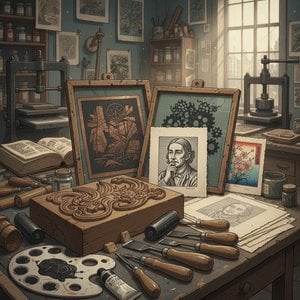
The Enduring Legacy of Printmaking: Techniques, Themes & Artistic Innovation Across Centuries
Explore the rich history of printmaking with ArtsDot. Discover techniques from intaglio to lithography, learn about collecting valuable prints & find museum-quality reproductions. Expert insights for art enthusiasts and collectors.

Giclée Prints: Archival Quality & Aesthetic Nuances for the Discerning Collector
Explore the world of giclée prints with ArtsDot. Learn about archival quality, aesthetic nuances & investment potential. Expert guidance for discerning art collectors seeking museum-quality reproductions and lasting value.