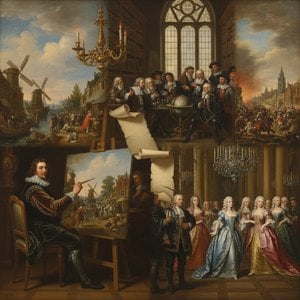
A Life in the Hague and Beyond
Born in 1615 in The Hague, Netherlands, Martinus Lengele lived through the height of the Dutch Golden Age. His life was closely tied to the artistic circles of the Netherlands, and his family was deeply embedded in the creative community. In 1642, his sister Anna married the painter Jacob van Loo, a connection that linked the Lengele name to other significant figures of the era. While much of his life was centered in the Netherlands, his path eventually led him to Paris, where he died on 27 May 1668.
His professional life was marked by a steady presence in the Dutch art scene. He was a painter and a draftsperson who sought formal recognition within his craft. From 1656 to 1665, he held membership in the Confrerie Pictura in The Hague, a guild that provided a sense of community and professional standing for artists working in the city.
The Subjects of His Brush
Lengele’s work focused on the people and social structures of his time. He was particularly known for his portraits within The Hague, capturing the likenesses of those living in the administrative heart of the Netherlands. Beyond individual portraits, he contributed to the tradition of the schutterstuk, or group portraits of civic militias.
His output included specific depictions of civic life, such as:
- The officers and ensign of the Orange Company of the Hague setting out, painted around 1660.
- Drawings, including a self-portrait alongside Jacob van der.
These works provide a window into the organized social and military life of the seventeenth century. His ability to handle both the intimacy of a portrait and the complexity of a group scene shows the breadth of his technical skill as a painter.
A Legacy in the Dutch Tradition
Though he died in Paris, Lengele remains a figure of the Dutch Golden Age. His work reflects the specific interests of his era, from the formal requirements of militia portraits to the personal nature of portraiture. He navigated the professional landscape of The Hague with purpose, securing his place in the local artistic establishment through his membership in the Confrerie Pictura. His life and his art remain tied to the specific social and cultural movements of the mid-seventeenth century.
الأسئلة والأجوبة
كيف تطور فن Martinus Lengele بمرور الوقت؟
تتجلى المسيرة المهنية لـ Martinus Lengele مرحلة تلو الأخرى في صفحة مسيرة فنية: وهي عبارة عن خط زمني أفقي للأعمال الفنية، مُصنفة ضمن فصول تمثل كل حقبة من مسيرته.
أين يمكنني مشاهدة أعمال Martinus Lengele الفنية بترتيب زمني؟
تعرض صفحة التسلسل الزمني للأعمال الفنية الخاصة بالفنان أعمال Martinus Lengele مرتبة زمنياً، عاماً تلو الآخر.
هل يمكنني استكشاف أعمال Martinus Lengele حسب طيف الألوان؟
تُتيح تدرج الألوان الخاصة بـ Martinus Lengele تصفح أعمال الفنان مُنظمةً حسب ألوانها.
أين يمكنني مشاهدة أعمال Martinus Lengele الفنية في معرض ثلاثي الأبعاد؟
يمكنكم مشاهدة أعمال Martinus Lengele الفنية في معرض ثلاثي الأبعاد عبر صفحة متحف ثلاثي الأبعاد الخاصة بالفنان.