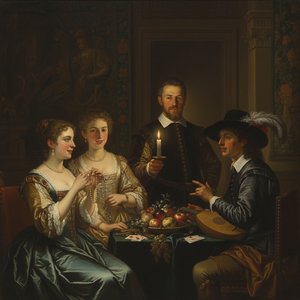
The Quiet Presence of Hieronymus Lapis
The brushwork of Hieronymus Lapis suggests a life spent observing the steady rhythms of the Dutch landscape and the formal requirements of portraiture. Born in 1723 in Italy, his path eventually led him to the Netherlands, where he established himself as a painter. He did not seek the loud or the dramatic. Instead, his work reflects the careful attention required to capture a likeness or a specific moment in time. His presence in the art world was marked by a steady hand and a commitment to the craft of painting during the eighteenth century.
His development as an artist was shaped by formal instruction and the practical realities of his era. He studied under Hendrik Willem Schweickhardt, a connection that likely helped ground his technique in the traditions of the time. By the time he reached his later years, his life was tied to the cultural centers of the Netherlands, eventually passing away in The Hague in 1798.
A Life in Portraits and People
Lapis focused much of his energy on the faces and figures of the people around him. His paintings often serve as records of specific individuals, capturing their status and their character through subtle details. Some of his subjects were part of the social fabric of the time, appearing in works that have been preserved in various collections. His ability to render a person was not about grand gestures, but about the way light fell across a collar or the specific set of a jawline.
The subjects of his work include:
- Eleonora Petronella Elisabeth van Oldenbarneveld, known as Witte Tullingh
- Mr. Petrus Nicolaas Juynboll
These individuals were not mere models; they were the reason for the paint on the canvas. Through them, we see the social structures of the eighteenth century. His work provides a window into the private lives and public identities of those living in the Kingdom of the Netherlands.
The Legacy of a Painter
The historical significance of Lapis lies in his role as a chronicler of his era. He was a painter who understood the weight of a portrait. His works have moved through private hands and into the care of institutions, such as the Cultural Heritage Agency of the Netherlands. He lived through a period of transition, yet his focus remained on the tangible reality of his subjects. He left behind a body of work that speaks to the quiet dignity of the human form and the steady evolution of Dutch painting.
الأسئلة والأجوبة
أين ومتى وُلد Hieronymus Lapis؟
وُلد Hieronymus Lapis في Italy عام 1723.
ما هي الألوان التي استخدمها Hieronymus Lapis بشكل أكثر تكراراً؟
تستعرض صفحة بصمة الألوان الفنية الخاصة بـ Hieronymus Lapis المخطط اللوني لمجموعة أعمال الفنان.
هل يوجد تسلسل زمني لمسيرة Hieronymus Lapis؟
تتجلى المسيرة المهنية لـ Hieronymus Lapis مرحلة تلو الأخرى في صفحة مسيرة فنية: وهي عبارة عن خط زمني أفقي للأعمال الفنية، مُصنفة ضمن فصول تمثل كل حقبة من مسيرته.
كيف يمكنني العثور على أعمال Hieronymus Lapis ضمن موضوع معين؟
يمكن استكشاف أعمال Hieronymus Lapis عبر الكلمات المفتاحية في صفحة حسب الكلمات المفتاحية الخاصة بالفنان، حيث تجمع كل كلمة مفتاحية الأعمال الفنية ذات الصلة.