
- الرئيسية

- نسخة زيتية مطابقة للأصل
- Tony Cragg
- Spyrogyra

 شراء نسخة مطبوعة شراء الصورة بدقة عالية
 مشاركة
 مشاركة
 Details
 أضف إلى المفضلة

 تحميل الملف
 قطع مشابهة
 X-Ray
X-Ray
 عرض شرائح
Spyrogyra
 Sculpture Bronze
- Other
- Contemporary Realism
 1992
1992 220.0 x 210.0 cm
 جاليريا الفنون الجديدة بأستراليا
نسخة زيتية مصنوعة يدوياً
لوحة زيتية مرسومة يدوياً على الكانفاس بالمقاس والإطار الذي تفضله، تُنفذ حسب الطلب على أيدي فنانينا.




































 للمزيد من المعلومات
اختر من بين أحجامنا المُعدّة مسبقًا والتي تتطابق مع النسب الأصلية للعمل الفني.

يمكنك إدخال أبعادك الخاصة لتناسب إطارًا معينًا أو مساحة محددة. وإذا لم يتطابق الحجم الذي اخترته مع نسب الصورة الأصلية، فسنقوم إما بقص العمل الفني أو توسيع اللوحة بإضافة عناصر مرسومة يدويًا. سيتم إرسال نموذج رقمي إليك للموافقة عليه قبل بدء الإنتاج.
يرجى ملاحظة أن المعاينة على الشاشة لا تعكس عملية القص أو التوسيع الفعلية؛ حيث إن النموذج الرقمي وحده هو الذي سيوضح التكوين النهائي بدقة.
وعلى الرغم من توفر أحجام مخصصة، إلا أننا نوصي باختيار أبعاد من القائمة المحددة مسبقًا للحفاظ على النسب الأصلية للعمل الفني.
بعد إتمام الطلب، سيرسل فريق ArtsDot.com بريداً إلكترونياً للعميل لطلب التعليمات وتزويده بمعاينة تجريبية (mockup).
توصيل عالمي إلى خلال 3 إلى 4 أسابيع بدلاً من المدة المعتادة البالغة 5 أسابيع. (1 يوليو). جودة لا تهاون فيها.

شحن سريع ومجاني لجميع أنحاء العالم

قماش كتان عالي الجودة

تأمين شحن شامل

ضمان استرداد الرسوم الجمركية

ضمان مطابقة الألوان الحقيقية

سياسة الإرجاع خلال 60 يومًا (في حالات العيوب فقط)

ضمان استرداد نقدي بنسبة 100%

خصم عند طلب عدة قطع
 خيار الزجاج متاح فقط للمقاسات التي تقل عن 110 سم

Spyrogyra
خامة إعادة الإنتاج
مقاس النسخة المطبوعة
-


السعر الإجمالي النهائي
-
وصف العمل الفني
Tony Cragg’s Spyrogyra: A Spiral Dance Between Form and Function
Tony Cragg's "Spyrogyra," created in 1992, stands as a cornerstone of British sculpture from the early 1990s—a testament to his unwavering commitment to exploring innovative materials and challenging conventional sculptural aesthetics. Unlike many artists of his time who sought to emulate established styles, Cragg deliberately rejected stylistic constraints, prioritizing instead a conceptual framework rooted in scientific observation and a fascination with natural processes.
The sculpture’s genesis lies in the artist's deliberate scavenging of discarded objects—primarily colored plastic fragments gleaned from the Thames embankment. These unassuming materials were transformed into an arresting spiral structure composed of glass bottles meticulously arranged to create a visually dynamic composition. Measuring 220 x 210 cm, “Spyrogyra” immediately confronts viewers with its monumental scale and unconventional materiality.
- Material Exploration: Cragg’s masterful manipulation of plastic fragments exemplifies his pioneering approach to assemblage—a movement that championed repurposing industrial waste as artistic medium. The choice of glass bottles wasn't merely pragmatic; it served as a deliberate reference to the DNA helix, symbolizing interconnectedness and organic growth.
- Geometric Abstraction: Despite its seemingly random arrangement, “Spyrogyra” adheres to a rigorously defined system—a characteristic born from Cragg’s formative education in British art schools where logical processes reigned supreme. This structured approach contrasts sharply with the prevailing trend of stylistic imitation and underscores Cragg's belief that form should derive inspiration from underlying principles.
- Conceptual Dialogue: The sculpture engages directly with the legacy of conceptual art, specifically Duchamp’s “Egouttoir” (bottle rack), 1914—a seminal work that questioned the very notion of artistic taste and elevated commonplace objects to the realm of high art. Cragg's piece echoes this provocative gesture, prompting contemplation on the role of materiality within artistic expression.
Beyond its formal considerations, “Spyrogyra” possesses a palpable emotional resonance—a quiet grandeur that invites viewers to consider the beauty inherent in unexpected combinations and the transformative potential of repurposing discarded materials. It embodies Cragg’s conviction that art can communicate profound ideas without resorting to overt ornamentation or stylistic convention.
The artwork is credited to Mervyn Horton Bequest Fund 1997 and resides at The Art Gallery of New South Wales, Sydney. Accession number 292.1997 © Anthony Cragg.
أعمال فنية ذات صلة


السيرة الذاتية للفنان
Sir Anthony Cragg: Sculptor of Fragmented Forms
Tony Cragg (born Liverpool, April 9, 1949) stands as a pivotal figure in British contemporary sculpture, recognized for his groundbreaking approach to material and form—a deliberate dismantling of traditional sculptural conventions. His artistic journey began with formative experiences at Gloucestershire College of Arts and Technology and Wimbledon School of Art, establishing him as a skilled painter before he turned his attention to the transformative potential of three-dimensional art. Crucially, Cragg’s relocation to Germany in 1977 marked a significant turning point, fostering collaborations with influential artists and propelling him into the international spotlight. Cragg's early work established him as an innovator within the burgeoning assemblage movement. Initially captivated by discarded materials—stacked chairs, tables, and boxes—he skillfully manipulated these fragments to create striking reliefs that explored geometric abstraction and vibrant color palettes. Pieces like “Stack” (1975) demonstrated his mastery of spatial arrangement and his ability to imbue seemingly mundane objects with artistic resonance. This meticulous process mirrored a broader philosophical stance: Cragg sought to distill visual language into its purest essence, rejecting representational imagery in favor of forms that spoke directly to the viewer’s perception. The mid-1970s through early 1980s witnessed Cragg's exploration of monumental installations utilizing primary structures alongside colorful reliefs on gallery walls. This stylistic fusion—evident in works such as “Red Indian” (1982–3)—further solidified his reputation for challenging artistic boundaries and engaging with architectural spaces. He meticulously constructed these sculptures by systematically arranging individual fragments, prioritizing their artificial hues and textural profiles to generate larger images that simultaneously referenced natural forms and geometric abstraction. This technique became a hallmark of Cragg’s oeuvre, reflecting his fascination with the interplay between organic and inorganic elements. A landmark achievement arrived in 1981 with “Britain Seen From The North,” an ambitious wall-mounted relief crafted from multicolored scraps of various materials. Executed during the height of Thatcherism's influence on British society—particularly in Northern England—the piece served as a potent commentary on socio-economic anxieties and offered a nuanced perspective on national identity. Cragg’s deliberate positioning of a figure gazing outwards from the sculpture’s surface symbolized an outsider’s gaze upon his homeland, prompting viewers to contemplate the complexities of contemporary experience. This work cemented Cragg's position as a socially conscious artist who utilized sculptural form to convey profound ideas about place and perception. Throughout the 1980s, Cragg transitioned away from installation art toward more focused explorations of individual objects—a deliberate shift that underscored his commitment to precision and materiality. His subsequent projects continued to champion innovative techniques and conceptual rigor, cementing his legacy as one of Britain’s foremost sculptors. Today, Cragg's enduring influence can be seen in the work of countless artists globally, demonstrating the lasting impact of his pioneering vision for sculptural art.
Tony Cragg
1949 -
حقائق سريعة
- Artistic Movement Or Style: Assemblage art
- Artists Who Influenced This Artist:
- Robert Irwin
- Donald Judd
- Date Of Birth: 1949
- Date Of Death: Living
- Full Name: Tony Cragg
- Nationality: British
- Notable Artworks:
- Axehead
- Opening Spiral
- Dining Motions
- Place Of Birth: Liverpool, UK
مقالات ذات صلة

Defining Art Now: Top 10 Masterpieces of '08-Contemporary & Beyond | ArtsDot
Explore 10 defining masterpieces of contemporary art – from Jeff Koons to Yayoi Kusama. Discover the stories behind iconic paintings & sculptures, and find museum-quality reproductions for your home at ArtsDot.com. Explore the full collection online!


Hiro Yamagata: Abstraction, Materiality & Spatial Dynamics in Contemporary Sculpture
Explore the captivating world of Hiro Yamagata’s innovative sculptures & paintings. Discover his pioneering use of laser technology, immersive installations, and abstract forms – a must-read for discerning art collectors.

الإرث الدائم للنحت البرونزي: تاريخ، تقنيات، وتفسيرات معاصرة
استكشف تاريخ النحت البرونزي وتقنياته العريقة، من صب الشمع المفقود إلى التحف المعاصرة. دليل شامل لجامعي الفن والمستثمرين والمهتمين بتقييم الأعمال الفنية.
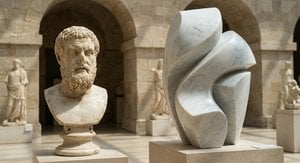
The Enduring Allure of Marble in Art History: From Classical Sculpture to Modern Abstraction
Explore the captivating history of marble sculpture from ancient Greece to modern art. Discover renowned artists like Canova & Michelangelo, carving techniques, and investment insights at ArtsDot.

Alexander Calder: Kinetic Sculpture, Mobile Art & the Poetics of Chance
Explore the revolutionary world of Alexander Calder's kinetic sculptures & mobiles. Discover insights for collectors, acquisition advice, and the enduring legacy of this modern master. Expert analysis & art valuation.

