

 معاينة الحجم الواقعي
 مشاركة
 مشاركة
 التفاصيل
 دليل
دليل

 تحميل الملف
 قطع مشابهة
 الأشعة السينية
 عرض شرائح
 الأسئلة والأجوبة
 الإحصائيات
Rolling Eye Clock


 عرض المزيد
إن العمل الفني المعروض في هذه الصفحة محمي بموجب قوانين حقوق الطبع والنشر، مما يعني أنه لا يحق لنا قانوناً إنشاء أو بيع نسخ مطابقة له. وتُطبق هذه الحماية بموجب الاتفاقيات الدولية مثل الـ اتفاقية برن ووفقاً للقوانين الوطنية، بما في ذلك تلك المنصوص عليها في قانون حقوق الطبع والنشر في الولايات المتحدة - الباب 17.
تتوافق هذه الطريقة تماماً مع لوائح حقوق النشر لأنها لا تتضمن نسخ أو تكرار العمل الفني المحمي، بل هي إعادة تفسير إبداعية؛ أي أنها لوحة جديدة مستوحاة من الأصل ولكنها ليست مطابقة له.
طباعة جيلي / مطبوعات فنية
طباعة جيكلي أو كانفاس بجودة المتاحف، مع سرعة في التنفيذ وخيارات متنوعة للتشطيب. ( شراء لوحة مرسومة يدويًا الانتقال إلى الصورة الرقمية)




P118B E£10

P118H E£10

P118W E£10

P438Z E£10

P508JH E£12

P508YH E£12

P805H E£10

P805Z E£10

P919BZ E£10

P919G E£10

P919XJ E£10

P959ZH E£10

P968JZ E£12

W106C E£8

W218G E£10

W218JH E£8

W218Y E£10

W307PJ E£10

W316G E£10

W316PJ E£8

W316Y E£10

W398PJ E£8

W4111J E£10

W500HY E£15

W500JH E£15

W692G E£12

W849H E£8

W940BG E£15

W953PJ E£8




اختر من بين أحجامنا المُعدّة مسبقاً والتي تتوافق مع النسب الأصلية للعمل الفني.

أدخل العرض والارتفاع المطلوبين ليتناسب المقاس مع إطارك أو جدارك. يرجى الملاحظة أن المطبوعة يمكن قصها فقط ولا يمكن تكبيرها لتتجاوز أبعاد الصورة الأصلية، لذا فإن اختيار مقاس بأبعاد مختلفة سيؤدي إلى فقدان جزء من الصورة. سنرسل لك نموذجاً رقمياً تجريبياً لاعتماده قبل البدء في عملية الطباعة. الصورة المعروضة في هذه الصفحة لا توضح شكل القص الفعلي — النموذج التجريبي فقط هو ما يظهر ذلك بدقة.
توصيل عالمي إلى خلال أسبوعين بدلاً من المدة القياسية البالغة 4/5 أسابيع. (4 نوفمبر)

شحن سريع ومجاني لجميع أنحاء العالم

قماش كتان عالي الجودة

تأمين شامل على الشحن

ضمان استرداد الرسوم الجمركية

ضمان مطابقة الألوان الحقيقية

سياسة الإرجاع خلال 100 يوم (في حالات العيوب فقط)

ضمان استرداد نقدي بنسبة 100%

خصم عند طلب كميات
 خيار الزجاج متاح فقط للمقاسات التي تقل عن 110 سم

Rolling Eye Clock
طباعة جيلي / مطبوعات فنية
مقاس النسخة المطبوعة
-


إجمالي السعر النهائي
E£ 3295
أعمال فنية ذات صلة


السيرة الذاتية للفنان
Oswald Moser: Weaver of Macabre Beauty
Oswald Moser (1874-1953) wasn’t merely an artist; he was a chronicler of the unsettling, a painter who wrestled with mortality and decay, translating their spectral presence onto canvas and into haunting sculptures. Born in London amidst personal tragedy – the early deaths of his brothers casting a long shadow over his childhood – Moser’s artistic journey became inextricably linked to themes of loss, memory, and the inevitable decline of Western civilization. His work, often described as surrealist before the term fully coalesced, possesses an arresting power that continues to resonate with viewers drawn to its melancholic beauty and unsettling realism.
Moser’s early life was marked by a rigorous classical education, culminating in studies at St John's Wood Art School. However, it wasn’t within the confines of traditional academic training that his distinctive style truly took root. Instead, he found himself profoundly influenced by the writings of Friedrich Nietzsche and the philosophical currents of his time, particularly the burgeoning interest in the cyclical nature of history – a concept that would later inform his grand, sweeping theories about the decline of Western culture. His military service during World War I, witnessing firsthand the horrors of conflict and the suffering of wounded soldiers, undoubtedly shaped his artistic sensibility, imbuing his work with a palpable sense of grief and disillusionment.
A Palette of Shadows: Artistic Style and Technique
Moser’s artistic style is immediately recognizable for its meticulous realism combined with an unsettling undercurrent of the macabre. He was a master of capturing subtle details – the wrinkles on a face, the texture of decaying fabric, the glint in a single eye – yet he employed these observations not to celebrate life but to expose its fragility and transience. His use of color is particularly noteworthy; he favored muted tones—ochres, browns, grays, and deep blues—creating an atmosphere of somber contemplation. He often utilized a technique reminiscent of Impressionism, employing broken brushstrokes and layering colors to suggest depth and movement, but always with a deliberate sense of unease.
His sculptures, most famously the “Rolling Eye Clock,” exemplify this duality perfectly. The clock itself is rendered in painstaking detail, yet its single, perpetually rolling eye evokes a profound sense of surveillance and paranoia. The work isn’t simply a mechanical device; it's a meditation on time, memory, and the ever-present gaze of observation. Similarly, his paintings frequently feature recurring motifs: decaying figures, solitary landscapes, and symbolic objects—a broken mirror, a wilting flower, a skeletal hand—each laden with layers of meaning.
The Decline of the West: Philosophical Influences
Moser’s artistic vision was deeply informed by his philosophical explorations, particularly his development of the concept of “cultural cycles.” Drawing heavily from the ideas of Oswald Spengler, a German philosopher who posited that all civilizations inevitably rise and fall in predictable patterns, Moser believed that Western civilization was approaching its terminal phase. This belief permeated his art, manifesting as a recurring preoccupation with themes of decline, decay, and the loss of spiritual values. His paintings and sculptures weren’t merely depictions of physical reality; they were allegorical representations of a larger historical process.
Spengler's theories, which predicted the emergence of “Caesars” – powerful, authoritarian figures who would attempt to halt the inevitable decline—found a visual echo in Moser’s work. The "Rolling Eye Clock," for instance, can be interpreted as a symbol of this impending Caesarism, constantly watching and controlling, yet ultimately unable to prevent the inexorable march of time. Moser's art served as both a warning and a lament – a poignant reflection on the beauty and tragedy of a civilization nearing its end.
Legacy and Recognition
Despite his considerable talent and distinctive vision, Oswald Moser’s work remained largely outside the mainstream during his lifetime. He exhibited primarily in smaller galleries and institutions, and his art was often viewed as unsettling or even disturbing. However, in recent decades, there has been a growing appreciation for his unique contribution to 20th-century art. His works are now held by prestigious collections such as the Wellcome Collection, the Imperial War Museum, and Rye Art Gallery, testament to their enduring power and significance.
Moser’s legacy extends beyond his individual artworks; he represents a pivotal figure in the development of surrealism and a profound observer of the human condition. His haunting images continue to challenge viewers to confront uncomfortable truths about mortality, memory, and the cyclical nature of history—a testament to the enduring relevance of an artist who dared to explore the darkest corners of the human psyche.

حقائق سريعة
- Artistic Movement Or Style: Philosopher, cultural critic
- Artists Or Movements Influenced By This Artist:
- Cultural determinism
- Civilization theory
- Artists Who Influenced This Artist:
- Goethe
- Nietzsche
- Date Of Birth: May 29, 1880
- Date Of Death: May 8, 1936
- Full Name: Oswald Arnold Gottfried Spengler
- Nationality: German
- Notable Artworks: ['The Decline of the West']
- Place Of Birth: Blankenburg, Germany
مقالات ذات صلة

التغليف بالأنبوب الملتوي للكانفاس: حل سريع واقتصادي لتوصيل الأعمال الفنية للمطاعم والفنادق مع ضمان الجودة والموثوقية
تعرف على تقنية التغليف بالأنبوب الملتوي للكانفاس، الحل السريع والاقتصادي لتوصيل الأعمال الفنية للمطاعم والفنادق مع ضمان جودة عالية وموثوقية لا مثيل لها. اكتشف كيف يرفع هذا الأسلوب من قيمة الفن ويضمن سلامته في كل مرحلة.

Oswald Birley: Capturing an Era Through Society Portraiture – A Legacy of British Elegance
Explore the captivating world of Oswald Birley, Britain’s premier society portraitist. Discover his iconic paintings of royalty & leaders. Expert insights for collectors and art enthusiasts.

The Enduring Legacy of Marble: A Comprehensive Exploration of Technique, Symbolism & Artistic Expression
Explore the rich history of marble sculpture from antiquity to the Renaissance! Discover key techniques, influential artists & enduring themes in classical art. Expert insights for collectors and enthusiasts at ArtsDot.

Koloman Moser: A Synthesis of Art Nouveau, Secessionism & the Gesamtkunstwerk Ideal
Explore the life & work of Koloman Moser, a pivotal figure in the Vienna Secession & Wiener Werkstätte. Discover his stunning graphic design, architecture, and applied arts – a true pioneer of Viennese Art Nouveau. Learn more at ArtsDot.
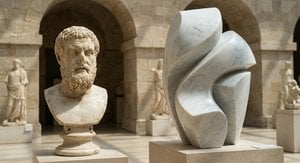
The Enduring Allure of Marble in Art History: From Classical Sculpture to Modern Abstraction
Explore the captivating history of marble sculpture from ancient Greece to modern art. Discover renowned artists like Canova & Michelangelo, carving techniques, and investment insights at ArtsDot.