

The picture follows your choices: , .
السيرة الذاتية للفنان
A pioneer of American portraiture and landscape painting, Matthew Harris Jouett captured historical figures like Thomas Jefferson with a unique Romantic sensibility that invites you to discover his evocative legacy.
 عرض المزيد
نسخة زيتية مرسومة يدوياً
لوحة زيتية مرسومة يدوياً على الكانفاس بالمقاس والإطار الذي تفضله، تُنفذ حسب الطلب على أيدي فنانينا. ( التبديل إلى نسخة مطبوعة الانتقال إلى الصورة الرقمية)
More about this painting
 معاينة الحجم الواقعي
 مشاركة
 مشاركة
 التفاصيل
 دليل
دليل

 تحميل الملف
 قطع مشابهة
 الأشعة السينية
 عرض شرائح
 Q&A
Q&A الإحصائيات
Order your painting in four simple steps
Take your time. You can change any answer; the price in your order card follows each choice.
1 Step one of four
Which size would you like?
These sizes keep the proportions of the original painting. The drawing shows your choice on a wall, above a two-metre sofa.
Or give your own measurements
اختر من بين أحجامنا المُعدّة مسبقاً والتي تتوافق مع النسب الأصلية للعمل الفني.

أدخل العرض والارتفاع اللذين تحتاجهما ليتناسب العمل مع إطارك أو جدارك. وبما أن هذه اللوحة مرسومة يدوياً، ففي حال اختيار مقاس بأبعاد مختلفة، يمكن للفنان رسم مساحة إضافية حول الصورة أو تقليصها قليلاً — الخيار لك. سنرسل لك نموذجاً رقمياً تجريبياً لاعتماده قبل البدء في الرسم. علماً بأن الصورة المعروضة في هذه الصفحة لا تعكس النتيجة النهائية الحقيقية، فالنموذج التجريبي هو الوحيد الذي يوضح ذلك بدقة.
2 Step two of four
How should it be prepared: rolled, stretched or framed?
The prices below are for the size you chose in step one.
Choose the edges of the stretched canvas
Choose your frame

White E£1

Blurside E£1

Extended E£1

P118B E£10

P118H E£10

P118W E£10

P438Z E£10

P508JH E£12

P508YH E£12

P805H E£10

P805Z E£10

P919BZ E£10

P919G E£10

P919XJ E£10

P959ZH E£10

P968JZ E£12

W106C E£8

W218G E£10

W218JH E£8

W218Y E£10

W307PJ E£10

W316G E£10

W316PJ E£8

W316Y E£10

W398PJ E£8

W4111J E£10

W500HY E£15

W500JH E£15

W692G E£12

W849H E£8

W940BG E£15

W953PJ E£8

H24-GOLD E£30

H24-SILVER E£30

H36-GOLD E£45

H36-SILVER E£45
مؤطر
Moulding: . Overall size with the frame: .
3 Step three of four
Would you like anything changed in the painting?
Most people answer no. Because each painting is made by hand, our artist can also adapt it for you.
After order, ArtsDot.com team will email client for instructions and provide a mockup preview
4 Step four of four
A few finishing options
All of them are optional. The answers already selected cost nothing extra.
Who paints it?
توصيل عالمي إلى خلال 3 إلى 4 أسابيع بدلاً من المدة المعتادة البالغة 5 أسابيع. (2 نوفمبر). جودة لا تهاون فيها.
A nameplate, as in a museum?
تفاصيل اللوحة البرونزية المحفورة
This elegant plaque features the artist's name and the title of the artwork, finely engraved for a timeless presentation.
It is made from bronze with a refined, elegant finish. The text is precisely laser-engraved for a sharp and permanent result. Measuring 9x2 cm, the plaque is compact yet easy to read. It's built to be durable and scratch-resistant, offering a professional, museum-quality look. Mounting is simple thanks to the included adhesive backing.
تفاصيل اللوحة الأكريليكية الشفافة
The plaque includes essential engraved details such as the artist's name, the title of the artwork, the date it was created, the type of media used-like oil on canvas or watercolor-a brief description of the piece, and a QR code that links to the complete artwork information.
It is crafted from clear acrylic, offering a sleek, modern appearance. The text is UV-engraved in black to ensure strong visual contrast. With a size of 10x15 cm, it ensures optimal readability. It comes equipped with two metal hooks for secure wall mounting. The plaque is designed to be weather-resistant, making it suitable for various environments, and it includes interactive features that work seamlessly with smartphone scanning.
تفاصيل اللوحة الأكريليكية السوداء
This elegant plaque includes engraved information such as the artist's name, the title of the artwork, the date it was created, the type of media used (like oil on canvas or watercolor), a short description of the artwork, and a QR code for quick access to more information.
The plaque itself is made from refined black acrylic with a premium finish. The text is laser-engraved in white for high contrast and readability. Its size is 10x15 cm, designed to be easy to read. It comes with two metal hooks for professional mounting. The design is sleek and fits any interior style. It is also weather-resistant and durable, with built-in digital integration for mobile compatibility.
A protective varnish?
When do you need it?
✓ Check and order
Your painting, as you ordered it

Thomas Smith
خامة النسخة المطبوعة
مقاس النسخة المطبوعة
-

نخبة كبار الفنانين
مزيد من التفاصيل، والبراعة، ووقت إضافي للإنتاج
-

إطار النسخة المطبوعة
-
-
بالنسبة للأعمال الفنية أو النسخ المطبوعة التي يتجاوز طول أي من أضلاعها 105 سم (حوالي 41 بوصة)، سيتم شحن الإطار كمجموعة مفككة؛ حيث تضمن هذه الطريقة سلامة التوصيل وتمنع حدوث أي أضرار أثناء النقل.
يتطلب الأمر تجميعاً احترافياً - هذا المنتج ليس مخصصاً للتركيب الذاتي.
يجب تجميع المجموعة وشد القماش بواسطة فني إطارات محترف وخبير، باستخدام غراء الخشب (غير مرفق)، وكماشة شد القماش، وملاقط لتثبيت القضبان بشكل مستوٍ أثناء جفاف الغراء. إن التجميع غير الصحيح أو عدم توازن شد القماش قد يؤدي إلى تلف العمل الفني بشكل دائم، وهو أمر لا يغطيه الضمان الخاص بنا.
 بالنسبة للأعمال الفنية أو النسخ المطبوعة التي يتجاوز طول أي من أضلاعها 105 سم (حوالي 41 بوصة)، سيتم شحن الإطار كمجموعة مفككة؛ حيث تضمن هذه الطريقة سلامة التوصيل وتمنع حدوث أي أضرار أثناء النقل.
تتضمن المجموعة جميع القطع الخشبية الصلبة، والمقطعة بدقة لتناسب المقاسات المطلوبة.
يتم التجميع باستخدام البراغي المرفقة، بالإضافة إلى غراء الخشب للوصلات الزاوية، وهو غير مرفق ويجب توفيره من قبل فني التأطير الخاص بك.
تتطلب العملية استخدام أدوات احترافية غير مدرجة في المجموعة: مثل زرادية شد القماش (أداة شد) وملاقط لتثبيت القضبان بشكل مستوٍ أثناء جفاف الغراء.
تنبيه هام:
تتطلب الوصلات الزاوية استخدام غراء الخشب، كما يجب تثبيت القضبان باستخدام المشابك حتى يجف الغراء تماماً، ويتطلب شد القماش على الإطار المجمع استخدام كماشة شد القماش. لا تشتمل المجموعة على أي من هذه الأدوات؛ لذا يرجى التواصل مع فني تأطير محترف قبل طلب هذا المقاس.

بطاقة التعريف
-
-

ورنيش واقٍ
ورنيش لامع (يُبرز الألوان ويحمي من الضوء والرطوبة)
-

تخصيص عملي الفني
أمثلة على التعديلات المتاحة: استبدال الوجه بصورة العميل؛ إضافة حيوان أليف (مثل استبدال قطة بكلب)؛ إدراج رسالة مخفية في الخلفية؛ تغيير المناظر الطبيعية أو العناصر في الخلفية.
-

شحن سريع
توصيل عالمي إلى خلال 3-4 أسابيع بدلاً من المدة المعتادة البالغة 5 أسابيع. (2 نوفمبر). جودة لا تضاهى.
-
شحن سريع
توصيل عالمي إلى خلال 5 أسابيع. (9 نوفمبر).
مُضمَّن
إجمالي السعر النهائي
E£ 13756
خيار الزجاج متاح فقط للمقاسات التي تقل عن 110 سم
Included with every order
- شحن سريع ومجاني لجميع أنحاء العالم
- قماش كتان عالي الجودة
- تأمين شامل على الشحن
- ضمان استرداد الرسوم الجمركية
- ضمان مطابقة الألوان الحقيقية
- سياسة الإرجاع خلال 100 يوم (في حالات العيوب فقط)
- ضمان استرداد نقدي بنسبة 100%
- خصم عند طلب كميات


أعمال فنية ذات صلة


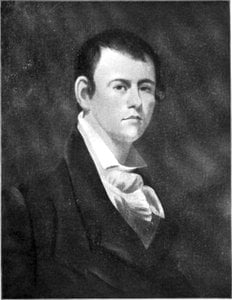
Matthew Harris Jouett
1788 - 1827, United States of America
السيرة الذاتية للفنان
A Legacy Captured in Light and Shadow
Matthew Harris Jouett remains an enigmatic and profound figure within the early annals of American art, a painter whose brush captured the very essence of a burgeoning nation. Born in Mercer County, Kentucky, Jouett’s life was marked by both the ruggedness of the American frontier and the refined pursuit of classical beauty. While history often remembers him through the lens of his notable subjects, his true contribution lies in his ability to translate the psychological depth of his sitters and the sublime atmosphere of the wilderness onto canvas. Though his career was tragically cut short, he left behind a body of work that serves as a vital window into the Romantic sensibility of the early nineteenth century.
His journey as an artist was one of both duty and devotion. A graduate of Transylvania University who briefly studied law, Jouett’s path took a decidedly more creative turn, much to the chagrin of his father, a hero of the American Revolution. Beyond the studio, he served with distinction as a volunteer officer in the 2 .8th Kentucky Infantry during the War of 1812. It was during these turbulent years that his artistry met necessity; he famously used his own earnings to restore missing militia funds and captured the likenesses of his fellow soldiers from memory, imbuing these portraits with a raw, human energy born of shared experience.
Mastery of Portraiture and Landscape
Jouett’s artistic development was shaped by a pursuit of excellence that led him far beyond the borders of Kentucky. Seeking to refine his craft, he traveled to Boston to study under the legendary Gilbert Stuart, an encounter that undoubtedly deepened his understanding of portraiture. This training allowed him to execute works of immense historical significance, earning commissions to paint luminaries such as Thomas Jefferson, George Rogers Clark, and the Marquis de Lafayette. His portraits are characterized by a masterful use of chiaroscuro, where dramatic contrasts of light and dark sculpt the features of his subjects, creating a sense of presence that transcends time.
While he is celebrated for his portraits, Jouett also emerged as a pioneer in the realm of American landscape painting. He possessed an unwavering dedication to capturing the Appalachian wilderness, focusing on the intimate and evocative beauty of the Kentucky and Tennessee landscapes. His approach to the land was not one of monumental scale, but rather an exploration of subtle tonal variations and atmospheric effects. In his landscapes, one finds a unique blend of Romantic idealism and meticulous observation, often utilizing watercolor to achieve luminous color palettes and delicate textures that resonate with the soul of the American frontier.
Artistic Style and Historical Significance
The stylistic hallmarks of Jouett’s work represent a fascinating intersection of classical tradition and emerging modern sensibilities. His technique can be described as a form of Romantic Impressionism, where he adopted the idealized forms and dramatic lighting reminiscent of masters like Claude Lorrain and Nicolas Poussin, yet infused them with a looser, more fluid brushwork. This ability to balance Neoclassical structure with a restless, human energy allowed him to create works that were both dignified and deeply emotive.
Though his fame was not fully realized until the 1893 Chicago World Fair, Jouett’s impact on the American artistic landscape is undeniable. His work stands as a testament to a period of transition in the United States—a time when artists were beginning to find their own visual language, separate from European traditions, by looking closely at the faces and the forests of their own soil. Today, his paintings are cherished not merely as historical artifacts, but as profound explorations of character and nature.