


 معاينة الحجم الواقعي
 إرسال
إرسال مشاركة
 عرض التفاصيل
 دليل الأعمال الفنية للطلاب

 تحميل
تحميل
 قطع مشابهة
 الأشعة السينية
 عرض شرائح متتابع
 الإحصائيات
Classical Landscape


 اقرأ المزيد
طباعة جيلي / مطبوعات فنية
طباعة جيكلي أو كانفاس بجودة المتاحف، مع سرعة في التنفيذ وخيارات متنوعة للتشطيب. ( اطلب نسخة مرسومة يدويًا التحويل إلى الصورة الرقمية)




P118B E£10

P118H E£10

P118W E£10

P438Z E£10

P508JH E£12

P508YH E£12

P805H E£10

P805Z E£10

P919BZ E£10

P919G E£10

P919XJ E£10

P959ZH E£10

P968JZ E£12

W106C E£8

W218G E£10

W218JH E£8

W218Y E£10

W307PJ E£10

W316G E£10

W316PJ E£8

W316Y E£10

W398PJ E£8

W4111J E£10

W500HY E£15

W500JH E£15

W692G E£12

W849H E£8

W940BG E£15

W953PJ E£8




اختر من بين أحجامنا المُعدّة مسبقاً والتي تتوافق مع النسب الأصلية للعمل الفني.

أدخل العرض والارتفاع اللذين تحتاجهما، ليتناسب مع إطارك أو جدارك. يمكن قص المطبوعة فقط، ولا يمكن أبداً جعلها أكبر من الصورة الأصلية، لذا فإن أي مقاس بشكل مختلف سيؤدي إلى فقدان جزء من الصورة. سنرسل لك نموذجاً رقمياً تجريبياً لاعتماده قبل البدء في عملية الطباعة. الصورة المعروضة في هذه الصفحة لا توضح القص الفعلي — النموذج التجريبي فقط هو ما يظهر ذلك.
توصيل عالمي إلى خلال أسبوعين بدلاً من المدة القياسية البالغة 4/5 أسابيع. (22 أكتوبر)

شحن سريع ومجاني لجميع أنحاء العالم

قماش كتان فاخر

تأمين شامل على الشحن

ضمان استرداد الرسوم الجمركية

ضمان دقة مطابقة الألوان

سياسة الإرجاع خلال 100 يوم (في حالات العيوب فقط)

ضمان استرداد نقدي بنسبة 100%

عرض خصم الكميات
 خيار الزجاج متاح فقط للمقاسات التي تقل عن 110 سم

Classical Landscape
طباعة جيلي / مطبوعات فنية
مقاس النسخة المطبوعة
-


إجمالي السعر
E£ 3188
Jean-Victor Bertin’s Classical Landscape: A Window Into Romantic Reverie
Jean-Victor Bertin (1767–1842) stands as a pivotal figure in the burgeoning landscape painting movement of late 18th and early 19th century France, bridging the gap between Neoclassicism’s rigid formalism and the emotive fervor of Romanticism. Unlike his contemporaries who primarily documented observable realities, Bertin embarked on a more ambitious endeavor: crafting immersive atmospheres steeped in classical allusion while simultaneously capturing the sublime beauty of the natural world.
His artistic journey began under the tutelage of Pierre-Henri de Valenciennes, a sculptor and landscape painter whose influence instilled in Bertin a meticulous approach to observation coupled with compositional rigor. Valenciennes championed the importance of accurately representing nature’s grandeur—a principle that would permeate Bertin's oeuvre throughout his prolific career.
Bertin’s training at the Académie royale de peinture et de sculpture solidified his understanding of artistic conventions, yet he swiftly diverged from established norms. He wasn’t merely replicating scenery; he was actively shaping it—transforming landscapes into canvases brimming with symbolic resonance and imbued with a palpable sense of emotion.
The Painting's Subject Matter: A Pastoral Ideal
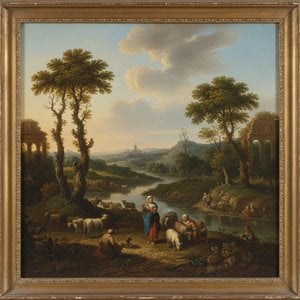
“Classical Landscape” depicts a serene Baroque/Romantic scene centered around ruins and lush vegetation. Bertin’s vision isn’t simply a depiction of a picturesque vista; it’s an imaginative interpretation of classical pastoral ideals—a genre deeply rooted in Renaissance humanist thought.
The composition unfolds with deliberate care, guiding the viewer's eye through a cleft in ancient trees, beyond which a carefully ordered succession of distinct planes culminates in distant mountains. This masterful use of atmospheric perspective softens the contours of the landscape, creating an ethereal quality that evokes feelings of tranquility and contemplation.
Technique and Style: Precision Meets Emotion
Bertin’s technique is characterized by painstaking detail—a hallmark of Neoclassical painting—yet it's tempered with Romantic sensibilities. He employed oil paints on canvas to achieve remarkable luminosity and tonal gradation, capturing the subtle nuances of light and shadow.
The scene unfolds in a clearing dominated by two young women who hold up garlands of flowers, symbolizing fertility and renewal. At the center right, shepherds offer an homage to Pan—the ancient Greek god of shepherds and flocks—further enriching the painting’s symbolic tapestry.
Historical Context: Bridging Eras
“Classical Landscape” emerged during a period of significant artistic transformation. Bertin's work reflects the broader shift from the austere grandeur of Neoclassicism to the expressive dynamism of Romanticism, mirroring the intellectual currents of his time. The painting’s depiction of ruins serves as a poignant reminder of the passage of time and the enduring influence of classical mythology.
Bertin's meticulous rendering—combined with his masterful use of atmospheric perspective—solidifies his place as one of the foremost landscape painters of his era, leaving behind a legacy of breathtaking beauty and profound artistic insight. It exemplifies the Romantic ideal of capturing sublime emotion within meticulously crafted natural settings.
الأسئلة والأجوبة
كيف يلتقي الأسلوب الفني مع العصر في "Classical Landscape" للفنان Jean-Victor Bertin؟
تندرج لوحة "Classical Landscape" للفنان Jean-Victor Bertin ضمن حركة Classical Reverie، وذلك في حقبة العصر الحديث المبكر لمبدعها.
هل يستخدم "Classical Landscape" للفنان Jean-Victor Bertin تباينات قوية أم تناغمات ناعمة؟
يُظهر التحليل اللوني لـ "Classical Landscape" للفنان Jean-Victor Bertin تباينًا Statement وتناغمًا Unified Palette.
هل العمل "Classical Landscape" خالٍ من حقوق الطبع والنشر؟
تندرج لوحة "Classical Landscape" للفنان Jean-Victor Bertin ضمن ملك عام - انتهت مدة حماية حقوق الطبع والنشر الخاصة به. وتحدد هذه الحالة كيفية إعادة إنتاج صورة العمل الفني.
أعمال فنية مشابهة


مقالات ذات صلة

أفضل 25 لوحة لجون كونستابل: روعة الطبيعة الإنجليزية في ArtsDot
اكتشف روعة الطبيعة الإنجليزية مع أفضل 25 لوحة لجون كونستابل. قصص فنية آسرة وتقنيات زيتية فريدة في ArtsDot.com. اشترِ نسخًا عالية الجودة وديكور منزلي فاخر. استكشف المجموعة الكاملة الآن!
Nicolaes Berchem: Dutch Golden Age Pastoralism & the Evolution of Landscape Painting
Explore the captivating world of Nicolaes Berchem, a leading Dutch Golden Age painter. Discover his idyllic landscapes, masterful technique & lasting influence on art history. Learn more at ArtsDot.

أفضل 10 لوحات طبيعية رومانسية غيرت مسار الفن وجمّلت الديكور | ArtsDot
اكتشف 10 روائع فنية رسمت مسار الفن الرومانسي! استكشف لوحات فريدريش، مالارد وأكثر. قصص الفنانين، تقنيات الرسم، وجمال المناظر الطبيعية الخلابة. احصل على أعمال فنية عالية الجودة من ArtsDot.com!

Nicolas Poussin: Classicism, Allegory & Order in 17th-Century French Painting
Explore the life & work of Nicolas Poussin, a master of French Classicism. Discover his allegorical paintings, Roman influences, and enduring impact on art history. Expert analysis & insights.

Evocations of Place: A Historical Journey Through Landscape Art
Explore the rich history of landscape art with ArtsDot. Discover renowned artists, movements like Impressionism & Romanticism, and expert guidance for collecting timeless pieces. Find your perfect serene escape today!