


 معاينة الحجم الحقيقي
 مشاركة
 مشاركة
 التفاصيل

 تحميل الملف
 قطع مشابهة
 الأشعة السينية
 عرض شرائح
A Luncheon
 Oil On Canvas
- WallArt
- Realist movement
 1868
1868- 19th Century
 58.0 x 78.0 cm
 عرض المزيد
طباعة جيلي / مطبوعات فنية
طباعة جيكلي أو كانفاس بجودة المتاحف، مع سرعة في التنفيذ وخيارات متنوعة للتشطيب. ( اشترِ لوحة مرسومة يدويًا اشترِ الصورة)




P118B $10

P118H $10

P118W $10

P438Z $10

P508JH $12

P508YH $12

P805H $10

P805Z $10

P919BZ $10

P919G $10

P919XJ $10

P959ZH $10

P968JZ $12

W106C $8

W218G $10

W218JH $8

W218Y $10

W307PJ $10

W316G $10

W316PJ $8

W316Y $10

W398PJ $8

W4111J $10

W500HY $15

W500JH $15

W692G $12

W849H $8

W940BG $15

W953PJ $8




اختر من بين أحجامنا المُعدّة مسبقًا والتي تتطابق مع النسب الأصلية للعمل الفني.

يمكنك إدخال أبعادك الخاصة لتناسب إطاراً أو مساحة معينة. وإذا لم يتطابق الحجم الذي اخترته مع نسب الصورة الأصلية، فسنقوم إما بقص العمل الفني أو تمديد الصورة باستخدام حافة معكوسة أو بلون مصمت. سيتم إرسال نموذج تجريبي رقمي لاعتمادك قبل بدء الإنتاج.
يرجى ملاحظة أن المعاينة على الشاشة لا تعكس عملية القص أو التمديد الفعلية؛ حيث سيوضح النموذج التجريبي فقط التكوين النهائي بدقة.
وعلى الرغم من توفر أحجام مخصصة، إلا أننا نوصي باختيار أبعاد من القائمة المحددة مسبقاً للحفاظ على النسب الأصلية.
توصيل عالمي إلى خلال أسبوعين بدلاً من المدة القياسية البالغة 4/5 أسابيع. 14 أغسطس

شحن سريع ومجاني لجميع أنحاء العالم

قماش كتان عالي الجودة

تأمين شحن شامل

ضمان استرداد الرسوم الجمركية

ضمان مطابقة الألوان الحقيقية

سياسة الإرجاع خلال 60 يومًا (في حالات العيوب فقط)

ضمان استرداد نقدي بنسبة 100%

خصم عند طلب عدة قطع
 خيار الزجاج متاح فقط للمقاسات التي تقل عن 110 سم

A Luncheon
طباعة جيلي / مطبوعات فنية
مقاس النسخة المطبوعة
-


السعر الإجمالي النهائي
$ 62
وصف القطعة الفنية
The Intimate Glow of Parisian Life
To gaze upon Tissot's A Luncheon is to be instantly transported across the threshold of time, into the warm, convivial embrace of a late 19th-century Parisian gathering. This painting is far more than a mere depiction of people sharing a meal; it is a meticulously crafted tableau vivant, capturing the ephemeral magic that exists when friends and family gather under one roof. The scene pulses with an undeniable sense of life—the clinking of unseen glasses, the murmur of conversation, the shared laughter echoing off the painted walls. Tissot, ever the keen observer of human nature, has gifted us a moment of perfect domesticity, rendered with such palpable realism that one can almost smell the aroma of wine and good food lingering in the air.
Mastery of Realism and Human Connection
Tissot’s adherence to Realism is breathtakingly evident here. He eschews grand historical narratives for the profound poetry found in everyday existence, a hallmark of his genius influenced by the French Realist movement. Observe the details: the careful placement of wine glasses catching the light, the rich folds of fabric draped over chairs, and the varied textures on the tables. Yet, these technical achievements never overshadow the emotional core. The interaction between the figures—the gentle way one woman cradles a cat in her lap while seated near another man—speaks volumes about connection. It is a celebration of companionship, suggesting that the greatest art sometimes lies not on the canvas itself, but in the shared experience it commemorates.
Symbolism Woven into the Setting
The inclusion of animals adds a layer of delightful symbolism to this gathering. The watchful dog and the placid cat are not mere props; they are integral participants in the scene's emotional tapestry. They embody the comfort, loyalty, and playful spirit that often accompanies deep human bonds. Furthermore, the warm palette employed throughout the composition—the ochres, the deep reds, and the soft browns—does more than just decorate; it acts as an emotional anchor, wrapping the viewer in a blanket of cozy nostalgia. The entire setting whispers of leisure, pleasure, and the enduring importance of social ritual.
A Timeless Piece for Modern Interiors
For the collector or designer seeking art that breathes life into a space, A Luncheon offers unparalleled depth. Its scale, 58 x 78 cm, allows it to function as a magnificent focal point in a dining room, drawing-room, or gallery setting alike. Reproducing this work means bringing home not just paint on canvas, but a piece of captured Parisian soul. It speaks to an appreciation for the nuanced beauty of daily life, making it a conversation starter that invites contemplation and warmth into any modern environment.
أعمال فنية ذات صلة


السيرة الذاتية للفنان
Early Life and Artistic Beginnings
Jacques Joseph Tissot, born October 15, 1836, in Nantes, France, was destined for a life steeped in artistic passion from his earliest years. His father, a drapery merchant, instilled in him an appreciation for craftsmanship and detail—qualities that would profoundly shape his artistic vision. Simultaneously, his mother, a milliner, nurtured his sensitivity to beauty and fashion, exposing him to the vibrant world of Parisian society. Despite familial responsibilities, Tissot relentlessly pursued his artistic ambitions, enrolling at the École des Beaux-Arts in Paris where he honed his skills under the tutelage of luminaries like Ingres, Flandrin, and Lamothe. This formative period cemented his commitment to painting as a vocation and established him firmly within the influential Parisian art milieu.The Salon Years and Recognition
Tissot’s debut at the Paris Salon in 1861 marked a pivotal moment—the unveiling of “The Meeting of Faust and Marguerite,” a dramatic tableau that captivated audiences and garnered considerable acclaim from critics. Purchased by the state for inclusion in the Luxembourg Gallery, this ambitious undertaking signaled Tissot's burgeoning reputation as a painter capable of capturing complex narratives and conveying profound emotion. Subsequent Salon exhibitions solidified his position within the artistic establishment, showcasing his evolving style and attracting commissions from prominent patrons. His early successes fueled confidence and propelled him toward exploring new subjects and techniques—a trajectory that would ultimately define his illustrious career.Genre Painting and Parisian Society
Tissot’s artistic breakthrough arrived with his series “La Femme à Paris,” a meticulously observed depiction of the demi-mondaine world of late Victorian London. These paintings, characterized by their luminous color palettes and masterful rendering of textures—particularly fabrics—became synonymous with capturing the allure and dynamism of Parisian high society. Tissot's meticulous attention to detail extended beyond mere visual representation; he sought to convey not only appearances but also psychological nuances, reflecting the anxieties and aspirations of his subjects. His work stands as a testament to Impressionistic influences blended with realism, offering an unparalleled glimpse into the social customs and artistic sensibilities of the Belle Époque.Biblical Themes and Japonisme
Throughout his prolific output, Tissot embraced diverse artistic inspirations—ranging from medieval narratives to biblical scenes—demonstrating remarkable versatility. His depictions of religious subjects, imbued with spiritual depth and emotional resonance, showcased his ability to elevate visual storytelling into profound contemplation. Simultaneously, he was captivated by Japonisme—the fascination with Japanese art and aesthetics that swept across Europe during the Victorian era—evident in compositions infused with asymmetrical arrangements and subtle color harmonies reminiscent of Japanese prints. This stylistic fusion underscored Tissot’s intellectual curiosity and his willingness to experiment with innovative artistic approaches.Later Years and Legacy
Tissot's life took a dramatic turn when he enlisted in the Franco-Prussian War, serving on the French side—an experience that undoubtedly shaped his worldview. Following the war’s conclusion, he relocated to London where he pursued etching alongside Sir Seymour Haden and honed his artistic skills through portrait commissions and caricatures for Vanity Fair. His relationship with Kathleen Newton blossomed into a passionate companionship, providing him with enduring inspiration for numerous paintings. Tragically, Newton succumbed to tuberculosis in 1882—a profound loss that deeply affected Tissot’s creative output. Despite this sorrowful chapter, he continued to produce exceptional artwork until his death in 1902. Today, Jacques Joseph Tissot's legacy resides in museums across Europe and North America—most notably the Musée National Jean-Jacques Henner in Paris—where his celebrated paintings continue to inspire admiration for their artistic brilliance and evocative portrayal of Victorian life and faith. His enduring influence on genre painting and Impressionism secures his place as one of France’s most distinguished artists of the 19th century.
جاك جوزيف تيسوت
1836 - 1902 , فرنسا
حقائق سريعة
- Artistic Movement Or Style: الرسم الجوهري
- Artists Who Influenced This Artist: ['جان أغسطس إنجرس"، "جاستاف كوبريت']
- Date Of Birth: 1836
- Date Of Death: 1902
- Full Name: Jacques Joseph Tissot
- Nationality: فرنسي
- Notable Artworks: ['المواعدة بين فوست ومارغريت"، "المرأة في باريس']
- Place Of Birth: نANTES، فرنسا
مقالات ذات صلة

Romantic Realism's Finest: 10 Masterpieces for Your Home | ArtsDot
Explore 10 defining masterpieces of Romantic Realism! Discover Courbet, Millet & Daumier's powerful paintings—capturing emotion and social realities. Find museum-quality reproductions for your home at ArtsDot.com.

The Evocative Embrace of Reality: Exploring Romantic Realism in 19th-Century Painting
Explore the captivating world of Romantic Realism! Discover key artists like Courbet & Millet, masterpieces, and the social context behind this influential art movement. Expert insights for collectors at ArtsDot.

The Poetic Truth of Observation: Exploring 19th-Century Realism in Painting
Explore the captivating world of 19th-century Realism! Discover key artists like Courbet & Millet, masterpieces, and the powerful social commentary behind this influential art movement. Expert insights at ArtsDot.
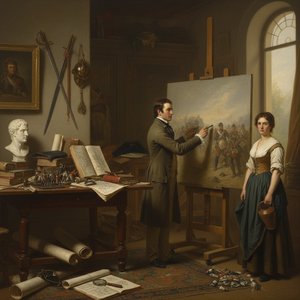
Historical Realism: A Pursuit of Truthful Representation in 19th-Century Art
Explore the captivating world of 19th-century Realism! Discover key artists like Courbet, groundbreaking techniques & the social context behind this influential art movement. Expert insights at ArtsDot.

Émile Jean Horace Vernet: Romantic Realism & Depicting 19th-Century Life
Explore the life & art of Émile Jean Horace Vernet, a master of Romantic Realism. Discover his captivating battle scenes, portraits, and Orientalist works – a window into 19th-century France. Learn about his techniques & enduring legacy.

