


 معاينة الحجم الحقيقي
 مشاركة
 مشاركة
 التفاصيل

 تحميل الملف
 قطع مشابهة
 الأشعة السينية
 عرض شرائح
A Garden in Summer
 1930
1930 24.0 x 22.0 cm
 عرض المزيد
نسخة زيتية مصنوعة يدوياً
لوحة زيتية مرسومة يدوياً على الكانفاس بالمقاس والإطار الذي تفضله، تُنفذ حسب الطلب على أيدي فنانينا. ( اشترِ نسخة مطبوعة اشترِ الصورة)




































اختر من بين أحجامنا المُعدّة مسبقًا والتي تتطابق مع النسب الأصلية للعمل الفني.

يمكنك إدخال أبعادك الخاصة لتناسب إطارًا معينًا أو مساحة محددة. وإذا لم يتطابق الحجم الذي اخترته مع نسب الصورة الأصلية، فسنقوم إما بقص العمل الفني أو توسيع اللوحة بإضافة عناصر مرسومة يدويًا. سيتم إرسال نموذج رقمي إليك للموافقة عليه قبل بدء الإنتاج.
يرجى ملاحظة أن المعاينة على الشاشة لا تعكس عملية القص أو التوسيع الفعلية؛ حيث إن النموذج الرقمي وحده هو الذي سيوضح التكوين النهائي بدقة.
وعلى الرغم من توفر أحجام مخصصة، إلا أننا نوصي باختيار أبعاد من القائمة المحددة مسبقًا للحفاظ على النسب الأصلية للعمل الفني.
بعد إتمام الطلب، سيرسل فريق ArtsDot.com بريداً إلكترونياً للعميل لطلب التعليمات وتزويده بمعاينة تجريبية (mockup).
توصيل عالمي إلى خلال 3 إلى 4 أسابيع بدلاً من المدة المعتادة البالغة 5 أسابيع. (26 أغسطس). جودة لا تهاون فيها.

شحن سريع ومجاني لجميع أنحاء العالم

قماش كتان عالي الجودة

تأمين شحن شامل

ضمان استرداد الرسوم الجمركية

ضمان مطابقة الألوان الحقيقية

سياسة الإرجاع خلال 60 يومًا (في حالات العيوب فقط)

ضمان استرداد نقدي بنسبة 100%

خصم عند طلب عدة قطع
 خيار الزجاج متاح فقط للمقاسات التي تقل عن 110 سم

A Garden in Summer
خامة إعادة الإنتاج
مقاس النسخة المطبوعة
-


السعر الإجمالي النهائي
$ 263
أعمال فنية ذات صلة


السيرة الذاتية للفنان
The Painter of Cornish Light and War
Guy Lipscombe (1881 – 1952) remains a captivating figure in the annals of British art, a painter whose brush possessed the rare ability to oscillate between the serene beauty of the natural world and the harrowing realities of human conflict. Born in Teddington, London, on August 22, 1881, Lipscombe’s artistic journey was forged in some of the most prestigious institutions of his era. His meticulous training at Hatherley’s School of Art and the Slade School of Art, further enriched by a coveted scholarship at the Royal Academy Schools, provided him with a formidable technical foundation. This rigorous academic background allowed him to master the nuances of light and form, a skill that would later serve him both in the sun-drenched landscapes of Cornwall and the somber, gas-lit rooms of the Italian Front.
Before he became a chronicler of war and landscape, Lipscombe established himself as a masterful illustrator. In the early years of the twentieth century, his keen eye for movement and mechanical precision found a home in the pages of “The Motor,” a publication founded in 1903. His ability to capture the kinetic energy of early automobiles—most notably seen in his depiction of the 1907 French Grand Prix—solidified his reputation as an artist capable of rendering both speed and intricate detail. This period of his life, characterized by a fascination with the burgeoning age of technology, instilled in him a precision that would later lend a profound sense of realism to his more emotive works.
A Legacy of Light and Conflict
While his early career was defined by the mechanical, Lipscombe’s heart belonged to the landscape. Influenced heavily by the St Ives School, he embraced the plein air tradition, seeking to capture the ephemeral qualities of light as it danced across the Cornish coastline. His canvases from this period are celebrated for their vibrant palettes and expressive brushwork, reflecting an emotional depth that sought to convey the very soul of the landscape. He did not merely paint scenery; he painted the atmosphere, the salt spray, and the ethereal glow that defines the British coast.
However, the trajectory of his life and art was irrevocably altered by the outbreak of the Great War. Driven by a sense of duty, Lipscombe volunteered as a driver for the British Red Cross Society, serving with the No. 3 British Red Cross Ambulance Unit on the Italian Front. This transition from observer of light to witness of tragedy brought about a profound shift in his creative output. The landscapes of peace were replaced by the stark, often devastating imagery of combat and its aftermath. His experiences in Italy yielded several monumental oil paintings that serve as haunting historical documents, including:
- British Red Cross Ambulance, Italian Front, 1916: A poignant look at the logistical and human efforts of medical relief during wartime.
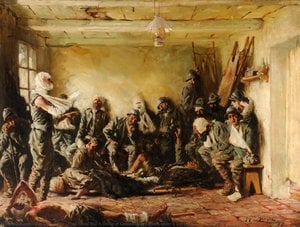
- A Group of Casualties in a Room under a Gas Lamp: A work of profound atmospheric tension, capturing the vulnerability of the wounded.
- The Arrival of the First Guns on the Carso Front: Documenting the encroaching machinery of war.
These works, several of which were commissioned by and now reside within the prestigious collection of the Imperial War Museum, stand as powerful testimonies to the era’s anxieties. Through his art, Lipscombe bridged the gap between the aesthetic beauty of the natural world and the visceral, often grim, realities of history. His ability to navigate these two extremes—the tranquil Cornish light and the shadows of the Italian Front—ensures his enduring significance as an artist who captured the full spectrum of the human experience during one of the most transformative periods in modern history.
guy lipscombe
1881 - 1952
حقائق سريعة
- Artistic Movement Or Style: Impressionism
- Artists Or Movements Influenced By This Artist: ['St Ives School']
- Artists Who Influenced This Artist: ['Claude Monet']
- Date Of Birth: 1881
- Date Of Death: 1952
- Full Name: Guy Lipscombe
- Nationality: British
- Notable Artworks: ['The Arrival of the First Guns on the Carso Front, Italy, 1916']
- Place Of Birth: Teddington

