


 معاينة الحجم الحقيقي
 مشاركة
 مشاركة
 التفاصيل

 تحميل الملف
 قطع مشابهة
 الأشعة السينية
 عرض شرائح
 الإحصائيات
بيتر الأول فوق بحر الضباب


 عرض المزيد
نسخة زيتية مصنوعة يدوياً
لوحة زيتية مرسومة يدوياً على الكانفاس بالمقاس والإطار الذي تفضله، تُنفذ حسب الطلب على أيدي فنانينا. ( التحويل إلى المطبوعات الانتقال إلى الصورة الرقمية)




P118B $10

P118H $10

P118W $10

P438Z $10

P508JH $12

P508YH $12

P805H $10

P805Z $10

P919BZ $10

P919G $10

P919XJ $10

P959ZH $10

P968JZ $12

W106C $8

W218G $10

W218JH $8

W218Y $10

W307PJ $10

W316G $10

W316PJ $8

W316Y $10

W398PJ $8

W4111J $10

W500HY $15

W500JH $15

W692G $12

W849H $8

W940BG $15

W953PJ $8




اختر من بين أحجامنا المُعدّة مسبقًا والتي تتطابق مع النسب الأصلية للعمل الفني.

يمكنك إدخال أبعادك الخاصة لتناسب إطارًا معينًا أو مساحة محددة. وإذا لم يتطابق الحجم الذي اخترته مع نسب الصورة الأصلية، فسنقوم إما بقص العمل الفني أو توسيع اللوحة بإضافة عناصر مرسومة يدويًا. سيتم إرسال نموذج رقمي إليك للموافقة عليه قبل بدء الإنتاج.
يرجى ملاحظة أن المعاينة على الشاشة لا تعكس عملية القص أو التوسيع الفعلية؛ حيث إن النموذج الرقمي وحده هو الذي سيوضح التكوين النهائي بدقة.
وعلى الرغم من توفر أحجام مخصصة، إلا أننا نوصي باختيار أبعاد من القائمة المحددة مسبقًا للحفاظ على النسب الأصلية للعمل الفني.
بعد إتمام الطلب، سيرسل فريق ArtsDot.com بريداً إلكترونياً للعميل لطلب التعليمات وتزويده بمعاينة تجريبية (mockup).
توصيل عالمي إلى خلال 3 إلى 4 أسابيع بدلاً من المدة المعتادة البالغة 5 أسابيع. (17 سبتمبر). جودة لا تهاون فيها.

شحن سريع ومجاني لجميع أنحاء العالم

قماش كتان عالي الجودة

تأمين شحن شامل

ضمان استرداد الرسوم الجمركية

ضمان مطابقة الألوان الحقيقية

سياسة الإرجاع خلال 100 يوم (في حالات العيوب فقط)

ضمان استرداد نقدي بنسبة 100%

خصم عند طلب عدة قطع
 خيار الزجاج متاح فقط للمقاسات التي تقل عن 110 سم

بيتر الأول فوق بحر الضباب
خامة إعادة الإنتاج
مقاس النسخة المطبوعة
-


السعر الإجمالي النهائي
$ 263
Beethoven composing the Pastoral Symphony
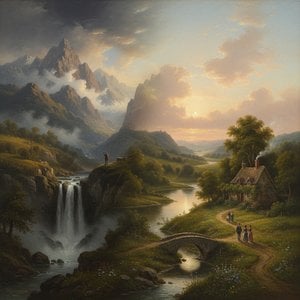
Franz Hegi’s “Beethoven composing the Pastoral Symphony,” painted in 1839, transcends mere visual representation; it's an embodiment of Romantic idealism and a profound meditation on the relationship between humanity and nature. The artwork captures a pivotal moment – Beethoven grappling with his magnum opus, attempting to distill the essence of pastoral tranquility onto canvas.
- Subject Matter: The scene depicts Beethoven seated beside a river, absorbed in his creative process. He holds a sheet of paper, suggesting contemplation and artistic endeavor amidst the serene surroundings.
- Artist Style: Hegi’s style aligns perfectly with Friedrich's aesthetic – characterized by meticulous detail and an unwavering focus on conveying emotion rather than documenting reality. It exemplifies the Romantic preoccupation with capturing sublime landscapes and exploring spiritual themes.
- Technique: Executed in aquatinta, a printing technique known for its tonal subtlety and ability to reproduce nuanced shades of grey, Hegi skillfully renders the misty atmosphere of the riverbank. The artist’s careful layering of ink creates depth and texture, mirroring the grandeur of the mountainous backdrop.
- Historical Context: Painted during the height of Romanticism, “Beethoven composing the Pastoral Symphony” reflects the movement's fascination with untamed wilderness and its belief in nature as a source of spiritual inspiration. Beethoven’s “Pastoral Symphony,” premiered in 1824, was itself a groundbreaking work that championed the beauty and restorative power of rural life – mirroring Hegi’s artistic vision.
- Symbolism: The solitary figure represents humanity's yearning for connection with the divine and its acceptance of mortality within the vastness of creation. Beethoven’s posture conveys humility before nature, emphasizing the importance of contemplation and inner reflection. The misty landscape symbolizes obscurity and mystery, inviting viewers to contemplate existential questions.
The artwork’s emotional impact is palpable—a quiet stillness punctuated by intellectual curiosity. It speaks to a desire for escape from urban pressures and an appreciation for the sublime beauty of the natural world. “Beethoven composing the Pastoral Symphony” remains a testament to Friedrich's ability to transform observation into profound artistic expression.
This captivating artwork is available as a high-quality reproduction on ArtsDot.com, allowing you to bring its serene grandeur into your home or office.
أعمال فنية ذات صلة


السيرة الذاتية للفنان
Caspar David Friedrich: The Soul of the German Landscape
Caspar David Friedrich, born in 1774 in the windswept Baltic town of Greifswald, wasn’t merely a painter; he was a translator of experience. His life, marked by profound personal loss and an intense connection to nature, became inextricably woven into the fabric of his art – a body of work that continues to resonate with viewers today as a poignant exploration of spirituality, solitude, and the sublime. Often considered the most important German artist of his generation, Friedrich’s landscapes aren't simply depictions of scenery; they are carefully constructed invitations to contemplate the mysteries of existence, rendered in a style both intensely personal and profoundly influential.
Early Life and Influences: A World Shaped by Loss
Friedrich’s childhood was shadowed by tragedy. The early deaths of his mother and brother instilled within him a deep sense of melancholy and an acute awareness of mortality – themes that would repeatedly surface in his art. This personal sorrow, coupled with the strict religious upbringing he received within a devout Lutheran family, profoundly shaped his worldview. He initially pursued studies at the University of Greifswald, focusing on architecture before ultimately dedicating himself to painting. Crucially, during this period, he encountered and was deeply moved by the works of Dutch masters like Jacob van Ruisdael and Jan Vermeer – artists who had mastered the subtle nuances of light and atmosphere, capturing a sense of quiet contemplation within their landscapes. These early influences instilled in him a meticulous attention to detail and a desire to evoke a specific mood or feeling through his art.
The Development of a Distinctive Style: Romanticism Takes Root
Friedrich’s artistic journey truly began after he moved to Copenhagen, where he studied at the Royal Danish Academy. However, it was in Dresden, the capital of Saxony, that he established himself as an artist and developed his unique style – a cornerstone of the burgeoning German Romantic movement. Unlike the Neoclassical emphasis on reason and order, Friedrich sought to capture the emotional power of nature, prioritizing subjective experience over objective representation. His paintings are characterized by a dramatic use of light and shadow, often employing a muted palette dominated by blues, greys, and browns, creating an atmosphere of mystery and introspection. He frequently incorporated solitary figures – often dwarfed by the vastness of the landscape – into his compositions, suggesting humanity’s place within the grand scheme of nature. These figures aren't heroic or triumphant; they are vulnerable, contemplative, and deeply connected to their surroundings.
Key Works and Symbolic Language
Several paintings stand as particularly potent examples of Friedrich’s artistic vision. “Wanderer above the Sea of Fog” (1818), perhaps his most iconic work, depicts a solitary figure gazing out over a misty landscape, embodying both human ambition and the humbling power of nature. "The Abbey in the Oak Forest" (1809) explores themes of spirituality and decay, juxtaposing the grandeur of the ruined abbey with the dense, brooding forest. “Chalk Cliffs on Rügen” (1826), showcases his mastery of atmospheric perspective and the evocative use of light to create a sense of depth and distance. Beyond their visual beauty, these works are laden with symbolic meaning. Friedrich frequently employed motifs such as ruins, mountains, forests, and bodies of water – each carrying layers of historical, religious, and philosophical significance. He deliberately blurred the boundaries between reality and imagination, inviting viewers to engage in a dialogue with the artwork and project their own emotions and experiences onto it.
Legacy and Historical Significance
Despite enjoying early success and patronage, Friedrich’s fortunes declined significantly during his later years. The waning of Romanticism and the rise of industrialization contributed to a shift in artistic tastes, leaving him largely forgotten until the late 19th century when Symbolist artists rediscovered his work and recognized its profound emotional depth. Today, Caspar David Friedrich is celebrated as one of the most important figures in German art history – a pioneer of Romantic landscape painting who profoundly influenced generations of artists. His paintings continue to captivate viewers with their evocative atmosphere, symbolic richness, and enduring exploration of the human condition’s relationship with nature. His work remains a powerful reminder of the importance of introspection, solitude, and the sublime beauty that can be found in the natural world.

franz hegi
1774 - 1850 , Switzerland
حقائق سريعة
- Artistic Movement Or Style: Romanticism
- Artists Or Movements Influenced By This Artist:
- Expressionism
- Symbolism
- Artists Who Influenced This Artist:
- J.M.W. Turner
- Joshua Reynolds
- Date Of Birth: September 5, 1774
- Date Of Death: May 7, 1840
- Full Name: Caspar David Friedrich
- Nationality: German
- Notable Artworks:
- Wanderer above the Sea of Fog
- Monk by the Sea
- The Abbey in the Oak Forest
- Place Of Birth: Greifswald, Germany
مقالات ذات صلة

أفضل 10 لوحات طبيعية رومانسية غيرت مسار الفن وجمّلت الديكور | ArtsDot
اكتشف 10 روائع فنية رسمت مسار الفن الرومانسي! استكشف لوحات فريدريش، مالارد وأكثر. قصص الفنانين، تقنيات الرسم، وجمال المناظر الطبيعية الخلابة. احصل على أعمال فنية عالية الجودة من ArtsDot.com!

Evocations of Place: A Historical Journey Through Landscape Art
Explore the rich history of landscape art with ArtsDot. Discover renowned artists, movements like Impressionism & Romanticism, and expert guidance for collecting timeless pieces. Find your perfect serene escape today!

The Sublime and the Picturesque: Exploring Emotion & Nature in Romantic Landscape Painting
Explore the emotional power of Romantic landscape painting! Discover the sublime & picturesque traditions, key artists like Friedrich & Cole, and find your perfect artwork at ArtsDot.
The Sublime and the Picturesque: Exploring Emotion & Nature in Romantic Landscape Painting
Explore the emotional power of Romantic landscape painting! Discover the sublime & picturesque aesthetics, key artists like Friedrich & Cole, and lasting influence on art history. Find your perfect piece at ArtsDot.

أفضل 25 لوحة لجون كونستابل: روعة الطبيعة الإنجليزية في ArtsDot
اكتشف روعة الطبيعة الإنجليزية مع أفضل 25 لوحة لجون كونستابل. قصص فنية آسرة وتقنيات زيتية فريدة في ArtsDot.com. اشترِ نسخًا عالية الجودة وديكور منزلي فاخر. استكشف المجموعة الكاملة الآن!
