


 معاينة الحجم الواقعي
 إرسال
إرسال مشاركة
 عرض التفاصيل
 دليل الأعمال الفنية للطلاب

 تحميل
تحميل
 قطع مشابهة
 الأشعة السينية
 عرض شرائح متتابع
 الإحصائيات
Object (Dinge)
 Neo-Expressionism
 1987
1987 50.0 x 50.0 cm
 اقرأ المزيد
إن العمل الفني المعروض في هذه الصفحة محمي بموجب قوانين حقوق الطبع والنشر، مما يعني أنه لا يحق لنا قانوناً إنشاء أو بيع نسخ مطابقة له. وتُطبق هذه الحماية بموجب الاتفاقيات الدولية مثل الـ اتفاقية برن ووفقاً للقوانين الوطنية، بما في ذلك تلك المنصوص عليها في قانون حقوق الطبع والنشر في الولايات المتحدة - الباب 17.
وكبديل قانوني ومحترم، نقدم أعمالاً فنية مخصصة ومرسومة يدوياً مستوحاة من العمل الأصلي. حيث يقوم فنانونا المهرة والمحترفون بدراسة أسلوب العمل الأصلي، وأجوائه، وجوهره الفني بعناية فائقة لابتكار قطعة جديدة وفريدة تثير الشعور ذاته - مع بقائها عملاً أصيلاً بحد ذاته.
تتوافق هذه الطريقة تماماً مع لوائح حقوق النشر لأنها لا تتضمن نسخ أو تكرار العمل الفني المحمي، بل هي إعادة تفسير إبداعية؛ أي أنها لوحة جديدة مستوحاة من الأصل ولكنها ليست مطابقة له.
نسخة زيتية مصنوعة يدوياً
لوحة زيتية مرسومة يدوياً على الكانفاس بالمقاس والإطار الذي تفضله، تُنفذ حسب الطلب على أيدي فنانينا. ( التبديل إلى المطبوعات التحويل إلى الصورة الرقمية)




































اختر من بين أحجامنا المُعدّة مسبقاً والتي تتوافق مع النسب الأصلية للعمل الفني.

أدخل العرض والارتفاع اللذين تحتاجهما، ليتناسب العمل مع إطارك أو جدارك. وبما أن هذه اللوحة مرسومة يدوياً، ففي حال اختيار مقاس بشكل مختلف، يمكن للفنان رسم مساحة إضافية حول الصورة أو تقليصها قليلاً — الخيار لك. سنرسل لك نموذجاً رقمياً تجريبياً لاعتماده قبل البدء في الرسم. علماً بأن الصورة المعروضة في هذه الصفحة لا تعكس النتيجة النهائية الحقيقية — فالنموذج التجريبي هو الوحيد الذي يوضح ذلك بدقة.
بعد إتمام الطلب، سيرسل فريق ArtsDot.com بريداً إلكترونياً للعميل لطلب التعليمات وتزويده بمعاينة تجريبية (mockup).
توصيل عالمي إلى خلال 3 إلى 4 أسابيع بدلاً من المدة المعتادة البالغة 5 أسابيع. (18 أكتوبر). جودة لا تهاون فيها.

شحن سريع ومجاني لجميع أنحاء العالم

قماش كتان فاخر

تأمين شامل على الشحن

ضمان استرداد الرسوم الجمركية

ضمان دقة مطابقة الألوان

سياسة الإرجاع خلال 100 يوم (في حالات العيوب فقط)

ضمان استرداد نقدي بنسبة 100%

عرض خصم الكميات
 خيار الزجاج متاح فقط للمقاسات التي تقل عن 110 سم

Object (Dinge)
وسيط إعادة الإنتاج
مقاس النسخة المطبوعة
-


إجمالي السعر
E£ 13712
أعمال فنية مشابهة


نبذة عن الفنان
The Radical Alchemy of Albert Oehlen
In the turbulent landscape of late twentieth-century German art, few figures command as much intellectual and visual authority as Albert Oehlen. Born in Krefeld in 1954, Oehlen emerged not merely as a painter, but as a provocateur who sought to dismantle the very sanctity of the canvas. His journey is one of deliberate disruption, a career defined by a refusal to settle into any single movement or aesthetic certainty. While his contemporaries often leaned into the emotional weight of Neo-Expressionism, Oehlen embarked on a more cerebral and rebellious path, treating the act of painting as a site of experimental collision where abstraction and figuration engage in a perpetual, restless struggle.
Oehlen’s formative years were steeped in the avant-garde energy of Berlin and Hamburg. Studying at the Hochschule für bildende Künste Hamburg between 1978 and 1981 under the legendary Sigmar Polke, he inherited a legacy of questioning the boundaries of medium and meaning. This period of academic rigor was balanced by a gritty, hands-on engagement with the art scene, where he worked as a decorator and waiter, absorbing the raw textures of urban life. Alongside figures like Martin Kippenberger and Georg Herold, Oehlen became a central pillar of the Neue Wilde movement, yet he always maintained a distance from its more predictable tropes, preferring instead to explore what he termed the "failures" of painting—finding beauty in discordance, error, and the breakdown of traditional composition.
A Symphony of Chaos and Control
The evolution of Oehlen’s technique is a testament to his fascination with the tension between the handmade and the mechanical. His oeuvre is famously categorized by several distinct, yet overlapping, stylistic phases that showcase an incredible breadth of vision. In the 1980s, he gained notoriety for his "Bad Paintings," works that intentionally embraced a sense of amateurism and aesthetic friction to challenge the polished standards of the art world. These pieces utilized brash juxtapositions of color and discordant symbols, suggesting that true innovation lies in the ability to break fundamental rules.
As his practice matured, Oehlen introduced even more complex layers of complexity through several groundbreaking series:
- The Gray Paintings: A period characterized by a more restrained, premeditated use of tone and texture, where form was explored within strict, almost architectural parameters.
- The Bionic/Computer Paintings: An era where Oehlen bridged the gap between the organic and the digital, incorporating computer-generated elements and electronic aesthetics into his canvases to explore the intersection of human gesture and machinic precision.
- The Fn Series: A collection that functions as a "footnote" to the history of painting, utilizing layered mixed media to create spatially complex works that act as annotations to the grander narrative of Western art.
In works such as Object (Dinge), one can witness his mastery of visual density, where elements of Dada and Constructivism are woven together with vibrant greens and geometric forms to create a provocative commentary on identity. His ability to blend the surrealist gesture with expressionist brushwork allows him to push the essential components of color, motion, and time to their absolute extremes.
Legacy and the Reimagined Canvas
Today, Albert Oehlen stands as a monumental figure whose influence stretches far beyond the borders of Germany. His significance lies in his ability to keep the medium of painting perpetually relevant by treating it as an evolving language rather than a static tradition. By embracing collage, digital motifs, and even "deliberate amateurism," he has provided a blueprint for how contemporary artists can engage with history without being imprisoned by it. His recent exhibitions, such as those at the Serpentine Galleries, continue to demonstrate his capacity to remix the past—appropriating elements from Modernist masters like John Graham to create something entirely new and startlingly contemporary.
Ultimately, Oehlen’s work is a celebration of process over product. He invites the viewer into a space where the collision of figuration and abstraction serves as a powerful reminder of the many forces that drive the resurgence of art in an increasingly digital age. Through his radical embrace of the unexpected, he has ensured that the act of painting remains a vital, breathing, and profoundly unpredictable force in the global art dialogue.

Albert Oehlen
1954 - , Germany
لمحة سريعة
- Artistic Movement Or Style: Neue Wilde
- Artists Or Movements Influenced By This Artist: ['Berlin Neue Wilde']
- Artists Who Influenced This Artist:
- Georg Baselitz
- Sigmar Polke
- Gerhard Richter
- Date Of Birth: 1954
- Full Name: Albert Oehlen
- Nationality: German
- Notable Artworks:
- Loa
- Object (Dinge)
- Untitled (Albert himself with horse)
- Place Of Birth: Krefeld, Germany
مقالات ذات صلة

The Magic of Collage: How to Layer Texture and Story into Your Home Decor
Elevate your interiors with the magic of collage. Discover expert tips on layering texture, 3D elements, and personal narratives through mixed media art to create a soulful, sophisticated home decor experience.

Anton von Werner: Imperial Painter, Historical Witness & Shifting German Identity
Explore the life & work of Anton von Werner, Imperial Germany's leading painter. Discover his dramatic depictions of war, unification, and court life – a fascinating insight into 19th-century German history & art.
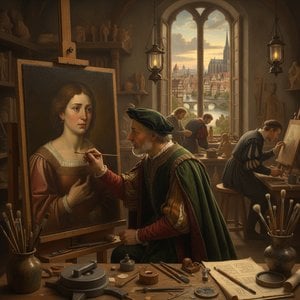
The Northern Awakening: Artistic Innovation & Cultural Transformation in the German Renaissance
Explore the artistic innovation of the German Renaissance! Discover Dürer, the Danube School & Reformation art. Learn about techniques, materials & lasting influence. Find museum-quality reproductions at ArtsDot.

Albert Kretschmer: Capturing 19th-Century Costume & the Seeds of Expressionism
Explore the exquisite costume studies of Albert Kretschmer (1825-1891). Discover his detailed illustrations, influence on art history & connection to early Expressionism. Learn about collecting this remarkable artist's work.

German Expressionism's 10 Defining Masterpieces | Art for Your Home
Explore 10 defining German Expressionism masterpieces – from Munch's 'The Scream' to Kandinsky’s abstracts. Discover the artists, stories & bold colors behind this powerful art movement. Find museum-quality reproductions at ArtsDot.com.