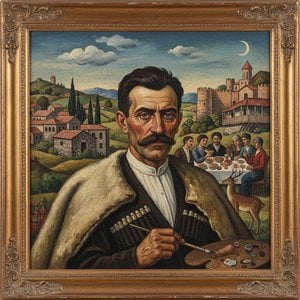
1873 - 1911

快速概览

  • Copyright status: Public domain
  • Lifespan: 38 years
  • Top 3 works: Road of Bologna
  • Born: 1873, Pieve di Sacco, Italy
  • Nationality: Italy
  • Museums on this site: 博洛尼亚美术学院

A Fleeting Glimpse of Belle Époque Italy: The Life and Art of Ugo Valeri

Ugo Valeri, born in the small town of Piove di Sacco near Padua, Italy, in 1873, remains a somewhat enigmatic figure within the landscape of Italian Symbolism. His life, tragically cut short in Venice in 1911 at just thirty-eight years old, left behind a body of work that, while not extensive, offers a poignant and evocative glimpse into the sensibilities of the Belle Époque. Valeri wasn’t merely a painter; he was a product of his time—a skilled illustrator steeped in the burgeoning graphic arts scene, deeply influenced by the literary currents of Symbolism, and acutely attuned to the shifting emotional climate of a rapidly modernizing Italy. His artistic journey, though brief, reveals a talent for capturing both the beauty and melancholy inherent in everyday life, making him a compelling figure worthy of renewed attention.

Early Training and Artistic Development

Valeri’s formal education included intermittent studies at the prestigious academies of Venice and Bologna. This period was crucial in establishing his technical foundation, but it wasn't within the rigid confines of academic tradition that he truly flourished. Instead, Valeri found himself drawn to the world of illustration, a field experiencing significant growth thanks to advancements in printing technology and the rise of popular magazines. He quickly gained recognition for his contributions to Italian periodicals at the turn of the century, becoming known for his delicate linework and atmospheric compositions. This early work demonstrates a clear affinity for Symbolist aesthetics—a movement that prioritized subjective experience, dreamlike imagery, and the exploration of inner psychological states over strict realism. The influence of artists like Gustave Moreau and Odilon Redon is subtly present in Valeri’s use of muted colors, ethereal forms, and suggestive symbolism. He wasn't simply replicating these styles; he was adapting them to reflect a distinctly Italian sensibility, one rooted in the country’s rich artistic heritage and its own unique cultural anxieties.

Landscapes and Figure Paintings: A Synthesis of Observation and Emotion

Valeri’s oeuvre is characterized by two primary subjects: landscapes and figure paintings. His landscapes are not merely topographical representations; they are imbued with a sense of atmosphere and mood, often depicting quiet scenes bathed in soft light. He possessed an exceptional ability to capture the subtle nuances of the Italian countryside—the hazy warmth of a summer afternoon, the stillness of a Venetian lagoon, the rugged beauty of rural life. These paintings evoke a feeling of nostalgia and longing, hinting at a deeper emotional resonance beneath the surface tranquility. His figure paintings, while fewer in number, are equally compelling. He focused on portraying individuals within intimate settings, often capturing moments of quiet contemplation or subtle interaction. There’s a remarkable sensitivity in his depiction of human character—a keen understanding of gesture, expression, and the unspoken emotions that lie beneath the veneer of social convention.

The Shadow of Symbolism and Family Legacy

Valeri's artistic vision was deeply intertwined with the broader Symbolist movement sweeping across Europe at the time. He wasn’t a radical innovator pushing the boundaries of form; rather, he was a skilled interpreter who translated the core tenets of Symbolism into his own unique visual language. His work shares the movement’s fascination with the subconscious, its rejection of materialism, and its emphasis on spiritual and emotional experience. It's also important to note Valeri’s familial connections within the Italian artistic community. He was the brother of Diego Valeri, a celebrated poet, literary scholar, and translator. This close relationship likely fostered a shared intellectual environment—a deep appreciation for literature, philosophy, and the power of artistic expression. The influence of his brother's work can be detected in the subtle narratives and poetic undertones present in many of Valeri’s paintings.

A Premature End and Lasting Significance

The untimely death of Ugo Valeri in 1911 robbed the Italian art world of a promising talent. His career, though brief, left behind a legacy that continues to resonate with those who appreciate his delicate artistry and evocative sensibility. While he may not be as widely recognized as some of his contemporaries, Valeri’s work offers a valuable insight into the artistic climate of the Belle Époque—a period characterized by both optimism and anxiety, tradition and modernity. His paintings are a testament to the power of observation, the beauty of subtlety, and the enduring allure of the Italian landscape. Today, his works can be found in private collections and museums, offering viewers a fleeting glimpse into the soul of an artist who captured the essence of a bygone era with remarkable grace and sensitivity.

趣味测试

每道题只有一个正确答案。

题目 1:
In what city was Ugo Valeri born?
题目 2:
What artistic movement heavily influenced Ugo Valeri's illustrations at the beginning of the century?
题目 3:
Besides being a painter, what other profession did Ugo Valeri practice?
题目 4:
Who was Ugo Valeri's brother?
题目 5:
In what year did Ugo Valeri die?

问答详情

Ugo Valeri 的哪些作品浏览量最高?

Ugo Valeri 拥有一个 统计数据 页面,其中展示了该艺术家在 本站 上的作品统计数据。

Ugo Valeri 的艺术风格是如何随时间演变的?

Ugo Valeri 的 艺术历程 是一个随滚动条变化的艺术时间轴,按创作时期进行章节划分,并按时间顺序呈现艺术家的作品。

在哪里可以按主题查看Ugo Valeri的作品分布?

Ugo Valeri 的 主题索引 旨在通过主题对艺术家的作品进行分类索引。

Ugo Valeri 最常使用的色彩有哪些?

您可以在Ugo Valeri的色彩基因页面上,深入研究其在本站所列作品中的色彩运用。

Ugo Valeri 来自哪里?

Ugo Valeri 出生于 Italy。

Ugo Valeri 是否还有其他别名或曾用名?

Ugo Valeri 也被称为 Ugo Valeri (Full Name)。

在哪里可以浏览 Ugo Valeri 的全部作品?

您可以在 Ugo Valeri 的 全部作品 页面上浏览其在 本站 上的所有作品。

Ugo Valeri 出生于哪个国家和城市?

Ugo Valeri 出生于 Italy 的 Pieve di Sacco。

可以按颜色对Ugo Valeri的作品进行排序吗?

Ugo Valeri 的 色彩索引 页面按色彩对艺术家的作品进行了分类整理。