Portrait of Gislebertus

Your Guide to the 11 Most Famous Gislebertus Paintings

Updated October 2026 · ranked by our popularity score (searches, visits and orders for each work) · 11 works by Gislebertus in our catalogue

In short

Gislebertus's best-known piece is Tympanum of the main portal (detail) (1130). You'll find it at the 奥坦圣拉撒尔大教堂 in 奥通. Next on the list are Pilgrims (1120) and Last Judgment (detail) (1130). We have 11 works by Gislebertus in our catalogue; this guide picks out the 11 best known, with the year, the museum and the story of each piece.

1120 – 1135 Romanesque Most works: 奥坦圣拉撒尔大教堂

The 10 Gislebertus paintings to know first

1
Tympanum of the main portal (detail) (1130) by Gislebertus

Tympanum of the main portal (detail)

1130 · Stone · 奥坦圣拉撒尔大教堂, 奥通

The Tympanum of the main portal (detail) by Gislebertus emerges from the stone of the Saint-Lazare Cathedral in Autun, France. Created about 1130, this relief captures a profound moment of divine reckoning. It presents a scene from the Last Judgment, where the boundaries between the earthly and the eternal seem to dissolve. The figures move with a frantic, stylized energy that defines the Romanesque style. Every carved line speaks to…

2
Pilgrims (1120) by Gislebertus

Pilgrims

1120 · Stone · 奥坦圣拉撒尔大教堂, 奥通

In the stone of Saint Lazare Cathedral in Autun, France, the relief titled Pilgrims captures a moment of quiet devotion. Created by the French Romanesque sculptor Gislebertus about 1120, the work depicts figures caught in a singular act of prayer. These travelers move through the heavy, carved medium to find a stillness in the midst of their movement. The stone holds the weight of their supplication.

3
Last Judgment (detail) (1130) by Gislebertus

Last Judgment (detail)

1130 · Stone · 奥坦圣拉撒尔大教堂, 奥通

The work before us is the Last Judgment (detail) by Gislebertus. This relief carving, created about 1130, offers a focused view of the profound theological drama unfolding within the Saint-Lazare Cathedral in Autun, France. It is situated within the Кафедральний собор Святого Лазаря в Отюні, Autun, where it remains a central element of the cathedral's architectural and spiritual program.

10
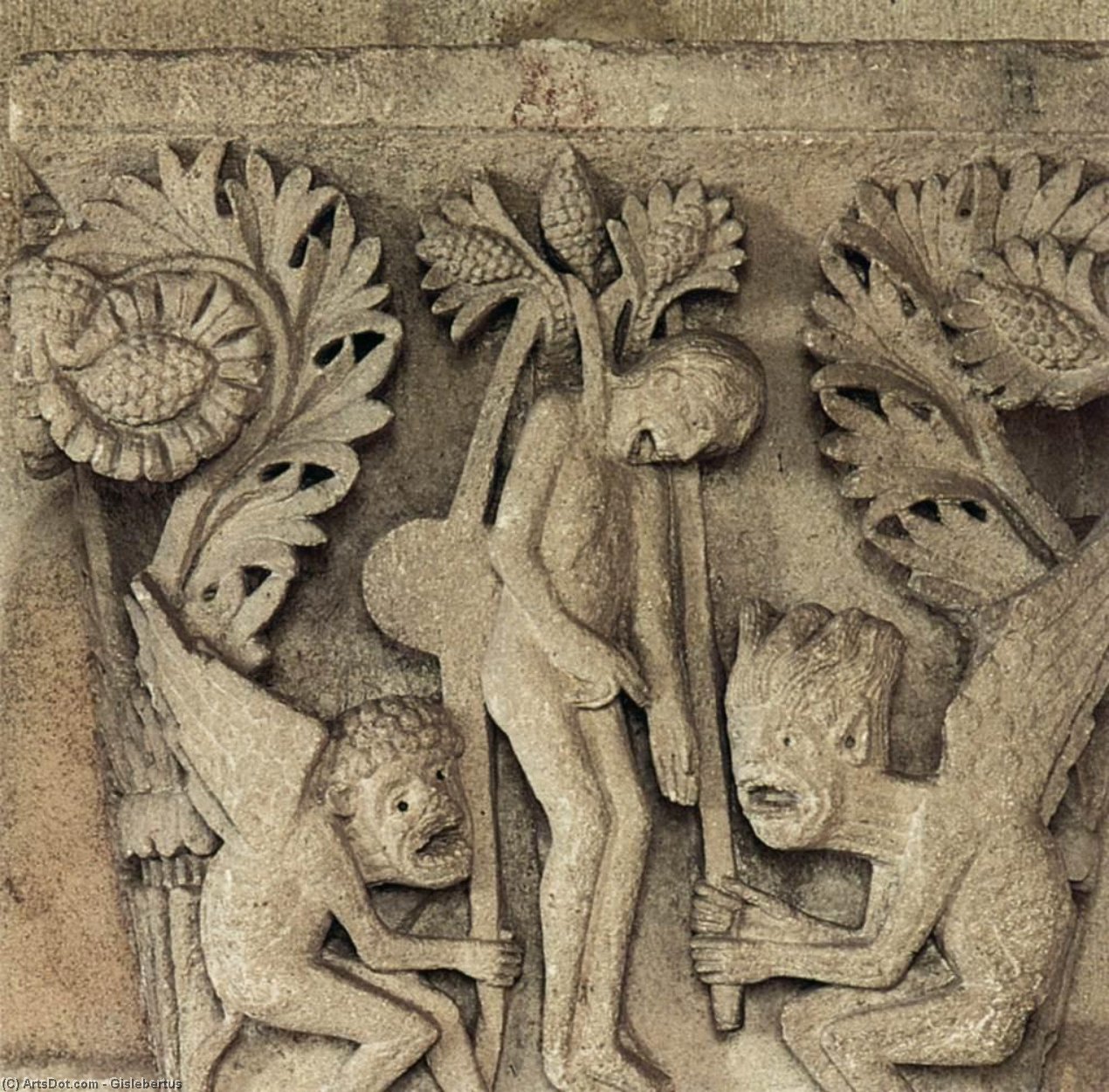
猶大自殺 (1120) by Gislebertus

猶大自殺

1120 · 布面丙烯 · 奥坦圣拉撒尔大教堂, 奥通

圣拉撒尔教堂的《犹大自杀》:罗马风格雕塑中的悲剧与象征 圣拉撒尔教堂位于法国奥敦,是罗马风格建筑艺术的瑰宝。其中最令人瞩目的是教堂正门上的 tympanum(圆顶上方装饰板),这幅作品正是大师吉尔塞伯图斯创作的杰作,《犹大自杀》,于公元1120年代完成。 这件雕塑不仅展现了圣经故事中的一个关键时刻,更体现了当时艺术家的精神追求和审美水平。 历史背景与艺术传统的影响 奥敦教堂在罗马风格时期建设时,受到克鲁尼修道院的强大影响。 克鲁尼修道院是欧洲宗教艺术中心,艺术家们在这里学习并传承着一种强调圣经故事叙述的艺术传统——通过雕塑来传播基督教教义。 吉尔塞伯图斯作为这一传统中的佼佼者,他的作品深深扎根于当时社会文化精神之中,反映了人们对信仰和道德的关注。 这幅作品创作于罗马风格时期,标志着欧洲艺术发展的重要阶段,也体现了艺术家们对宗教题材的热爱与探索。 作品分析:技术与象征意义的解读 吉尔塞伯图斯运用了精湛的石雕技艺,将犹大自杀这一悲剧场景栩栩如生地呈现于 tympanum 上。 他采用三角形构图设计,巧妙地平衡了画面视觉效果,同时通过对人物形象的刻画和细节处理,表达了深刻的情感与象征意义。 吉尔塞伯图斯创作时,特别注重表现人类的痛苦与绝望,这幅作品并非单纯的历史记录,而是艺术家们对生命意义的思考与艺术表达。 自杀的犹大被描绘为充满愤怒和恐怖的恶魔力量所诱惑,两个恶魔形象辅助犹大进行自杀行为,象征着人类灵魂在面对邪恶时所经历的挣扎与痛苦。 这幅作品不仅展现了当时罗马风格雕塑的艺术水平,更蕴含着基督教文化中的重要象征意义——对罪恶的忏悔和对救赎的渴望。 吉尔塞伯图斯的其他作品与艺术成就 虽然关于吉尔塞伯图斯的生平和创作活动的信息较为匮乏,但他的作品在奥敦教堂和其他地方都享有盛名。 他不仅是圣拉撒尔教堂 tympanum 的杰作,《犹大自杀》,还创作了许多其他精美的石雕作品,例如教堂内的柱子装饰以及其他宗教题材的雕塑艺术品。 这些作品展现了他卓越的艺术天赋和对罗马风格艺术的贡献,为我们了解当时欧洲艺术文化提供了宝贵的历史资料。 吉尔塞伯图斯的作品不仅具有高度的艺术价值,也反映了当时社会文化精神的审美追求与道德伦理观念。 他是一位伟大的艺术家,他的作品将永远激励着后人不断探索艺术创作的奥秘和美学价值。 作品名称:《犹大自杀》 创建年代:公元1120年代 材料:石雕 地点:圣拉撒尔教堂,奥敦 来源:奥敦博物馆收藏

Numbers 11 to 11: more Gislebertus paintings

What Gislebertus painted most

The four subjects that come up most often in these pieces, each with its best-known example.

Where you can see Gislebertus's paintings

The 2 museums that hold the most of the paintings on this page.

Museum City Works by Gislebertus Paintings from this list
奥坦圣拉撒尔大教堂, 奥通奥坦圣拉撒尔大教堂 奥通 9 Tympanum of the main portal (detail), Pilgrims, Last Judgment (detail)
Musée Rolin, AutunMusée Rolin Autun 1 Eve

Year by year: the best-known Gislebertus pieces

The dated Gislebertus pieces on this page all come from 1130. Here they are, in order of fame.

Works per year

Pick a year to see its pieces.

Gislebertus: quick answers about the paintings

What is Gislebertus's best-known painting?See the answer

Top of the list is Tympanum of the main portal (detail) (1130), 奥坦圣拉撒尔大教堂, 奥通. Right behind it: Pilgrims (1120) and Last Judgment (detail) (1130).

What age was Gislebertus when creating Tympanum of the main portal (detail)?See the answer

10 years old. Gislebertus was born in 1120, and Tympanum of the main portal (detail) dates from 1130.

What are Gislebertus's top 10 paintings?See the answer

Tympanum of the main portal (detail), Pilgrims, Last Judgment (detail), Dream of the Magi, Tympanum of the main portal, Eve, Last Judgment, Main portal, Last Judgment (detail) and 猶大自殺. You'll find the year and the museum of each in the list above.

How many works by Gislebertus are in your catalogue?See the answer

We have 11 works by Gislebertus in our catalogue.

In which museums can you see Gislebertus's famous works?See the answer

You'll find most of them in 奥坦圣拉撒尔大教堂 (奥通) and Musée Rolin (Autun). The museum list above has the full breakdown.

When did Gislebertus make the most famous pieces?See the answer

In 1130, more than any other time: 7 of the 11 pieces on this page date from then, Tympanum of the main portal (detail) among them.

Which subjects did Gislebertus paint most often?See the answer

Medieval art (3), Autun cathedral (3) and People (2), out of the 11 pieces on this page.

Which medium shows up most in Gislebertus's paintings?See the answer

Stone, used in 3 of the 11 pieces on this page.

What style or movement is Gislebertus known for?See the answer

Romanesque, as you can see in the pieces on this page.

Which famous Gislebertus paintings are at the 奥坦圣拉撒尔大教堂?See the answer

You can see 9 of the pieces on this page at the 奥坦圣拉撒尔大教堂, 奥通, including Tympanum of the main portal (detail), Pilgrims and Last Judgment (detail).

Where can I order a Gislebertus reproduction?See the answer

Yes. Every painting on this page is available as a hand-painted oil reproduction or a print, in the size that suits you. Just open the painting's page to order.

Gislebertus's story

Gislebertus: The Sculptor of Autun Cathedral’s Divine Vision

Gislebertus, a name etched in stone and whispered through the centuries, stands as one of the most remarkable figures of Romanesque sculpture. Specifically celebrated for his profound contribution to Saint Lazare Cathedral in Autym, France, he emerged from the fertile artistic landscape of Burgundy during a period profoundly shaped by religious fervor and burgeoning architectural ambition. Born sometime around 1120, Gislebertus lived through an era where art served as the primary language of the faithful. While biographical details remain scarce, scholars believe he was trained at Cluny Abbey, arguably the epicenter of European monastic art and intellectual life at the time. This formative experience instilled in him a deep understanding of biblical narratives and imbued his work with an unwavering devotion to Christian themes.

His initial role at Cluny involved assisting the master sculptor, cementing his position within a tradition prioritizing didactic storytelling—conveying moral lessons through visual representation. The cathedral’s ambitious project demanded exceptional skill, and Gislebertus quickly established himself as a pivotal talent. Recognizing the importance of providing solace to pilgrims afflicted with leprosy—a prevalent ailment during the 12th century—the Abbey envisioned Saint Lazare as more than just a place of worship; it was intended as a sanctuary for the marginalized. This vision profoundly impacted Gislebertus’ artistic sensibilities, prompting him to create reliefs that resonated with compassion and hope, featuring imagery designed to uplift those facing immense suffering.

Mastery of Emotion and Narrative Relief

The true genius of Gislebertus lies in his ability to translate complex theological concepts into visceral, physical forms. His work at Autun is characterized by a dramatic use of line and shadow that breathes life into the cold stone. In masterpieces such as the Suicide of Judas, created around 1120-30, he captures the raw horror and despair associated with treason. Through the depiction of hanging figures and menacing demonic entities, Gisleberus showcases an exceptional skill in capturing human psychological torment, a hallmark of the Romanesque style that pushes the boundaries of medieval expression.

Beyond the scenes of tragedy, his work also celebrates the spiritual journey of the faithful. In his Pilgrims relief, one can observe a powerful depiction of devotion, where strong lines and dramatic shadows emphasize the physical and spiritual weight of the pilgrimage. This ability to oscillate between the terrifying aspects of divine judgment and the quiet strength of religious perseverance makes his oeuvre uniquely captivating. His sculptures do not merely decorate a building; they act as a window into the medieval soul, inviting the viewer to contemplate the eternal struggle between good and evil.

Legacy and Historical Significance

The artistic development of Gislebertus represents a crucial bridge in the evolution of European art. While his roots are firmly planted in the Romanesque tradition of Cluny, his expressive power and narrative complexity hint at the burgeoning naturalism that would later define Gothic art. His work on the Dream of the Magi further demonstrates this sophisticated approach to storytelling, blending historical reverence with a sense of wonder.

The enduring significance of Gislebertus can be summarized through several key contributions:

  • Narrative Innovation: He transformed architectural elements like tympanums into complex, readable storybooks for the illiterate masses.
  • Emotional Depth: He moved beyond static iconography to introduce psychological depth and human emotion into stone sculpture.
  • Cluniac Influence: He carried the high intellectual and spiritual standards of Cluny Abbey into the public sphere of cathedral architecture.
  • Architectural Integration: His ability to harmonize intricate sculptural detail with the massive, heavy forms of Romanesque architecture remains a pinnacle of medieval craftsmanship.

Today, the works of Gislebertus remain some of the most studied and revered examples of 12th-century art. He remains a master whose hands, though long since returned to dust, continue to speak through the enduring stone of Autun, reminding us of a time when art was the ultimate vessel for the divine.

All 11 works by Gislebertus →