


1



更新于 October 2026 · 基于我们的流行度评分排名(每件作品的搜索量、访问量及订单量) · 11 件 Bernard Buffet 作品收录于我们的目录中
简而言之
如果你知道一幅 Bernard Buffet 的画作,那很可能就是《Untitled (634)》。 Provence Landscape (1952) 和 Quatre Zinnias (1967) 构成了人们一眼就能认出的三件作品。 我们的目录中包含 Bernard Buffet 的 11 件作品。以下是 11 件最广为人知的作品,并附有创作年份、馆藏地点及其艺术特色。
收藏了本页中大部分画作的 2 家博物馆。
| 博物馆 | 城市 | Bernard Buffet 的作品 | 此列表中的画作 |
|---|---|---|---|
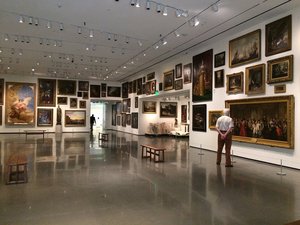 Rhode Island School of Design Museum of Art |
普罗维登斯 | 1 | Provence Landscape |
 伍斯特艺术博物馆 |
伍斯特 | 1 | Quatre Zinnias |
Bernard Buffet 的作品跨越了从 1952 到 1967 共 16 年。您可以逐年浏览,欣赏每年的代表之作。
选择年份以查看该年份的作品。


榜首作品是Untitled (634)。紧随其后的是:Provence Landscape (1952)和Quatre Zinnias (1967)。
Untitled (634), Provence Landscape, Quatre Zinnias, Untitled (154), Untitled (175), Untitled (498), Untitled (612), Untitled (360), Untitled (917) 及 Untitled (410)。您可以在上方的列表中找到每件作品的创作年份及所属博物馆。
我们的目录中共有 11 件 Bernard Buffet 的作品,创作时间从 1952 到 1967。
您可以在 Rhode Island School of Design Museum of Art (普罗维登斯) 及 伍斯特艺术博物馆 (伍斯特) 中找到其中的大部分作品。上方的博物馆列表提供了详细分类。
此处的早期作品为 Provence Landscape (1952);最新作品为 Quatre Zinnias (1967)。
正如您在这些作品中所看到的,Expressionism。
Bernard Buffet (1928–1999) remains one of the most evocative and polarizing figures in twentieth-century French art. Born in Paris during a period of profound global upheaval, his very existence was shaped by the shadows of the Second World War. This early exposure to the fragility of life left an indelible mark on his psyche, manifesting in a style that many critics famously labeled miserabilist. Yet, to reduce his work to mere despair is to overlook the profound technical mastery and the quiet, structural elegance that define his oeuvre. Buffet did not merely paint sadness; he constructed it through a rigorous, almost architectural application of line and form, creating a visual language that spoke to the collective anxieties of a post-war generation.
His formative years were marked by both artistic awakening and personal tragedy. A student at the École Nationale Supérieure des Beaux-Arts, Buffet was deeply influenced by the stark realism of Gustave Courbet, whose presence could be felt in Buffet’s later tributes to the master. However, it was the loss of his mother to cancer in 1945 that perhaps most significantly anchored his artistic preoccupation with mortality and decay. This personal grief found a voice in his early works, where the sharp, angular lines and muted palettes began to coalesce into a signature style—one that captured the skeletal essence of his subjects, whether they were lonely figures or decaying still lifes.
Buffet’s rise to international prominence in the 1950s was nothing short of meteoric. He emerged as a central figure of the L'homme témoin (The Witness Man) movement, a group that embraced the raw, emotional intensity of Expressionism to reflect the disillusionment of the era. His work during this period often featured a hauntingly beautiful tension between order and chaos. Through his meticulous use of fine, nervous lines, he could transform a simple arrangement of flowers or a piece of meat into a meditation on the passage of time. This technique allowed him to bridge the gap between the figurative tradition and a modern, psychological depth that resonated with a public seeking meaning in a fractured world.
The influence of masters like Edvard Munch and Giorgio Morandi is evident in his ability to evoke profound solitude through minimalist compositions. His paintings often possess a rhythmic, almost musical quality, where the starkness of the subject matter is balanced by a sophisticated sense of space. This period of his career saw him achieving a level of fame that drew frequent comparisons to Pablo Picasso, making him a household name and a dominant force in the Parisian art scene. His ability to command both the attention of the avant-garde and the broader public was a rare feat in an era increasingly divided between abstraction and figuration.
Despite his immense success, Buffet’s journey was not without its tribulations. By the late 1950s, shifting artistic tides toward total abstraction and criticisms regarding his prolific output and lavish lifestyle led to a period of professional alienation. The very qualities that had made him a star—his accessibility and his commitment to the figurative—became targets for a changing art establishment. Nevertheless, Buffet’s dedication to his craft never wavered. He continued to produce an astonishing volume of work, including paintings, prints, and sculptures, ensuring that his artistic vision remained a constant, even when the spotlight dimmed.
In recent decades, a profound reassessment of his importance has taken place within the art historical community. Collectors and curators are rediscovering the nuanced complexity of his later works and recognizing the enduring power of his early masterpieces. His significance lies not only in his role as a chronicler of post-war malaise but also in his ability to find a haunting, structural beauty within the themes of loss and decay. Today, Bernard Buffet is remembered as an artist who dared to look directly at the uncomfortable truths of existence, leaving behind a legacy that continues to haunt and inspire the modern imagination.


