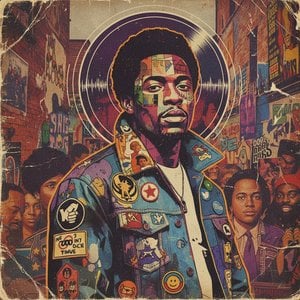
Gavin Jantjes: A Life Painted in Resistance
Born in Cape Town’s vibrant, yet deeply fractured, District Six in 1948, Gavin Jantjes' life and art are inextricably linked to the tumultuous history of apartheid South Africa. His early experiences—a childhood shaped by both artistic exploration at the Children’s Art Centre and the stark realities of racial segregation—laid the foundation for a career dedicated to confronting injustice through visual expression. This wasn’t merely an aesthetic choice; it was a deeply personal commitment, fueled by witnessing firsthand the devastating impact of systemic oppression.
Jantjes' formal artistic training began at the Michaelis School of Fine Art at the University of Cape Town, where he honed his skills and developed a critical perspective on South African society. However, recognizing the limitations imposed by the apartheid regime, he sought opportunities beyond its borders. A DAAD scholarship propelled him to Hamburg in 1970, offering a crucial period of artistic growth amidst a different cultural landscape. It was during this time that he began experimenting with printmaking, a medium that would become central to his distinctive visual language.
His departure from South Africa in 1970 marked the beginning of a deliberate exile, a strategic move aimed at amplifying his artistic voice and engaging with international dialogues about social justice. He found refuge in Germany, where he continued to develop his craft, exploring themes of displacement, identity, and resistance. This period was pivotal, allowing him to refine his techniques and cultivate a deeper understanding of the complexities of colonialism and its enduring legacies.
The Rise of an Activist Artist
Jantjes’ artistic trajectory took a significant turn in 1974 with the creation of *A South African Colouring Book*, a series of collaged serigraphs that offered a subversive commentary on the realities of apartheid. Presented as a children's coloring book, the work juxtaposed idyllic images with stark depictions of racial segregation and inequality, exposing the hypocrisy inherent in the regime’s propaganda. This project garnered considerable attention and solidified Jantjes’ reputation as an artist committed to challenging the status quo.
Following this impactful series, he continued to produce works that engaged directly with the political landscape of South Africa. The 1982 Culture and Resistance Symposium in Botswana proved a watershed moment, bringing together exiled artists, writers, and activists to discuss strategies for cultural resistance. Jantjes’ contribution—his assertion that “artists should function as verbs in the grammar of culture”— underscored his belief in art's capacity to actively participate in social change. He saw art not merely as representation but as a catalyst for action, a tool for disrupting power structures and fostering solidarity.
His work during this period—including *Before Maputo* (1982) and *It is our peoples* (1974)—explored the intersections of African history, colonialism, and resistance. These pieces often depicted symbolic encounters between indigenous communities and colonizing forces, prompting viewers to confront uncomfortable truths about the past and consider the ongoing implications of historical injustices.
A Shift Towards Abstract Expressionism
The 1980s witnessed a shift in Jantjes’ artistic focus, marked by an exploration of abstract expressionism. Moving away from overt political imagery, he began to create works characterized by layered textures, vibrant colors, and dynamic compositions. These paintings—often referred to as the “Korabra” series—were inspired by his travels and experiences abroad, reflecting a broader engagement with global cultures and artistic traditions.
The "Korabra" series, named after a term used in South Africa to describe a collection of diverse stories and narratives, sought to capture fleeting moments of beauty and emotion. These works are not easily deciphered; they invite viewers to engage in a personal dialogue with the artist’s vision, interpreting the layers of color and form through their own experiences and perspectives.
Legacy and Recognition
Jantjes' career has been marked by both critical acclaim and political activism. His work has been exhibited extensively throughout Europe and North America, earning recognition from prestigious institutions such as the Tate Britain and the Smithsonian Institution’s National Museum of African Art. He has also served as a consultant and advisor to various arts organizations, advocating for diversity and inclusivity within the art world.
His retrospective at the Whitechapel Gallery in 2024, “To Be Free!”, offered a comprehensive overview of his artistic journey—from his early political prints to his later abstract explorations. The exhibition underscored Jantjes’ enduring commitment to using art as a vehicle for social change and his profound impact on contemporary visual culture. His work continues to resonate today, reminding us of the power of art to challenge injustice, foster dialogue, and inspire hope.