A Life Etched in Industry: The World of František Hudeček
František Hudeček, born on April 7th, 1909, in the small Bohemian village of Nemečice u Hořejšova, wasn’t destined for a life steeped in grand artistic tradition. His early world was one of rural simplicity, but it quickly became interwoven with the burgeoning industrial landscape that would profoundly shape his vision. The Czech Republic at the turn of the 20th century was undergoing rapid transformation, and this dynamic shift – the collision of agrarian life with the relentless march of modernity – became a central theme in Hudeček’s oeuvre. He wasn't merely *documenting* change; he was interpreting its emotional weight, the human cost and quiet dignity found within it. His formal training began at the Uměleckoprůmyslové školy v Praze (School of Applied Arts in Prague), where he honed his skills in painting and graphic arts, but it was his immersion in the realities of everyday life that truly fueled his artistic development.
The Spirit of ‘Skupina 42’
A pivotal moment in Hudeček's career came with his membership in *Skupina 42*, a collective of Czech artists formed in 1942 during the challenging years of the Nazi occupation. This wasn’t simply an aesthetic alliance; it was a statement of cultural resistance, a refusal to succumb to imposed ideologies. The group sought to portray authentic Czech experiences, focusing on the lives of ordinary people and the landscapes that defined their nation. Hudeček found kinship with artists who shared his commitment to social realism, though his style remained distinctly personal. While some members leaned towards more overtly political themes, Hudeček’s work often possessed a quiet introspection, a focus on the psychological impact of industrialization rather than direct condemnation or celebration. He wasn't creating propaganda; he was offering empathy and understanding. The group provided a vital platform for his early exhibitions and helped establish him as a significant voice within the Czech art scene.
Themes of Labor and Landscape
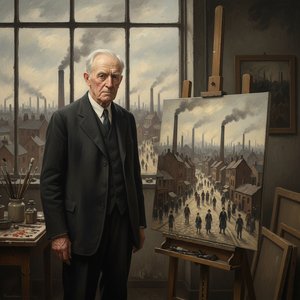
Hudeček’s paintings are immediately recognizable for their subject matter: factories, mines, railway yards, and the workers who populated them. But to call them simply “industrial landscapes” would be a gross simplification. He wasn't interested in the cold mechanics of production; he was captivated by the *human element* within these environments. His figures aren’t heroicized or romanticized. They are often depicted with a sense of weariness, resilience, and quiet dignity. The color palettes he employed – muted grays, browns, and ochres – further reinforce this mood of solemnity. He masterfully captured the interplay of light and shadow within these industrial spaces, creating compositions that feel both monumental and intimate. His work is a testament to the power of observation, his ability to find beauty and meaning in the seemingly mundane aspects of working-class life. He often depicted scenes from around Prague and the surrounding regions, grounding his art in specific locales and experiences.
A Lasting Legacy: Hudeček’s Place in Czech Art History
František Hudeček continued to paint and exhibit throughout the latter half of the 20th century, solidifying his reputation as a key figure in modern Czech art. His work reflects a unique blend of social realism, psychological insight, and technical skill. While he never achieved widespread international fame, his paintings remain deeply valued within the Czech Republic for their honest portrayal of a nation undergoing profound change. He offered a counter-narrative to more idealized depictions of industrial progress, reminding viewers of the human cost often obscured by grand narratives of economic development. His influence can be seen in subsequent generations of Czech artists who sought to explore themes of social justice and working-class life. He passed away on May 13th, 1990, leaving behind a body of work that continues to resonate with its quiet power and enduring empathy.
Explore the poignant world of L.S. Lowry, Britain's iconic chronicler of industrial life. Discover his unique style, 'matchstick men', and captivating landscapes. Find original artwork & expert appraisal at ArtsDot.
A discarded letter brings news of the loss of Smolensk to the court of Queen Bona Sforza. Why did the jester see the crisis before the rest of the world?