

 效果预览
效果预览
 购买印刷品
购买印刷品 分享
分享 分享
分享
 详情
详情

 下载
下载
 相似作品
相似作品 X射线
X射线 幻灯片播放
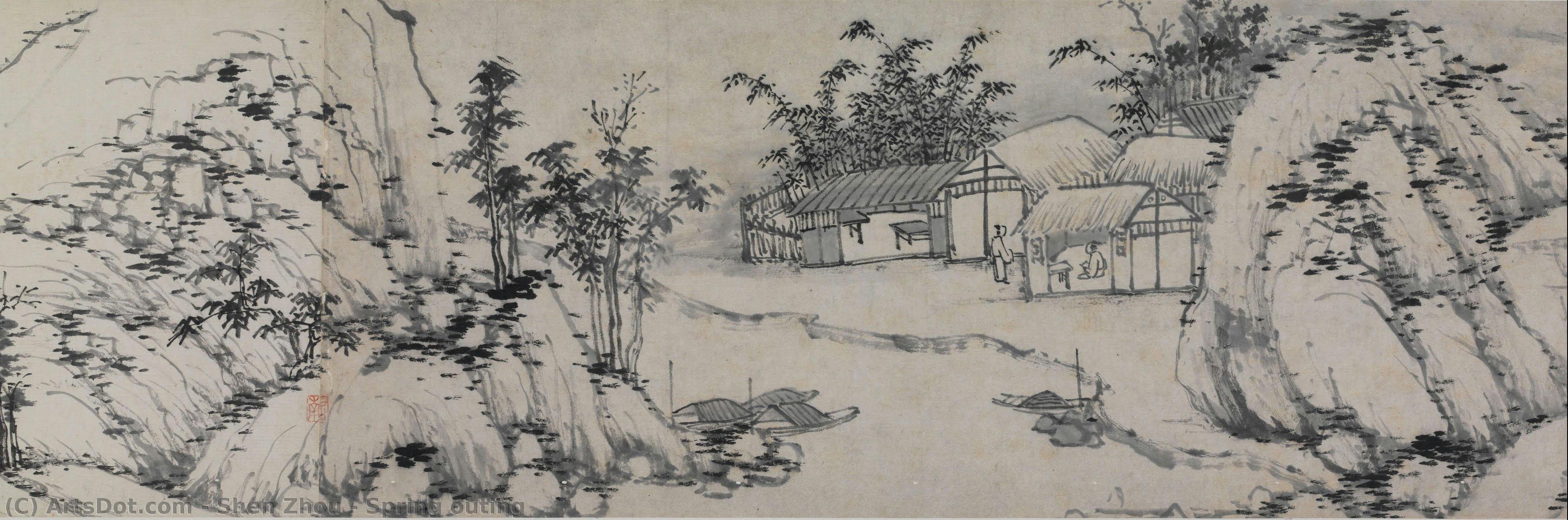
幻灯片播放春行訪友圖
 布面丙烯
布面丙烯- 墙面艺术品
- Chinese Traditional Art
 356.0 x 34.0 cm
 香港藝術館
香港藝術館
 展开详情
展开详情




P118B $10

P118H $10

P118W $10

P438Z $10

P508JH $12

P508YH $12

P805H $10

P805Z $10

P919BZ $10

P919G $10

P919XJ $10

P959ZH $10

P968JZ $12

W106C $8

W218G $10

W218JH $8

W218Y $10

W307PJ $10

W316G $10

W316PJ $8

W316Y $10

W398PJ $8

W4111J $10

W500HY $15

W500JH $15

W692G $12

W849H $8

W940BG $15

W953PJ $8




从与原作比例一致的预设尺寸中进行选择。

您可以输入自定义尺寸,以适配特定的画框或空间。如果所选尺寸与原图比例不符,我们将通过裁剪作品或添加手绘元素来扩展画面。数字样稿将在制作开始前发送给您确认。
请注意,屏幕预览无法准确反映实际的裁剪或扩展效果,只有样稿才能真实呈现最终的构图。
虽然我们提供定制尺寸服务,但为了保留原作比例,建议您从预设列表中选择尺寸。
下单后,ArtsDot.com 团队将通过电子邮件联系客户获取具体要求,并提供效果预览图。


 玻璃选项仅适用于110厘米以下的尺寸。

春行訪友圖
复制材质
复制品尺寸
-


最终总价
$ 288
作品详情
春行訪友圖:沈周的靜謐與傳統美學
沈周(1427年-1509),作為明代文人畫家四大家之一,以其對藝術的熱愛和對生活哲學的思考而聞名於後世。他出生於蘇州附近的一個富裕家庭,擁有良好的教育背景,卻選擇了與當時社會普遍期望截然不同的人生道路——遠離官場,專注於家庭生活和藝術創作。這種選擇不僅塑造了他個人的人生觀,也深深影響了他的藝術風格和作品價值。 他的一生充滿了對傳統美學的堅持和對自然景觀的熱愛,為我們留下了豐富而珍貴的藝術遺產。 沈周的畫風深受元代畫家們的影響,尤其是在黃庭堅、趙傳等人的指導下,他逐漸形成了獨特的藝術風格——“吳派”。這種風格注重寫意和氛圍營造,力求捕捉自然景觀中的靈氣與美感。 他對色彩運用也極為講究,常用淡雅的墨色來表現山水畫的靜謐與蒼勁。這種風格不僅反映了當時文人階層的思想情感,也成為中國傳統藝術的重要代表之一。 沈周的作品具有鮮明的個人特色和時代精神,在藝術史上佔據著重要的地位。 他不僅是一位傑出的畫家,更是一位充滿人文關懷的哲學家和思想家,他的作品蘊含著豐富的文化價值和歷史意義。 沈周最著名的作品之一便是《春行訪友圖》,這幅畫作以其精湛的技法和優美的意境而深受人們的喜愛。 這幅畫作描繪了一幅冬日山水風景,畫面中的景色寧靜祥和,充滿了詩情畫意。畫家巧妙地運用了黃庭堅和倪瓒的畫風,將兩位畫家的風格融合在一起,呈現出獨特的藝術魅力。 在畫面左側,沈周以黃庭堅的長毫筆絋畫了山石,並採用了倪瓒的點苔技巧來表現雪景。這種技法不僅能夠準確地記錄自然景象,還能夠通過對色彩和線條的處理來營造出豐富的情感氛圍。 畫面中的建築和人物也同樣具有重要的藝術意義。沈周將建築和人物巧妙地安排在畫面的中心區域,使畫面呈現出平衡與協調的美感。 他對人物造型的刻畫也極為細緻入微,力求表現人物的神韻與氣質。這種風格不僅反映了當時文人階層的生活方式和精神追求,也成為中國傳統藝術的重要組成部分。 《春行訪友圖》不僅是一幅美麗的山水畫作,更是一件具有深刻文化意義的藝術品。 它以其優美的畫面構成和豐富的情感表達而感動了無數觀眾,為我們帶來了一種對自然與人文精神的欣賞與思考。 這幅畫作也成為中國傳統藝術的瑰寶,值得我們細細品味和研究。- 作品名稱:春行訪友圖
- 作者:沈周
- 生產年代:1483年
- 主要風格:吳派畫風
- 材料:黑墨與紙張
相似艺术品


艺术家简介
A Life Dedicated to Art and Contemplation
Shen Zhou, a name synonymous with the flourishing of scholar-artist ideals in Ming dynasty China, was born in 1427 near Suzhou into a family whose wealth stemmed from both land ownership and service as tax collectors. This fortunate circumstance afforded him an upbringing steeped in learning and cultural refinement, yet he consciously chose a path diverging from the conventional expectations of his social standing. Rather than pursuing official examinations and a career within the imperial bureaucracy, Shen Zhou dedicated himself to filial piety, caring for his widowed mother, Chang Su-wan. This decision wasn’t one of resignation but rather a deliberate embrace of a reclusive life centered on artistic pursuits, intellectual exchange, and quiet contemplation – a lifestyle that would profoundly shape both his art and legacy. He lived a long life, dying in 1509, witnessing significant shifts within the Chinese political and artistic landscape, and ultimately becoming a pivotal figure in defining a new aesthetic direction.The Rise of the Wu School and a Revivalist Spirit
Shen Zhou’s artistic development unfolded during a period of considerable transition in Chinese painting history. The relocation of the Ming capital from Nanjing to Beijing created a cultural distance, lessening the direct influence of imperial tastes and allowing for regional styles to flourish. It was within this environment that Shen Zhou emerged as the founder of the Wu School, based in Suzhou. This wasn’t merely a geographical designation; it represented a conscious revival of artistic principles championed by scholar-painters of the preceding Yuan dynasty. These artists viewed painting not as a profession or a means to courtly favor, but as an integral part of self-cultivation – a meditative practice reflecting one's inner world and understanding of the universe. The Wu School painters deliberately distanced themselves from the more formal, technically precise style favored by the Ming court, seeking instead a return to the expressive freedom and individualistic spirit of earlier masters.Mastering Tradition, Forging a Unique Style
Shen Zhou’s artistic foundations were deeply rooted in the legacy of Yuan dynasty painters like Wang Meng, Huang Gongwang, and Wu Zhen. He meticulously studied their techniques, absorbing their compositional strategies and brushwork nuances. However, he wasn't simply an imitator; he possessed a remarkable ability to synthesize these influences with his own innovative sensibilities. His landscapes are particularly celebrated for their meticulous detail, reflecting both a reverence for Chinese history and the philosophical underpinnings of Confucianism. He also became renowned for his distinctive “boneless” flower paintings – delicate renderings of blossoms and foliage achieved without strong outlines, echoing the ethereal quality found in the works of Yuan masters. This technique demanded exceptional control over ink wash and an intuitive understanding of form. Beyond technical skill, Shen Zhou’s work is characterized by a harmonious integration of painting, poetry, and calligraphy. He frequently collaborated with fellow artists, engaging in gatherings where these art forms intertwined, creating holistic expressions of artistic vision. The accompanying poems were not mere embellishments but integral components of the artwork itself, adding layers of meaning and emotional resonance.A Lasting Legacy: The Four Masters and Beyond
Shen Zhou’s impact on Chinese art history is immeasurable. His establishment of the Wu School fostered a new generation of scholar-artists who carried forward his ideals of artistic independence and expressive freedom. He is rightfully regarded as one of the “Four Masters of Ming,” alongside Wen Zhengming, Tang Yin, and Qiu Ying – a testament to his enduring influence and exceptional talent. His art continues to be studied and admired for its technical brilliance, profound philosophical depth, and embodiment of the scholar-artist ideal. Shen Zhou’s work represents not just a revival of past traditions but a vital contribution to the ongoing evolution of Chinese painting, shaping the course of Ming dynasty aesthetics and leaving an indelible mark on subsequent generations of artists. He remains a significant figure whose serene landscapes and delicate floral studies continue to captivate and inspire.
Shen Zhou
1427 - 1509 , China
艺术家简介
- Artistic Movement Or Style: Wu School
- Artists Or Movements Influenced By This Artist:
- Wen Zhengming
- Tang Yin
- Qiu Ying
- Wu School
- Artists Who Influenced This Artist:
- Wang Meng
- Huang Gongwang
- Wu Zhen
- Date Of Birth: 1427
- Date Of Death: 1509
- Full Name: Shen Zhou
- Nationality: Chinese
- Notable Artworks:
- Landscape with Four Pines
- Marsh Scene with Birds
- Autumn Colors among Streams…
- Place Of Birth: Xiangcheng, China
相关文章

The Beauty of Ink Wash: Discover Serene & Soulful Art for Your Home
Discover the tranquil beauty of ink wash painting. Explore how Sumi-e and monochrome landscapes bring Zen-inspired serenity and soulful elegance to your home decor through expert curation and timeless East Asian aesthetics.


Beyond the Horizon: 10 Landscape Masterpieces for Your Home Decor
Journey through 10 breathtaking landscape paintings by Monet, Van Gogh & more! Explore iconic artworks, artistic techniques & find inspiration for your home decor. Museum-quality reproductions at ArtsDot.com. Discover all masterpieces on ArtsDot.com

葛饰北斋:25幅传世名作,浮世绘大师的艺术传奇 (Katsushika Hokusai: 25 Masterpieces, The Art Legacy of the Ukiyo-e Master)
探索葛饰北斋的25幅传世名作!深入了解浮世绘大师的艺术传奇,感受《神奈川冲浪波》等经典作品背后的故事与魅力。ArtsDot.com提供博物馆级高质量复制品,为您的家居带来日本风情和艺术灵感。立即探索完整系列!

Xie Zhiliu: A Legacy of Ink Wash Painting & Modern Chinese Literati Tradition
Explore the legacy of Xie Zhiliu, a master of Chinese ink wash painting & prominent figure in modern art. Discover his techniques, influences, and contributions to literati tradition. A guide for discerning collectors.


