


 效果预览
效果预览
 切换至印刷版
 分享
分享 分享
分享
 详情
详情

 下载
下载
 相似作品
相似作品 X射线
X射线 幻灯片播放
幻灯片播放男人饮酒与音乐家演奏乐器
 布面丙烯
布面丙烯- 墙面艺术品
- Baroque Style
 1675
1675 38.0 x 31.0 cm
 National Trust
 展开详情
展开详情




P118B $10

P118H $10

P118W $10

P438Z $10

P508JH $12

P508YH $12

P805H $10

P805Z $10

P919BZ $10

P919G $10

P919XJ $10

P959ZH $10

P968JZ $12

W106C $8

W218G $10

W218JH $8

W218Y $10

W307PJ $10

W316G $10

W316PJ $8

W316Y $10

W398PJ $8

W4111J $10

W500HY $15

W500JH $15

W692G $12

W849H $8

W940BG $15

W953PJ $8




从与原作比例一致的预设尺寸中进行选择。

您可以输入自定义尺寸,以适配特定的画框或空间。如果所选尺寸与原图比例不符,我们将通过裁剪作品或添加手绘元素来扩展画面。数字样稿将在制作开始前发送给您确认。
请注意,屏幕预览无法准确反映实际的裁剪或扩展效果,只有样稿才能真实呈现最终的构图。
虽然我们提供定制尺寸服务,但为了保留原作比例,建议您从预设列表中选择尺寸。
下单后,ArtsDot.com 团队将通过电子邮件联系客户获取具体要求,并提供效果预览图。


 玻璃选项仅适用于110厘米以下的尺寸。

男人饮酒与音乐家演奏乐器
复制材质
复制品尺寸
-


最终总价
$ 263
作品详情
《酒馆艺人与笛子演奏者》——巴洛克艺术的生动瞬间
《酒馆艺人与笛子演奏者》,创作于1675年,由荷兰画家埃格伯特·范·海姆斯克二世绘制,现藏于英国国家信托基金会七 oaks美术馆。 这幅作品尺寸为38厘米×31厘米,采用油画技法,展现了巴洛克艺术风格的巅峰之作。 画家以细腻的笔触捕捉了一段热闹的场景:一群男子饮酒歌舞,其中一位男子悠扬地吹奏笛子。 这位身着红色外套的男士成为了画面焦点,他举起葡萄酒杯,象征着欢乐与庆典的气氛。 他充满活力的姿态和表情表达了对生活的热爱。 右侧是一位笛子演奏者,为整个画面的氛围增添了动感与趣味。 背景墙上有一扇窗户,窗帘半掩,阳光洒进室内,营造出温馨舒适的光线环境。 画中还栖息着一只鸟儿,象征着自由和生命力,为画面注入了生机勃勃的活力。- 画家: 埃格伯特·范·海姆斯克二世(1634年出生于荷兰)是一位荷兰黄金时代画家,以风景画、肖像画和历史题材作品闻名于世。 他对人体解剖学有着深刻的理解,并在医学绘画领域取得了卓越成就。
- 创作时期: 这幅作品诞生于荷兰黄金时代(约16世纪末至18世纪初),是当时艺术文化繁荣的时期。 巴洛克风格以戏剧性、情感表达和精湛的技巧著称,它追求极致的真实感和视觉冲击力。
- 绘画风格: 这幅画作采用典型的巴洛克风格,注重光影对比和色彩运用。 画家巧妙地运用柔和的光线照射在人物身上,增强了画面的立体感和空间感。 同时,鲜艳的红色外套与背景墙上的淡色调形成强烈的视觉对比。
- 绘画技法: 作品采用传统的油画技法,画家运用细腻的笔触和色彩混合技巧,呈现出人物的面部表情和服装纹理的丰富细节。 这不仅展现了艺术家的精湛技艺,也为观赏者带来视觉上的享受。
- 象征意义: 红色的外套代表着财富和权力,而笛子演奏者则象征着音乐的美与和谐。 画家通过这些元素,传递了一种积极乐观的精神力量。
- 艺术价值: 《酒馆艺人与笛子演奏者》不仅是一幅优秀的绘画作品,也是历史文化遗产的重要组成部分。 它为我们了解了当时欧洲社会的生活方式和艺术审美提供了宝贵的资料。


艺术家简介
Jacques Callot: The Chronicler of a Turbulent Age
Jacques Callot, born around 1592 in Nancy, Duchy of Lorraine, and passing away in 1635, remains a pivotal figure in the history of printmaking. More than simply an engraver, he was a chronicler—a visual recorder of his time, capturing the anxieties, entertainments, and hardships of 17th-century Europe with remarkable detail and unsettling honesty. His work, largely focused on scenes of soldiers, clowns, drunken revelers, Romani people, beggars, and even depictions of court life, offers a unique window into a world grappling with war, poverty, and social upheaval. Callot’s legacy isn't defined by grand masterpieces but rather by the sheer volume and poignant realism of his prints—over 1,400 images that collectively form a sprawling tapestry of everyday existence.Early Life and Training: From Goldsmith to Master Engraver
Callot’s early life was steeped in craftsmanship. His father, a master goldsmith, initially intended for him to follow the family trade. However, a youthful fascination with drawing led him to apprentice under a goldsmith first, then a glass engraver named Abraham Toorenvliet. This formative period instilled in him a meticulous attention to detail and an understanding of line quality—skills that would prove crucial to his later success. Crucially, Callot traveled to Rome around 1612, immersing himself in the artistic traditions of the Renaissance. He studied under Philippe Thomassin, a French expatriate engraver who had established a studio there, absorbing techniques and developing his own distinctive style. It was during this time that he honed his skills in etching, a process that allowed for greater subtlety and nuance than engraving alone. His training wasn’t solely focused on technique; Callot's exposure to Roman antiquities and classical literature profoundly shaped his artistic sensibilities, influencing his later depictions of mythological scenes and allegorical narratives.Technical Innovations: Shaping the Old Master Print
Callot was not merely a skilled reproducer of existing images; he was an innovator who significantly advanced the art of printmaking. He is credited with several key technical breakthroughs that fundamentally altered the possibilities of the medium. Perhaps most notably, he developed the *échoppe*, a specialized engraving needle featuring a slanting oval section at its tip. This ingenious tool allowed engravers to create swelling lines—a technique previously unattainable—mimicking the effect of brushstrokes and adding depth and dynamism to his prints. Furthermore, Callot refined the etching ground recipe, utilizing lute-makers’ varnish instead of traditional wax-based formulations. This alteration dramatically increased the durability of the ground, extending the lifespan of the plate and reducing the risk of “foul-biting,” a common problem that could ruin an entire print. These innovations were not simply technical refinements; they represented a shift in the way artists approached printmaking, paving the way for future generations of engravers and establishing Callot as a pioneer of the *old master print*.The “Suite” and Social Commentary: A Chronicle of His Time
Callot’s most enduring contribution lies in his development of the “suite”—a series of prints united by a common theme or narrative. He pioneered this format, meticulously planning each image to work together as a cohesive whole. This approach allowed him to explore complex social and political issues with unprecedented depth and nuance. His most famous suites, *Les Moeurs Natures de Tous les Ages* (The Customs of All Ages), are a searing indictment of the excesses and injustices of his time. These prints depict a wide range of human experiences—from the brutality of war to the poverty and exploitation of the marginalized—with unflinching realism. He also created suites focused on the lives of soldiers, clowns, and Romani people, offering glimpses into their worlds and challenging prevailing stereotypes. His work wasn’t simply observational; it often carried a subtle moral message, prompting viewers to confront uncomfortable truths about themselves and society.Influence and Legacy: A Foundation for Future Artists
Jacques Callot's influence on subsequent generations of printmakers is undeniable. Rembrandt van Rijn, one of the greatest painters of all time, was a devoted collector of Callot’s prints, recognizing their technical brilliance and emotional power. Nicolas Poussin, another influential artist known for his classical compositions, also drew inspiration from Callot's work, particularly his depictions of landscapes and human figures. Callot’s innovations in etching—the *échoppe* and improved ground recipe—were adopted by other engravers, shaping the development of printmaking techniques for decades to come. While he may not be remembered for grand paintings or monumental sculptures, Jacques Callot's legacy rests on his extraordinary prints—a testament to his skill, vision, and profound understanding of the human condition. His work continues to resonate today, offering a powerful reminder of the complexities and contradictions of 17th-century Europe and serving as a poignant commentary on the enduring challenges of social justice and human dignity.
egbert van heemskerck ii
1635 - 1704
艺术家简介
- Artistic Movement Or Style: Baroque printmaker
- Artists Or Movements Influenced By This Artist: ['Rembrandt']
- Artists Who Influenced This Artist: ['Philippe Thomassin']
- Date Of Death: 1635
- Full Name: Jacques Callot
- Nationality: French
- Notable Artworks:
- The Triumph of Pan
- The Triumph of Bacchus
- Place Of Birth: Nancy, France
相关文章
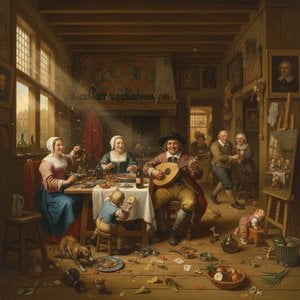
Jan Steen: A Master of Dutch Genre Painting & the Golden Age
Explore the life & art of Jan Steen, a leading Dutch Golden Age painter renowned for his humorous genre scenes & insightful social commentary. Discover his techniques, legacy, and collecting tips.

Pieter de Hooch: Illuminating Dutch Domestic Life & Golden Age Charm
Explore the captivating world of Pieter de Hooch, a master of Dutch Golden Age painting. Discover his innovative use of light, intimate domestic scenes, and lasting influence on art history. Learn more at ArtsDot.

荷兰黄金时代绘画:文化创新中的现实主义反思
深入探索荷兰黄金时代绘画的文化创新与现实主义反思。本文解读伦勃朗、维米尔等大师的作品,并结合玛莉特·韦斯特曼的图像学研究,揭示艺术史背后的社会语境与现代性意识觉醒。
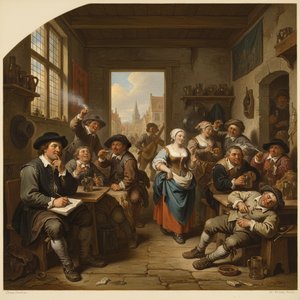
David Teniers the Younger: Genre Painting & Social Commentary in Baroque Flanders
Explore the captivating world of David Teniers the Younger, a leading Flemish Baroque painter. Discover his genre scenes, social commentary, and lasting influence on 17th-century art. Learn about his life, techniques & legacy.

光影中的生活:十七世纪荷兰风俗画的社会镜像与艺术价值
探索十七世纪荷兰风俗画的社会镜像与艺术价值。ArtsDot 提供高品质手工油画复制、定制肖像及专业艺术咨询,重现黄金时代的精髓。 值得信赖的艺术品专家,为您打造专属艺术空间。


