

 效果预览
效果预览
 购买印刷品
购买印刷品 分享
分享 分享
分享
 详情
详情

 下载
下载
 相似作品
相似作品 X射线
X射线 幻灯片播放
幻灯片播放天使宣告基督降生给牧羊人


 展开详情
展开详情




P118B $10

P118H $10

P118W $10

P438Z $10

P508JH $12

P508YH $12

P805H $10

P805Z $10

P919BZ $10

P919G $10

P919XJ $10

P959ZH $10

P968JZ $12

W106C $8

W218G $10

W218JH $8

W218Y $10

W307PJ $10

W316G $10

W316PJ $8

W316Y $10

W398PJ $8

W4111J $10

W500HY $15

W500JH $15

W692G $12

W849H $8

W940BG $15

W953PJ $8




从与原作比例一致的预设尺寸中进行选择。

您可以输入自定义尺寸,以适配特定的画框或空间。如果所选尺寸与原图比例不符,我们将通过裁剪作品或添加手绘元素来扩展画面。数字样稿将在制作开始前发送给您确认。
请注意,屏幕预览无法准确反映实际的裁剪或扩展效果,只有样稿才能真实呈现最终的构图。
虽然我们提供定制尺寸服务,但为了保留原作比例,建议您从预设列表中选择尺寸。
下单后,ArtsDot.com 团队将通过电子邮件联系客户获取具体要求,并提供效果预览图。


 玻璃选项仅适用于110厘米以下的尺寸。

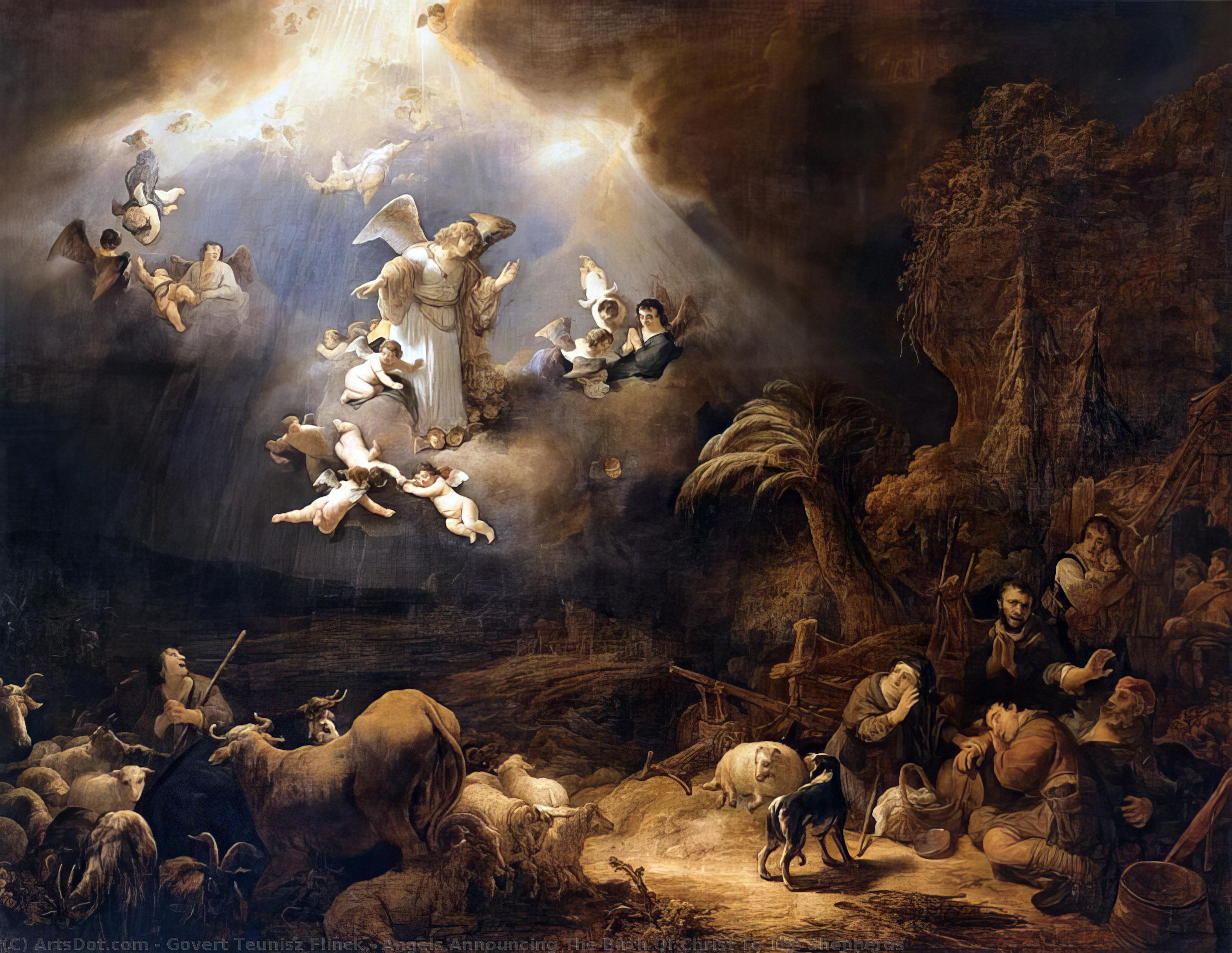
天使宣告基督降生给牧羊人
复制材质
复制品尺寸
-


最终总价
$ 263
作品详情
《天使宣告牧羊人见证基督诞生》:巴洛克时代的宗教奇迹
Govert Teunisz Flinck 的 1639 年作品,以其生动的描绘,将圣经中的一个关键时刻——天使加百列向马利亚宣布耶稣即将降生的消息,以及牧羊人见证这一奇迹的场景,呈现在我们眼前。 这幅大型油画不仅仅是对一则圣经故事的再现,更是一次对信仰、敬畏和神圣干预的深刻探索,充分体现了荷兰黄金时代的戏剧性和艺术魅力。
- 巴洛克风格的戏剧性: Flinck 的作品牢固地扎根于巴洛克传统中,尽管受到另一位大师伦勃朗的影响。他巧妙地运用了明暗对比(Chiaroscuro)——光影的戏剧性相互作用——营造出一种强烈的、充满激情的氛围。 仔细观察,天上的光辉从天堂降临,照亮了中央的天使,并倾泻到惊愕的牧羊人身上,而大地景观则笼罩在黑暗之中。这种技巧不仅仅是美学上的表现,更是对神圣恩典进入等待救赎的世界的象征。
- 技艺与材料: 这幅作品采用油画技法,充分展现了 Flinck 对颜料的精湛掌握。他运用层层叠叠的笔触和微妙的光泽效果,创造出令人惊叹的深度和质感。 尤其值得注意的是厚涂(Impasto)——在天使服饰和牧羊人服装上大量施加颜料,赋予这些人物以触觉上的感觉。
荷兰黄金时代的宗教艺术
17 世纪的荷兰见证了艺术人才的蓬勃发展——荷兰黄金时代。虽然艺术家们以肖像画和风景画而闻名,但像 Flinck 一样,他们也擅长描绘历史和宗教题材。 这幅作品反映了一个既充满深刻信仰,又充满科学探索的时期。 牧羊人的逼真形象、他们的牲畜(包括一只生动有趣的狗)以及田园风光,将这一神圣事件置于日常生活中,使之与当时观众产生共鸣。
象征意义与情感共鸣
除了叙事内容之外,这幅画作还充满了象征意义。 绵羊代表着基督的追随者和人类的脆弱性;黑暗象征着在基督降临之前的世界,而光明则象征着神圣的希望和恩典。 Flinck 精心捕捉了各种人类的情感——从虔诚的敬畏到惊奇的惊讶——反映了这一奇迹宣告所产生的深刻影响。 动态的构图,其对角线轴向将视线引导向上,指向天堂领域,加强了这种精神上的提升感。
一件值得收藏的艺术品
"《天使宣告牧羊人见证基督诞生》" 不仅仅是一幅美丽的画作;它更是一件充满力量的艺术品。 它的动态构图、丰富的象征意义和精湛的技艺使其成为任何收藏家或室内空间的理想补充。无论您是希望在客厅、书房还是教堂中创造一个焦点,这幅作品都一定会激发您的思考并唤起敬畏之情。
相似艺术品


艺术家简介
A Life Painted in Light and Shadow: The Story of Govert Teunisz Flinck
Govert Teunisz Flinck, a name that resonates with the golden age of Dutch painting, was more than just a portraitist; he was a conduit between Rembrandt’s revolutionary style and the burgeoning artistic landscape of 17th-century Amsterdam. Born in Kleve, Germany, in 1615 – a city steeped in both German and Dutch influences – Flinck's early life hinted at a path far removed from the world of art. His father, a prosperous cloth merchant, envisioned a future for his son within the trade, but fate intervened with the unexpected guidance of Lambert Jacobsz, a prominent Mennonite preacher and painter who recognized the young man’s innate artistic talent. This pivotal encounter steered Flinck towards Leeuwarden, where he began his formal training under Jacobsz, laying the foundation for a career that would ultimately eclipse his initial aspirations.
The move to Amsterdam in 1633 marked a turning point. There, Flinck entered the studio of Rembrandt van Rijn, a relationship that profoundly shaped his artistic development. Rembrandt’s influence is undeniably present throughout Flinck's oeuvre – particularly in his early works – characterized by dramatic lighting, nuanced expressions, and a masterful manipulation of chiaroscuro. However, unlike Rembrandt, who often embraced theatricality, Flinck gradually developed a more refined and elegant style, incorporating elements of Rubensian dynamism and a heightened sense of realism. This evolution is strikingly evident in pieces like “Isaac Blessing Jacob” (1638), where the composition’s balance and the figures' emotional depth demonstrate a clear departure from Rembrandt’s immediate influence.
The Portraiture of Power and Prestige
Flinck quickly established himself as one of Amsterdam’s most sought-after portraitists, catering to a clientele that included wealthy merchants, civic officials, and prominent members of the Mennonite community. His portraits weren't merely representations of likeness; they were carefully constructed narratives, imbued with social commentary and reflecting the status and aspirations of his subjects. The “Portrait of a Man, probably Augustijn Wtenbogaert (1577-1655)” exemplifies this approach, showcasing an aged sitter rendered with remarkable sensitivity and capturing not only his physical appearance but also the weight of experience etched upon his face. The use of rich fabrics, intricate details in the background, and subtle gestures all contribute to a portrait that transcends simple likeness, offering a glimpse into the subject’s life and character.
His commissions for civic guardsmen – as seen in “Officers and Other Civic Guardsmen of District XVIII in Amsterdam…” – further cemented his reputation. These works are not simply depictions of military personnel; they are vibrant celebrations of civic pride, meticulously rendered with attention to detail and a keen awareness of the social dynamics at play. The influence of Rembrandt is palpable here, particularly in the dynamic composition and the use of light and shadow to create a sense of movement and drama. The painting captures not just the appearance of the guardsmen but also their role as protectors of Amsterdam’s prosperity and stability.
Beyond the Portrait: Genre Scenes and Religious Narratives
While renowned for his portraits, Flinck's artistic range extended beyond the confines of formal representations. He produced a series of compelling genre scenes – intimate depictions of everyday life – that offered a window into the domestic sphere of 17th-century Amsterdam. These works are characterized by their realism and their ability to capture the nuances of human interaction, revealing both the joys and challenges of daily existence. His religious paintings, such as “Angels Announcing the Birth of Christ to the Shepherds,” demonstrate a masterful command of composition, color, and symbolism, creating scenes that are both visually stunning and emotionally resonant.
Legacy and Influence
Govert Teunisz Flinck’s career spanned nearly four decades, during which he produced an impressive body of work that continues to captivate viewers today. His artistic development—from his early apprenticeship under Rembrandt to the refinement of his own distinctive style—reflects the dynamic artistic climate of the Dutch Golden Age. He left a lasting legacy as one of the most accomplished portraitists and genre painters of his time, influencing generations of artists who followed in his footsteps. His works are now housed in prestigious collections around the world, including the Rijksmuseum in Amsterdam, testament to his enduring contribution to the history of art.

govert teunisz flinck
1615 - 1660 , Germany
艺术家简介
- Artistic Movement Or Style: Baroque
- Artists Or Movements Influenced By This Artist: ['Peter Paul Rubens']
- Artists Who Influenced This Artist: ['Rembrandt']
- Date Of Birth: January 25, 1615
- Date Of Death: February 2, 1660
- Full Name: Govert Teunisz Flinck
- Nationality: Dutch
- Notable Artworks:
- Angels Announcing Christ
- Portrait of a Man
- Officers Civic Guardsmen
- Place Of Birth: Kleve, Germany
相关文章

荷兰黄金时代:十幅定义艺术史的巨作 | ArtsDot
探索荷兰黄金时代的艺术巅峰! 伦勃朗、维米尔等大师名作,带您领略巴洛克艺术的辉煌。高清画作、博物馆级品质,点亮您的家居空间。ArtsDot.com 提供精选艺术复制品和定制装饰方案。立即在线探索全系列!

荷兰黄金时代绘画:文化创新中的现实主义反思
深入探索荷兰黄金时代绘画的文化创新与现实主义反思。本文解读伦勃朗、维米尔等大师的作品,并结合玛莉特·韦斯特曼的图像学研究,揭示艺术史背后的社会语境与现代性意识觉醒。

光影交织的时代:荷兰黄金时代绘画艺术的兴盛与创新
深入探索荷兰黄金时代的绘画艺术:伦勃朗、维米尔等大师的技法与创新,了解巴洛克风格的独特演绎。ArtsDot提供手绘油画复制、艺术咨询及收藏建议,助您领略经典艺术之美。

十七世纪荷兰黄金时代绘画:光影、现实与人文精神的辉煌
深入探索十七世纪荷兰黄金时代绘画的辉煌!解读林布兰、维米尔等大师的光影技巧与人文精神,了解巴洛克风格、风俗画的演变。艺术史专家带您领略珍品收藏,提升艺术鉴赏力。

Charles Leickert: Capturing the Dutch Golden Age Light – A Comprehensive Study of Technique, Context, and Legacy
Explore the captivating winter landscapes of Charles Leickert, a master of Dutch Golden Age light & atmosphere. Discover his techniques, symbolism, and lasting legacy – a comprehensive study for art enthusiasts and collectors.


