 效果预览
效果预览
 购买印刷品
购买印刷品 分享
分享 分享
分享
 详情
详情

 下载
下载
 相似作品
相似作品 X射线
X射线 幻灯片播放
幻灯片播放图腾耶路撒冷之毁


 展开详情
展开详情




P118B $10

P118H $10

P118W $10

P438Z $10

P508JH $12

P508YH $12

P805H $10

P805Z $10

P919BZ $10

P919G $10

P919XJ $10

P959ZH $10

P968JZ $12

W106C $8

W218G $10

W218JH $8

W218Y $10

W307PJ $10

W316G $10

W316PJ $8

W316Y $10

W398PJ $8

W4111J $10

W500HY $15

W500JH $15

W692G $12

W849H $8

W940BG $15

W953PJ $8




从与原作比例一致的预设尺寸中进行选择。

您可以输入自定义尺寸,以适配特定的画框或空间。如果所选尺寸与原图比例不符,我们将通过裁剪作品或添加手绘元素来扩展画面。数字样稿将在制作开始前发送给您确认。
请注意,屏幕预览无法准确反映实际的裁剪或扩展效果,只有样稿才能真实呈现最终的构图。
虽然我们提供定制尺寸服务,但为了保留原作比例,建议您从预设列表中选择尺寸。
下单后,ArtsDot.com 团队将通过电子邮件联系客户获取具体要求,并提供效果预览图。


 玻璃选项仅适用于110厘米以下的尺寸。

图腾耶路撒冷之毁
复制材质
复制品尺寸
-


最终总价
$ 438
作品详情
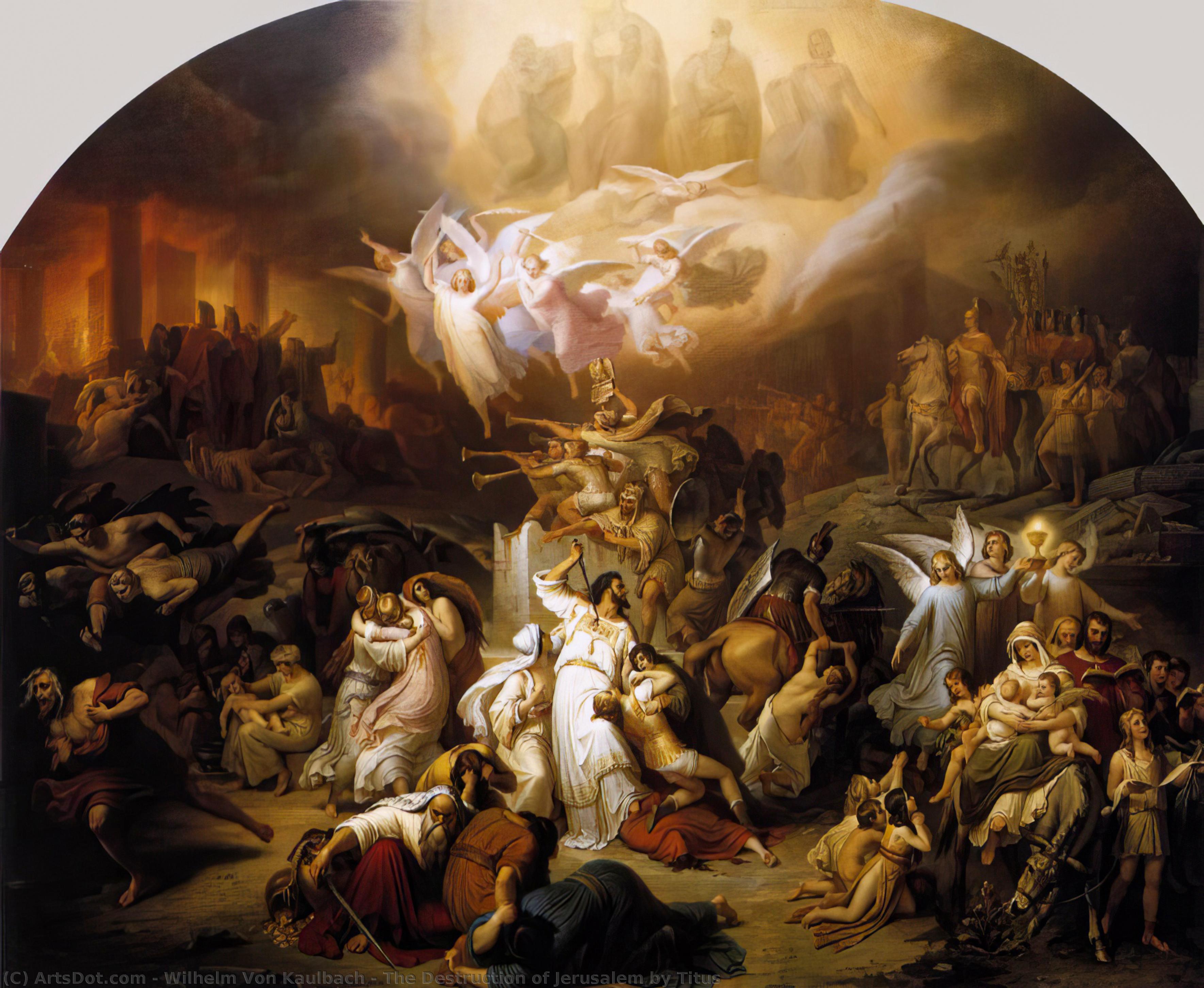
威廉·冯·库尔巴赫的《耶路撒冷沦陷》:一场史诗般的宗教与艺术的交融
威廉·冯·库尔巴赫(1805-1874)的作品,尤其是《耶路撒冷沦陷》,是德国艺术史上的一颗璀璨明珠。这幅巨作不仅仅是一幅绘画,更是一部凝固的历史、宗教和情感的史诗。它以其宏伟的规模、戏剧性的构图以及对人类命运的深刻反思,深深震撼着观者,也成为了浪漫主义时期最具代表性的作品之一。库尔巴赫在 Düsseldorf 学院的训练,以及他与 Peter von Cornelius 等大师的交流,为他日后的艺术生涯奠定了坚实的基础。
- 历史背景: 这幅画作描绘了公元70年罗马皇帝提图对犹太圣殿进行毁灭的场景——耶路撒冷沦陷。这场事件不仅是宗教意义上的灾难,也是政治和文化冲突的象征,库尔巴赫通过这幅画作,将这一历史悲剧以一种充满力量的方式呈现出来。
- 浪漫主义风格: 《耶路撒冷沦陷》完美地体现了浪漫主义艺术的核心特征。它强调情感的表达、对自然的崇敬以及对英雄主义和史诗般故事的追求。库尔巴赫运用强烈的对比光线,营造出一种戏剧化的氛围,将观者带入到那场残酷而又壮丽的战斗之中。
- 精湛的技法: 库尔巴赫是一位技术大师,他熟练地运用了油画在画布上的表现手法。通过细腻的笔触和丰富的色彩运用,他成功地塑造了人物的形象、建筑的细节以及光影效果。画面上的人物表情各异,动作生动逼真,仿佛置身于那场混乱而又激烈的战斗之中。
象征意义:信仰与毁灭的交织
《耶路撒冷沦陷》不仅仅是对历史事件的再现,更蕴含着丰富的象征意义。画面中的天使代表了上帝的干预和救赎,他们从天而降,象征着希望和拯救。另一方面,那些在战火中挣扎、哀嚎的人们则象征着人类的脆弱和无助。库尔巴赫巧妙地将这些元素融合在一起,引发观者对信仰、道德和命运等问题的思考。
- 光与影: 画面中的光线对比极强,象征着光明与黑暗、希望与绝望之间的冲突。天使的光芒照亮了那些在黑暗中挣扎的人们,也暗示了上帝的恩典和救赎。
- 人物形象: 画作中的人物形象各具特色,他们代表了不同种族、不同信仰的人们,共同面对着命运的挑战。他们的表情和姿态充满了悲壮与坚毅,展现了人类在灾难面前的勇气和尊严。
艺术价值与收藏价值
《耶路撒冷沦陷》不仅是一件杰出的艺术作品,也是具有重要历史和文化价值的文物。它以其宏伟的规模、精湛的技法以及深刻的思想内涵,赢得了无数艺术爱好者的赞誉。无论是作为私人收藏品还是公共艺术展览的一部分,《这幅画作都能够引发人们对人类文明的思考,并激发人们对艺术的热爱。
- 尺寸: 585 x 705 cm 的巨大尺寸,使其成为一件令人印象深刻的艺术作品。
- 材质: 油画在画布上的表现,保证了画作的色彩鲜艳、质感逼真,并能经受时间的考验。
- 主题: 具有普遍意义的主题——人类命运、信仰与毁灭之间的关系,使其具有永恒的价值。
为您的空间增添一份史诗般的魅力
《威廉·冯·库尔巴赫的《耶路撒冷沦陷》》是一件能够提升您生活品质的艺术品。它不仅能为您的空间带来视觉上的震撼,更能引发您对历史、宗教和人类文明的思考。无论是作为客厅的中心piece,还是作为私人收藏的一部分,这幅画作都将成为您人生中一段难忘的回忆。
相似艺术品


艺术家简介
The Architect of German Grandeur: The Life of Wilhelm von Kaulbach
In the sweeping landscape of nineteenth-century German art, few figures loom as large or as dramatically as Wilhelm von Kaulbach. Born in 1805 in the quiet town of Bad Arolsen, Kaulbach’s early years were far from the gilded halls of academia; instead, they were defined by a profound struggle against poverty and the harsh realities of rural life. This early exposure to hardship did not stifle his ambition but rather forged a resilient spirit that would later allow him to tackle the most monumental canvases of his era. His journey into the heart of the art world began with a transformative opportunity at the Düsseldorf Academy of Fine Arts, where the mentorship of luminaries like Peter von Cornelius would fundamentally reshape his artistic trajectory.
Kaulbach’s development was inextricably linked to the rise of the Düsseldorf School, a movement characterized by its pursuit of classical ideals blended with a distinctly German emotional depth. Under the guidance of Cornelius, Kaulbach learned to navigate the complex intersection of historical narrative and allegorical symbolism. His time at the academy was marked by intense dedication, often persevering through periods of hunger and deprivation to master the intricate techniques required for large-scale compositions. This period of rigorous training prepared him for his most significant professional undertaking: the creation of massive frescoes that would breathe life into the walls of Munich’s Glyptothek. Working alongside fellow artists like Schweitzer, Kaulbach participated in a painstaking process of translating detailed cartoons into vibrant, permanent displays of color and history.
Mastery of Narrative and Symbolism
The true essence of Kaulbach’s genius lies in his ability to weave complex historical and biblical narratives into visually arresting compositions. He possessed a rare talent for capturing the chaotic energy of human conflict while maintaining a sense of divine order or tragic inevitability. His works often serve as windows into the soul of Romanticism, where the line between the earthly and the eternal becomes blurred. To understand his impact, one must look at the thematic breadth of his repertoire:
- Biblical Catastrophe: In masterpieces such as The Destruction of Jerusalem by Titus, Kaulbach utilizes dramatic lighting and sweeping movement to evoke a sense of profound emotional impact and historical weight.
- Historical Allegory: His engravings and paintings, including works like Die Hunnenschlacht Raab, showcase his ability to depict moments of intense struggle, utilizing detailed linework to convey the chaos of battle and the presence of divine intervention.
- Satire and Illustration: Beyond the monumental, Kaulbach was a skilled book illustrator, capable of shifting from the epic scale of mural painting to the sharp, biting wit found in satirical works like Narrenhaus.
His technical prowess was not limited to a single medium; whether working in the delicate precision of an engraving or the expansive reach of a fresco, Kaulbach maintained a signature style characterized by rich symbolism and a profound sense of drama. His ability to utilize Baroque-inspired elements—such as the dramatic shadows seen in his depictions of the Fall of Babylon—allowed him to create works that felt both ancient and urgently contemporary to his nineteenth-century audience.
A Lasting Legacy in German Art
The historical significance of Wilhelm von Kaulbach extends far beyond the physical boundaries of the murals he painted. He was a pivotal figure who helped revitalize German art, moving it away from mere imitation of foreign styles toward a robust, self-assured aesthetic that celebrated national history and classical myth. By bridging the gap between the academic rigor of the Düsseldorf School and the emotive power of Romanticism, he provided a visual language for a generation seeking identity in a changing Europe.
Though the era of monumental mural painting eventually gave way to new artistic movements, Kaulbach’s influence remains etched in the annals of art history. He transformed the walls of museums and the pages of books into stages for the grandest human dramas, ensuring that his vision of history, faith, and struggle would endure. Today, he is remembered not just as a painter, but as a titan of his age—a man who took the hardships of his youth and transmuted them into a legacy of unparalleled artistic grandeur.

Wilhelm von Kaulbach
1805 - 1874 , Germany
艺术家简介
- Artistic Movement Or Style: Düsseldorfs Schule
- Artists Or Movements Influenced By This Artist: ['Middle Ages']
- Artists Who Influenced This Artist: ['Peter von Cornelius']
- Date Of Birth: 1805
- Full Name: Wilhelm von Kaulbach
- Nationality: German
- Notable Artworks:
- Die Zerstorung Jerusalems
- Homer Und Die Griechen
- Die Reformation
- Place Of Birth: Bad Arolsen, Germany
相关文章

Romantic Realism's Finest: 10 Masterpieces for Your Home | ArtsDot
Explore 10 defining masterpieces of Romantic Realism! Discover Courbet, Millet & Daumier's powerful paintings—capturing emotion and social realities. Find museum-quality reproductions for your home at ArtsDot.com.

浪漫主义画派的十部巨作:定义风景画的艺术传奇
探索浪漫主义风景画的巅峰!本文精选十部经典名作,带您领略莫奈、库尔贝等大师的艺术魅力。感受色彩与光影的诗意,重温自然风光的震撼。ArtsDot.com为您提供博物馆级别的艺术复制品和个性化家居装饰方案。尽在ArtsDot.com!
Romantic Masterpieces: 10 Artworks for a Timeless Home Decor Aesthetic
Fall in love with art! Explore 10 iconic romantic paintings – from Monet & Bouguereau to Fragonard. Discover the stories behind these masterpieces and find museum-quality reproductions for your home decor at .

Illuminating Faith: Biblical Narrative & Artistic Expression Through the Ages
Explore the rich history of biblical art from Giotto to the Renaissance masters with ArtsDot. Discover symbolism, techniques & enduring legacies. Museum-quality reproductions & expert insights.

Romantic Masterpieces: 10 Artworks to Stir Your Soul |
Fall in love with art! Explore 10 iconic romantic paintings – from Renaissance classics to Impressionist masterpieces. Discover the stories behind artists like Monet & Klimt, and find museum-quality reproductions for your home at .