


 效果预览
效果预览
 购买印刷品
购买印刷品 分享
分享 分享
分享
 详情
详情

 下载
下载
 相似作品
相似作品 X射线
X射线 幻灯片播放
幻灯片播放贝多芬肖像
 布面丙烯
布面丙烯- 墙面艺术品
- Romantic Portraiture
 1818
1818 40.0 x 27.0 cm
 波恩贝多芬故居
 展开详情
展开详情




P118B $10

P118H $10

P118W $10

P438Z $10

P508JH $12

P508YH $12

P805H $10

P805Z $10

P919BZ $10

P919G $10

P919XJ $10

P959ZH $10

P968JZ $12

W106C $8

W218G $10

W218JH $8

W218Y $10

W307PJ $10

W316G $10

W316PJ $8

W316Y $10

W398PJ $8

W4111J $10

W500HY $15

W500JH $15

W692G $12

W849H $8

W940BG $15

W953PJ $8




从与原作比例一致的预设尺寸中进行选择。

您可以输入自定义尺寸,以适配特定的画框或空间。如果所选尺寸与原图比例不符,我们将通过裁剪作品或添加手绘元素来扩展画面。数字样稿将在制作开始前发送给您确认。
请注意,屏幕预览无法准确反映实际的裁剪或扩展效果,只有样稿才能真实呈现最终的构图。
虽然我们提供定制尺寸服务,但为了保留原作比例,建议您从预设列表中选择尺寸。
下单后,ArtsDot.com 团队将通过电子邮件联系客户获取具体要求,并提供效果预览图。


 玻璃选项仅适用于110厘米以下的尺寸。

贝多芬肖像
复制材质
复制品尺寸
-


最终总价
$ 263
作品详情
卡尔·弗里德利希·奥古斯图斯·冯·克洛伯:贝多芬肖像的艺术魅力与历史回响
克洛伯,这位活跃于19世纪德国艺术界的画家,以其对贝多芬肖像的创作而闻名于世。这幅作品不仅展现了音乐大师的形象,更蕴含着当时社会文化背景下的艺术精神和审美追求。我们来深入探讨这幅画作的艺术魅力与历史意义。作品概述:贝多芬肖像
这幅黑白风格绘画作品描绘了德国作曲家路易斯·凡·贝多芬的形象。艺术家克洛伯以细腻的笔触捕捉到了贝多芬标志性的特征,如长发、胡须和浓密的眉毛,以及一种深邃而专注的眼神。背景人物的巧妙安排为画面增添了层次感和故事性,营造出一种宁静而富有诗意的氛围。尺寸为40厘米×27厘米,这幅作品以其精湛的技艺和对人物精神状态的准确表达赢得了广泛赞誉。艺术风格与技巧:巴黎与柏林的对话
克洛伯的作品深受巴黎浪漫主义的影响,同时也体现了德国传统艺术的审美标准。他运用古典绘画技巧,注重光影变化和色彩对比,力求通过线条和构图来塑造贝多芬的形象,展现出音乐家内心的力量与智慧。这种风格既具有优雅精致的美感,又充满着人文关怀和对历史人物的敬意。克洛伯大师在创作过程中,尤其注重捕捉人物神态和情感表达,这正是他作品中最具吸引力的特点之一。历史背景:贝多芬时代与艺术发展
贝多芬生活于一个充满变革的时代——法国拿破仑统治时期和德国浪漫主义兴起之际。当时的社会文化环境鼓励艺术家们探索新的题材和表现形式,克洛伯正是这一时代艺术潮流的代表人物之一。他通过创作贝多芬肖像,不仅记录了历史瞬间,更表达了对音乐艺术的热爱与赞美。这幅画作也反映了当时人们对伟大艺术家的崇敬之情以及对精神追求的渴望。象征意义:音乐与灵魂的和谐统一
贝多芬作为音乐大师,他的肖像不仅仅是对人物形象的再现,更象征着音乐与灵魂之间的和谐统一。克洛伯通过绘画作品,将贝多芬的音乐天赋和哲学思想融入其中,传递出一种超越物质世界的精神力量。这幅画作提醒我们艺术不仅是视觉享受,更是对人类心灵的滋养和启迪。它以其简洁而深刻的表达方式,成为了一件具有永恒价值的艺术品。相似艺术品


艺术家简介
Carl Friedrich August von Klöber: A Portraitist Bridging Parisian Elegance and Prussian Tradition
Carl Friedrich August von Klöber, born in Breslau (modern-day Wrocław), Germany, in 1793, was a pivotal figure in 19th-century German art. His life’s journey—a tapestry woven with military service, artistic study across Europe, and ultimately, the creation of compelling portraits – reflects the dynamic social and cultural shifts of his era. Klöber's career unfolded against the backdrop of Napoleonic wars, burgeoning Romanticism, and the rise of urban centers as hubs for artistic innovation. He died in Berlin in 1864, leaving behind a legacy marked by both technical skill and an ability to capture the essence of his subjects, particularly through his celebrated portraiture.Early Life and Artistic Foundations
Klöber’s early years were shaped by military service; he enlisted as a volunteer in the wars of liberation against Napoleon in 1813-14, participating in battles at Groß-Görschen, Bautzen, and even briefly stationed near Paris. This experience instilled discipline and broadened his perspective beyond the confines of Breslau. Following his military service, he pursued formal artistic training, initially at the Berlin Cadet School and later at the *Bauschule* (School of Design) in Breslau. Crucially, he then enrolled at the *Königlich Preussischen Akademie der Künste* (Royal Prussian Academy of Arts) in Berlin, where he honed his skills under the tutelage of established masters. His studies there were further enriched by a period of intensive study in Paris and Vienna – cities renowned for their artistic ferment during this time. These experiences exposed him to diverse movements, including Neoclassicism and nascent Romanticism, profoundly influencing his stylistic development.Parisian Influence and Viennese Refinement
Klöber’s sojourn in Paris proved particularly formative. He immersed himself in the vibrant artistic scene, absorbing the techniques of established portraitists and engaging with the prevailing trends of the era. The influence of Parisian art is readily apparent in his later works – a refined elegance, an attention to detail, and a sophisticated understanding of light and shadow all contribute to this effect. Subsequently, he spent four years in Vienna, where he continued his artistic education and developed a distinct style characterized by a balance between German realism and the more expressive tendencies of Austrian painting. This period solidified his ability to capture not just physical likeness but also the character and personality of his subjects.Notable Portraits and Artistic Style
Klöber’s most enduring contribution lies in his portraiture. He was particularly celebrated for his depictions of prominent figures, including Ludwig van Beethoven – a painting that is now considered a significant work in German art history. He also produced numerous portraits of members of the Grillparzer family, capturing their individual personalities with remarkable sensitivity. His artistic style can be described as characterized by meticulous observation, skillful rendering of fabrics and textures, and an ability to convey a sense of inner life within his subjects. He wasn’t merely replicating appearances; he was striving to reveal something deeper about the individuals he portrayed. His use of light and shadow created depth and drama, while his compositions were often balanced and harmonious.Legacy and Continued Recognition
Carl Friedrich August von Klöber's legacy continues to be celebrated today. His works are showcased in various museums and galleries across Germany, testament to their enduring artistic value. The *Akademie der bildenden Künste Wien* (Academy of Fine Arts Vienna), where he once studied, actively promotes fine arts education and research, ensuring that his contributions are remembered and appreciated by future generations. Resources like ArtsDot.com provide valuable insights into his oeuvre, while the Kunstsammlungen der Akademie der bildenden Künste W Wien offer a comprehensive collection of artworks from various periods and styles, including those of other notable artists such as Wilhelm Trübner and Jörg the elder Breu. Furthermore, research conducted by sites like Artprice.com reveals valuable information about the market value and historical significance of his paintings, particularly his portraits. His work stands as a bridge between the formal training of the Prussian Academy and the artistic innovations emerging from Paris and Vienna – a testament to the interconnectedness of European art in the 19th century.
carl friedrich august von klöber
1793 - 1864 , Germany
艺术家简介
- Artistic Movement Or Style: Parisian & Viennese influences
- Artists Or Movements Influenced By This Artist:
- Hans Memling
- Franz Heinrich Louis
- Artists Who Influenced This Artist:
- Karl Friedrich Schinkel
- Bonaventure Genelli
- Date Of Birth: 1793 Breslau
- Date Of Death: 1864 Berlin
- Full Name: Carl Friedrich August von Klöber
- Nationality: German
- Notable Artworks:
- Ludwig van Beethoven
- Grillparzer family
- Place Of Birth: Breslau, Germany
相关文章

White on Canvas: 10 Masterpieces & Timeless Elegance for Your Home Decor
Explore 10 iconic white paintings by Monet, Whistler & Rothko! Discover the stories behind these serene masterpieces and their impact on art history. Find museum-quality reproductions for your home decor at .

Dark Masterpieces: 10 Iconic Paintings Dominated by Black Tones |
Explore 10 iconic paintings dominated by black tones, from Rembrandt’s chiaroscuro to Goya's dark expressions. Discover the stories behind these masterpieces & find museum-quality art reproductions for your home at .

Monochrome Visions: Exploring the Aesthetic & Historical Significance of Black & White Photography
Explore the rich history & artistic power of black and white photography. From early techniques to iconic masters like Ansel Adams, discover why monochrome continues to captivate art lovers today. Expert insights for collectors.
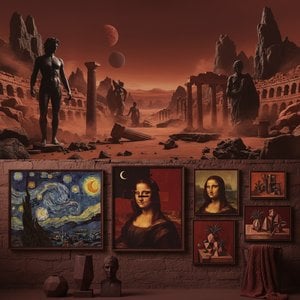
Mars Black Masterpieces: 10 Iconic Paintings & Timeless Art Decor Ideas
Delve into the power of 'Mars Black' with 10 iconic paintings by masters like Rembrandt & Caravaggio. Explore dramatic chiaroscuro, gothic art, and timeless beauty. Find museum-quality reproductions & elevate your home decor on .

The Subtleties of White: Exploring Absence, Light & Symbolism in Art History
Explore the profound symbolism & history of white in art! From ancient purity to modern abstraction, discover how artists have used absence & light. Expert insights from ArtsDot.


