


图片将根据您的选择进行更新: , .
藏品详情
Discover Lambert Lombard's 'Self-Portrait,' a pivotal Northern Renaissance masterpiece bridging Italian and Flemish art. Explore his meticulous technique, contemplative expression, and legacy as an influential artist & educator.
 展开全文
艺术家简介
Discover Lambert Lombard (1505-1566), a pivotal Flemish Renaissance artist bridging Northern realism with Italianate ideals. Explore his masterful paintings & architectural designs.
只需简单四步,即可订购您的
请慢慢挑选。您可以随时更改任何选项;订单详情卡中的价格将随您的选择实时更新。
1 四步中的第一步
您想要哪种尺寸?
这些尺寸均保持了原画的比例。示意图展示了您所选尺寸在墙面上的效果,其位置位于一张两米宽的沙发上方。
或输入您自定义的尺寸
您可以从与原作比例一致的预设尺寸中进行选择。

请输入您需要的宽度和高度,以适配您的画框或墙面。由于作品为手工绘制,若选择不同比例的尺寸,艺术家可能会在画面边缘多画一些或稍作裁剪 —— 由您决定。在开始绘画之前,我们会为您发送一份数字效果图供您确认。本页面上展示的图片并非最终实物 —— 只有效果图才能反映真实结果。
2 四步中的第二步
您希望如何装裱:卷轴装、绷框装还是带框装?
以下价格对应您在第一步中所选的尺寸。
选择绷边画布的边缘样式
选择您的画框

白色边缘 ¥1

边缘晕染效果 ¥1

延展式 ¥1

P118B ¥10

P118H ¥10

P118W ¥10

P438Z ¥10

P508JH ¥12

P508YH ¥12

P805H ¥10

P805Z ¥10

P919BZ ¥10

P919G ¥10

P919XJ ¥10

P959ZH ¥10

P968JZ ¥12

W106C ¥8

W218G ¥10

W218JH ¥8

W218Y ¥10

W307PJ ¥10

W316G ¥10

W316PJ ¥8

W316Y ¥10

W398PJ ¥8

W4111J ¥10

W500HY ¥15

W500JH ¥15

W692G ¥12

W849H ¥8

W940BG ¥15

W953PJ ¥8

H24-GOLD ¥30

H24-SILVER ¥30

H36-GOLD ¥45

H36-SILVER ¥45
带框
边框材质: . 含框总尺寸: .
3 四步中的第三步
您想对画作进行任何修改吗?
大多数人的回答是否定的。由于每一幅画作都是手工绘制,我们的艺术家也可以为您进行定制。
下单后,ArtsDot.com 团队将通过电子邮件联系客户获取具体指令,并提供效果预览图
4 第四步(共四步)
几种饰面选项
所有选项均为可选。已选择的答案不会产生额外费用。
出自哪位艺术家之手?
像博物馆里的那样,配上一块铭牌?
青铜铭牌雕刻详情
This elegant plaque features the artist's name and the title of the artwork, finely engraved for a timeless presentation.
It is made from bronze with a refined, elegant finish. The text is precisely laser-engraved for a sharp and permanent result. Measuring 9x2 cm, the plaque is compact yet easy to read. It's built to be durable and scratch-resistant, offering a professional, museum-quality look. Mounting is simple thanks to the included adhesive backing.
透明亚克力铭牌详情
The plaque includes essential engraved details such as the artist's name, the title of the artwork, the date it was created, the type of media used-like oil on canvas or watercolor-a brief description of the piece, and a QR code that links to the complete artwork information.
It is crafted from clear acrylic, offering a sleek, modern appearance. The text is UV-engraved in black to ensure strong visual contrast. With a size of 10x15 cm, it ensures optimal readability. It comes equipped with two metal hooks for secure wall mounting. The plaque is designed to be weather-resistant, making it suitable for various environments, and it includes interactive features that work seamlessly with smartphone scanning.
黑色亚克力铭牌详情
This elegant plaque includes engraved information such as the artist's name, the title of the artwork, the date it was created, the type of media used (like oil on canvas or watercolor), a short description of the artwork, and a QR code for quick access to more information.
The plaque itself is made from refined black acrylic with a premium finish. The text is laser-engraved in white for high contrast and readability. Its size is 10x15 cm, designed to be easy to read. It comes with two metal hooks for professional mounting. The design is sleek and fits any interior style. It is also weather-resistant and durable, with built-in digital integration for mobile compatibility.
需要保护性光油吗?
您预计何时收到?
✓ 确认并下单
您的画作,正如您所订购的那样

Self-Portrait
复制品材质
复刻品尺寸
-

精选资深艺术家
更丰富的细节、更精湛的工艺以及更充裕的制作时间
-

复制画装裱选项
-
-
对于任何边长超过 105 厘米(约 41 英寸)的艺术品或复制品,画框将以拆解后的组件形式发货。此方法可确保安全送达并防止运输过程中的损坏。
需由专业人员组装 —— 本产品不适用于 DIY 操作。
该组件必须由经验丰富的专业装裱师进行组装及画布绷装,过程中需使用木工胶(不随附)、画布绷边钳以及夹具,以确保在胶水干燥期间保持内框方正。组装不当或画布张力不均可能会对艺术品造成永久性损坏,且此类情况不在我们的保修范围之内。
 对于任何边长超过 105 厘米(约 41 英寸)的艺术品或复制品,画框将以拆解后的组件形式发货。此方法可确保安全送达并防止运输过程中的损坏。
包含所有实木条,尺寸精确,便于组装。
使用随附的螺丝进行组装,另需准备用于角部连接的木工胶(本品不含木工胶),请由您的装裱师自行准备。
需另备专业工具(本套件不含):画布绷紧钳以及用于在胶水干燥过程中保持木条方正的夹具。
重要提示:
角部连接处需要使用木工胶,边框条必须使用夹具固定直至胶水完全干透,且在组装好的框架上绷紧画布需要用到画布拉伸钳。以上工具均不包含在套装内。请在订购此尺寸前,预先联系经验丰富的专业装裱师。

展品铭牌
-
-

保护性清漆
光泽清漆(提亮色彩,防光防潮)
-

定制我的艺术品
定制化示例:替换面部为客户照片;添加宠物(例如,将猫替换为狗);在背景中加入隐藏信息;更改背景风景或元素。
-

加急
全球配送()仅需 3-4 周即可送达,无需等待标准时效的 5 周。(20 November)。品质始终如一,绝不妥协。
-
极速达
全球配送(),预计 5 周送达。(27 November)。
已包含
最终结算价
¥ 1759
玻璃选项仅适用于110厘米以下的尺寸。
每份订单均包含
- 全球免运费特快专递服务
- 优质亚麻画布
- 全程运输保险
- 关税退款保证
- 色彩精准还原保证
- 100天退货保障(仅限制造缺陷)
- 100% 退款保证
- 多件购买优惠


A Bridge Between Worlds: Introducing Lambert Lombard and His Self-Portrait
Lambert Lombard's "Self-Portrait," a remarkably intimate work completed around 1560, stands as a pivotal testament to the burgeoning artistic landscape of the Northern Renaissance. More than simply a likeness, this painting embodies Lombard’s unique position – a crucial intermediary between the fervent innovations of Italy and the established traditions of the Low Countries. Born in Liège in 1505, Lombard wasn't merely an artist; he was a deliberate seeker, driven by an intellectual curiosity that propelled him to master both Italianate ideals and the distinctive realism of his native Flanders. His apprenticeship under Jan Gossaert instilled within him a meticulous approach, a dedication to detail, and a profound understanding of capturing human form with remarkable accuracy – qualities vividly displayed in this compelling self-representation.
The painting immediately draws the eye to its subject: a man of considerable presence, dressed in the formal attire characteristic of the upper classes. The dark coat, accented by a crisp white collar, speaks volumes about his social standing and reflects the prevailing fashion of the period. Lombard’s beard and mustache, hallmarks of Northern Renaissance portraiture, contribute to an air of dignified contemplation. However, it is not merely outward appearance that commands attention; the artist has skillfully employed light and shadow to sculpt the face, revealing a subtle complexity beneath the surface. The gaze, directed slightly off-center, suggests introspection – a moment of quiet reflection, inviting the viewer into his inner world.
Technique and Composition: A Masterclass in Northern Renaissance Realism
Lombard’s technique is a testament to his training and experience. The painting showcases a remarkable level of detail, particularly evident in the rendering of the hair and facial features. Each strand appears meticulously placed, each wrinkle subtly defined. This dedication to realism is balanced by an understanding of atmospheric perspective – the background fades gently into a muted light, creating depth and drawing attention to the central figure. Note the careful use of chiaroscuro, the dramatic interplay of light and shadow, which not only enhances the three-dimensionality of the portrait but also contributes to its emotional impact.
The composition is remarkably balanced, with the subject positioned centrally within a restrained frame. The plain background – a wash of pale color – serves as an effective foil for the darker tones of the clothing and the subtle shadows on the face. This deliberate simplicity directs all attention towards Lombard himself, reinforcing his importance as both the artist and the subject. The small object held in his right hand—likely a coin or piece of jewelry—adds another layer of intrigue, prompting speculation about its significance and perhaps hinting at the man’s personal life.
Symbolism and Historical Context: A Reflection of Renaissance Thought
Lombard's self-portrait is more than just a portrait; it’s a statement. During the Renaissance, artists increasingly sought to elevate their status from mere craftsmen to intellectual figures – men of learning and culture. Lombard’s deliberate inclusion in his own work reflects this shift, asserting his artistic identity and demonstrating his mastery of technique. The contemplative expression suggests a man engaged with philosophical ideas, mirroring the humanist values that were gaining prominence during the period.
Further research reveals that Lombard was deeply involved in disseminating Italian Renaissance ideals throughout the Low Countries. As described in the WGA article, he traveled to Rome, bringing back not only artworks but also new artistic principles and a renewed appreciation for the role of the artist as a scholar and innovator. This self-portrait can be seen as a visual embodiment of this transformative journey – a bridge between the classical world of Italy and the evolving artistic traditions of his homeland.
Bringing Lombard’s Vision Home: A High-Quality Reproduction
ArtsDot offers meticulously crafted, hand-painted reproductions of Lambert Lombard's "Self-Portrait," allowing you to experience this remarkable work of art in stunning detail. Our skilled artisans replicate the painting’s nuanced techniques and atmospheric effects with exceptional accuracy, ensuring that your reproduction captures the essence of Lombard’s artistic vision. Whether displayed in a formal setting or cherished as a personal treasure, this reproduction serves as a beautiful reminder of the Renaissance spirit – a testament to human intellect, artistry, and the enduring power of self-reflection.
常见问题与解答
在哪里可以观赏到 Lambert Lombard 的《Self-Portrait》 的原作?
Lambert Lombard 的《Self-Portrait》 的原作收藏于 冬宫博物馆 (Hermitage Museum), Saint Petersburg, Russia。通过复制品,您也可以在居家环境中欣赏这部杰作。
建议将 Lambert Lombard 的《Self-Portrait》 悬挂在哪个空间?
Lambert Lombard 的《Self-Portrait》 推荐陈列于 Living Room。此建议是基于作品的主题、色彩与意境而定。
"Self-Portrait" 的作者是谁?属于哪种艺术流派?
"Self-Portrait" 的背后是 Lambert Lombard 及其所属的 Northern Renaissance 流派。
更多关于此画作的信息
 实景预览

 切换至版画销售渠道
 分享
 分享
 详情
 指南


 下载作品
 相似作品
 X射线
 幻灯片播放
 问答
 统计数据
相似作品


Lambert Lombard
1505 - 1566, Belgium
艺术家简介
A Bridge Between Worlds: The Life and Art of Lambert Lombard
Lambert Lombard, born in Liège around 1505 and passing in 1566, occupies a fascinating, pivotal position within the landscape of Renaissance art. He wasn’t merely an artist; he was a conduit, skillfully channeling the burgeoning innovations of the Italian High Renaissance into the artistic traditions of the Low Countries. His story is one of deliberate seeking, intellectual curiosity, and a commitment to elevating the status of art through both practice and pedagogy. While details surrounding his early life remain somewhat elusive, we know Lombard received his initial training within Liège itself, laying the groundwork for a career that would see him flourish as both painter and architect. A crucial turning point arrived with his apprenticeship under Jan Gossaert, known also as Mabuse, in Middelburg. This exposure to the evolving styles of Northern Renaissance painting proved formative, instilling in Lombard a meticulous attention to detail and a mastery of oil technique that would characterize much of his work.Rome and the Embrace of Italianate Ideals
Lombard’s artistic trajectory took a dramatic turn in 1537 when Prince-Bishop Erard de la Marck dispatched him to Rome. This wasn't simply an art-buying mission; it was a calculated investment in Lombard’s development, a deliberate attempt to immerse him in the heart of the Italian Renaissance. The impact of this journey proved profound. Surrounded by the masterpieces of Michelangelo and Raphael, Lombard absorbed the classical ideals of form, composition, and anatomical accuracy that defined the era. He returned to Liège not only with artworks for the Prince-Bishop’s collection but also with a renewed artistic vision—a desire to synthesize the Northern realism he had mastered with the grandeur and intellectual rigor of Italian art. This fusion would become the hallmark of his style, setting him apart from many of his contemporaries. The influence is visible in his increasing emphasis on idealized figures and more dynamic compositions, moving away from the earlier Gothic influences prevalent in the region.A Multifaceted Talent: Painting, Architecture, and Academia
Securing the prestigious position of court painter and architect to the Prince-Bishopric of Liège in 1532 provided Lombard with both artistic freedom and significant responsibility. He wasn’t confined solely to the canvas; he actively participated in architectural projects throughout the region, demonstrating a versatility that speaks to his broad intellectual curiosity. Though relatively few paintings survive today—a frustrating reality for art historians—numerous drawings attributed to him offer invaluable insight into his creative process, revealing a restless experimentation with form and composition. Beyond his artistic endeavors, Lombard’s most enduring legacy lies in his establishment of what is considered the first academy of art in the Low Countries. This institution wasn't merely a workshop; it was a center for intellectual exchange, where students were encouraged to study not only technique but also classical literature, history, and philosophy—a holistic approach to artistic education that was remarkably forward-thinking for its time.Legacy and the Shaping of Future Generations
The impact of Lombard’s academy resonated far beyond Liège. Among his most prominent pupils were figures who would themselves become leading artists of their generation. Frans Floris, a master of Mannerism, further developed Lombard's stylistic innovations, pushing the boundaries of composition and figural representation. Hendrick Goltzius, renowned for his masterful engravings and paintings, carried forward Lombard’s emphasis on anatomical accuracy and dramatic expression. And Dominicus Lampsonius, a humanist scholar and art historian, not only absorbed Lombard’s artistic principles but also immortalized him through a detailed biography—a crucial source of information about the artist's life and work. The Life of Lambert Lombard, penned by Lampsonius, remains an invaluable resource for understanding Lombard’s intellectual ambitions and his role in shaping the artistic landscape of the Low Countries. Lombard’s historical significance rests not only on his own artistic achievements but also on his ability to synthesize diverse influences and transmit them to a new generation of artists, solidifying his position as a key figure in the cultural and artistic development of the 16th century. His work stands as a testament to the power of cross-cultural exchange and the enduring legacy of Renaissance ideals.Notable Works
- The Miracle of the Loaves and Fishes: A dynamic Mannerist painting that exemplifies Lombard’s ability to blend Northern realism with Italianate drama, showcasing a biblical scene with rich textures and captivating spiritual intensity.
- Triptychs: Demonstrating his skill in multi-panel compositions, these works reveal Lombard's mastery of narrative storytelling and complex spatial arrangements.
- The Last Supper: Reflecting the influence of Italian Renaissance masters like Leonardo da Vinci, this painting showcases a sophisticated understanding of perspective and composition, creating a sense of depth and realism.
相关文章

Reflecting the Self: A History of Portraiture & Psychological Insight
Explore the fascinating history of self-portraiture from Renaissance masters like Dürer & Rembrandt to modern interpretations. Discover the psychological insights and artistic techniques behind these iconic works. Expert analysis for art enthusiasts.
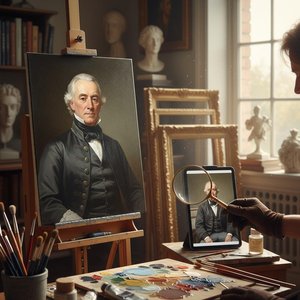
ArtsDot 专为精英收藏家打造:以照片定制手绘油画,4–5 周完成,全球免费配送——尊贵品质与匠心工艺的终极体验
ArtsDot 为精英收藏家提供专业的照片转手绘油画服务,4–5 周完成。我们以顶级艺术家团队、严格质量控制和免费全球配送赢得信赖,为您呈现高价值、原汁原味的原创复制品,让每一幅作品成为永恒的投资与审美享受。
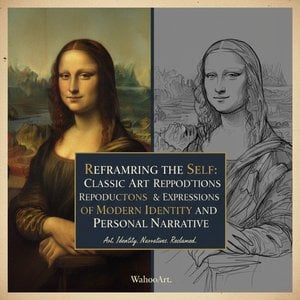
定制艺术:经典再现如何表达现代身份与个人叙事
ArtsDot.com提供手绘定制艺术品,重现经典名作并表达您的独特身份。专业艺术家团队,高品质油画复制、个性化肖像创作,助您打造专属视觉空间!免费咨询,尽享艺术魅力。