


 实景预览
实景预览
 发送
发送 分享
分享
 详情
详情 指南
指南

 下载图片
下载图片
 相似作品
相似作品 X射线
X射线 幻灯片播放
幻灯片播放 统计数据
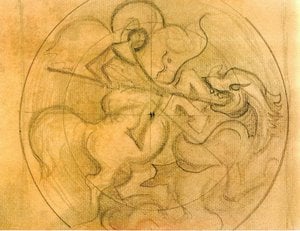
统计数据Erwinna
 1957
1957 50.0 x 61.0 cm
 阅读全文
阅读全文
购买高分辨率增强版数字图像,其品质远超在线预览。
每一份文件都由我们的内部专家使用先进工具与专业的后期润色技术精心打造。我们确保每一张图像都具备卓越的清晰度、精准的色彩还原度以及细腻的细节表现。
最终文件将在 72 小时内通过电子邮件交付,并针对专业、编辑及印刷用途进行了优化。其品质与顶级设计工作室、出版社和画廊所信赖的标准完全一致。
数字图像
下载高分辨率文件,用于个人展示、打印及创意项目。 ( 切换至版画销售渠道 订购此收藏品的纯手工复刻画作)
每份数字图像订单均包含的内容
专业级数字交付,品质无忧
选择 ArtsDot.com,您获得的不仅仅是一张图像——您收到的是经过专业级增强、精雕细琢的数字艺术作品,并享有满意保证。以下是您的订单中自动包含的所有内容:

即时邮件交付
您的高分辨率数字图像文件将在下单后 72 小时内通过电子邮件发送给您 —— 即可立即使用。

AI 增强型数字图像
您的艺术品经过专业优化,结合先进的 AI 技术与人工修饰,确保呈现极致的细节、清晰度与色彩准确度。

终身免费重发服务
不小心删除了文件或找不到了?没关系——我们将随时为您免费重发。

无需进口税费,始终如一
即刻拥有您的艺术作品,无需支付任何关税、税费或运费——数字下载始终免税。

色彩精准保障
我们通过专业工具与色彩管理技术,确保您的数字图像尽可能真实地还原原作色彩。

100天满意保证
如果您对所购数字图像不满意,我们将在100天内为您进行修改或提供100%的全额退款——无需任何理由。

100% 退款保证
不满意?在收到数字文件后的100天内,您可以申请全额退款——无需任何理由。

批量订购优惠
购买 3 张享 10% 折扣 - 购买 5 张享 15% 折扣 - 购买 10 张以上享 20% 折扣。非常适合创意项目、画廊及机构使用。
Artistic Inspiration and Style
Glasco's artistic journey was influenced by prominent figures such as Alfonso Ossorio, Jackson Pollock, and Lee Krasner. His work also reflects the impact of Jean Dubuffet and Hans Hofmann. The Erwinna painting, in particular, showcases Glasco's ability to deconstruct the figure and develop non-objective paintings that build upon the abstraction of the 1950s. Key Features of the Painting The Erwinna painting is characterized by its vibrant colors, intricate textures, and complex composition. The use of oil on linen creates a sense of depth and dimensionality, drawing the viewer into the world of the artwork. The painting's abstract nature invites interpretation, making it a thought-provoking piece that continues to fascinate art enthusiasts.- The Smithsonian Museum of American Art has an impressive collection of Glasco's works, including the Erwinna painting.
- Glasco's artistic style is also reflected in his other notable works, such as Big Sitting Cat and Reclining Figure, which can be found at the Museum of Modern Art New York and the Metropolitan Museum of Art, respectively.
- For more information on Joseph Glasco and his artwork, visit ArtsDot.com or Wikipedia.
The Erwinna painting is a remarkable example of Joseph Glasco's innovative style and artistic vision. As a masterpiece of abstract expressionism, it continues to inspire and captivate art enthusiasts around the world.
问答详情
Joseph Glasco 的《Erwinna》 的主导色是什么?
Putty (#d5bfaa) 是 Joseph Glasco 的《Erwinna》 的主导色。
Joseph Glasco 的《Erwinna》 中占据主导地位的是哪些颜色?
"Erwinna" 的色彩基调由以 Putty (#d5bfaa) 为主的 Dark 色系构成。
Joseph Glasco 的《Erwinna》 的色彩构图是如何构建的?
Joseph Glasco 的《Erwinna》 的色彩分析记录了一种 Gentle 的对比与 Strong Color Unity 的和谐。
相关艺术品


艺术家简介
Joseph Glasco: Pioneer of Textured Abstraction
Joseph Glasco (1925 – 1996) stands as a singular figure in American Abstract Expressionism, an artist whose distinctive approach to painting—characterized by layered textures and monumental scale—earned him recognition within the vanguard of postwar art. Born in Pauls Valley, Oklahoma, Glasco’s formative years were spent amidst the sprawling landscapes of Texas, shaping his artistic sensibility from an early age. His family comprised Lowell and Pauline Glasco, alongside three brothers and two sisters, fostering a rich familial environment that nurtured his creative pursuits. He pursued higher education at the University of Texas at Austin before enlisting in the United States Army during World War II, serving bravely in the Battle of the Bulge—a testament to his commitment to duty and resilience. Following the war, Glasco embarked on an artistic journey fueled by intellectual curiosity and exploration. He enrolled at Portsmouth Art School in Bristol, England, immersing himself in European artistic traditions and honing his technical skills. Simultaneously, he studied at the École Supérieure des Beaux-Arts in San Miguel de Allende, Mexico, absorbing influences from Mexican muralism and engaging with diverse cultural perspectives. Further refining his craft at the Art Students League of New York solidified his position within the burgeoning New York art scene of the 1950s and 60s. Glasco’s artistic vision was profoundly impacted by collaborations with luminaries like Jackson Pollock and Alfonso Ossorio, as well as by the groundbreaking theories of Hans Hofmann—a teacher who championed spontaneous gesture and color exploration. Hofmann's emphasis on “psychological abstraction” resonated deeply with Glasco, guiding him toward a style that prioritized emotional expression over representational accuracy. Glasco’s canvases became monumental explorations of texture and pigment, often incorporating burlap or other materials to create palpable surfaces that conveyed depth and dynamism. He drew inspiration from the work of Jean Dubuffet, whose “primitive art” championed unfiltered emotion and challenged conventional artistic standards—a conviction that permeated Glasco's oeuvre. Glasco’s prolific output spanned decades, producing canvases ranging in size from modest portraits to colossal works measuring over eight feet wide. His paintings are housed in prestigious institutions worldwide, including the Metropolitan Museum of Art, MoMA, Guggenheim Museum, Whitney Museum of American Art, Hirshhorn Museum and Smithsonian American Art Museum—a testament to his enduring legacy as a master of abstract expressionism. Beyond his artistic achievements, Glasco established the Joseph Glasco Charitable Foundation, demonstrating his dedication to supporting artistic endeavors and fostering creativity within younger generations. Notably, he had a significant relationship with William Goyen, documented in Clark Davis’ biography “It Starts With Trouble,” offering insight into his personal life alongside his professional accomplishments. He retired to Galveston, Texas in 1972, maintaining a studio on the Strand near the Strand Emporium and retreating from public life—leaving behind an indelible mark on the art world. Glasco passed away peacefully in Galveston on May 31, 1996.
Joseph Glasco
1925 - 1996
概览
- Artistic Movement Or Style: Abstract Expressionism
- Artists Or Movements Influenced By This Artist: ['Dubuffet']
- Artists Who Influenced This Artist:
- Jackson Pollock
- Jean Dubuffet
- Hans Hofmann
- Date Of Birth: 1925
- Date Of Death: 1996
- Full Name: Joseph Glasco
- Nationality: American
- Notable Artworks:
- Standing Man
- Erwinna
- Head
- Place Of Birth: Paulsville, Oklahoma