

Зміст
Основна інформація
- Featured artists:
- Жак-Луї Давид
- Jacques-Louis David
- Carlo Maratta
- Paolo Veronese
- claude lefebvre
- Movements:
- baroque grandeur
- neoclassical style
- rococo neoclassical
- Location: Версаль, Франція
- Works on APS: 36
- Більше…
- Mediums:
- акрил на полотні
- олія на полотні
- Art types: настінне мистецтво
- Alternate names: []
Квіз з мистецтва
Для кожного питання є лише одна правильна відповідь.
A Royal Echo: Exploring the Palace of Versailles
The Palace of Versailles isn’t merely a building; it's an immersive experience, a meticulously crafted stage upon which the drama of French monarchy unfolded for over a century. Stepping through its grand gates is akin to stepping back in time, into a world saturated with opulent excess, breathtaking artistry, and the very essence of absolute power. More than just bricks and mortar, Versailles represents a profound statement about aesthetics, governance, and the enduring legacy of a nation’s identity. This sprawling complex—a palace, gardens, and surrounding estates—offers a unique window into 17th and 18th-century France, inviting visitors to contemplate not only its stunning beauty but also the complex political and social forces that shaped it.
The story begins with Louis XIII, a man seeking respite from the formality of court life. His initial hunting lodge, a modest structure nestled in the verdant landscape of Versailles, served as the seed for what would become one of Europe’s most iconic palaces. However, it was his son, Louis XIV, who truly transformed this humble beginning into a symbol of royal grandeur. Driven by an ambition to consolidate power and establish himself as the undisputed “Sun King,” Louis XIV embarked on a decades-long project of expansion, transforming Versailles into a dazzling testament to his authority – a deliberate rejection of the perceived decadence of previous reigns and a bold declaration of France’s dominance. This transformation wasn't simply about size; it was a carefully orchestrated visual language designed to communicate absolute control and divine right.
Architectural Symphony: Le Vau, Mansart, and the Language of Power
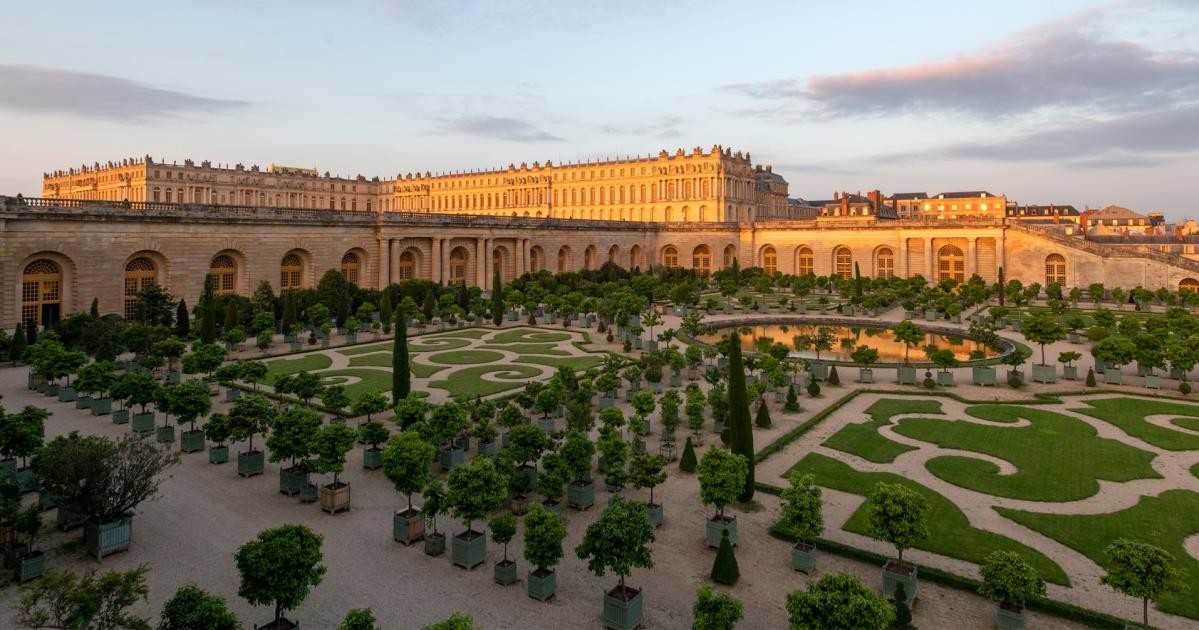
The palace’s design is a masterful orchestration of classical principles and Baroque exuberance, largely thanks to the collaboration of three exceptional architects: Louis Le Vau, Jules Hardouin-Mansart, and André Le Nôtre. Le Vau’s structural integrity provided a solid foundation, ensuring the building could support its immense scale and intricate ornamentation. Mansart’s flair for decoration elevated the palace to unparalleled levels of splendor; his influence is most evident in the soaring facades and elaborate detailing that seem to defy gravity. However, it was André Le Nôtre who truly shaped the surrounding gardens into an expansive landscape—a carefully planned reflection of Versailles’s power and order. The symmetrical design, punctuated by grand fountains, meticulously manicured lawns, and geometric parterres, creates a sense of harmonious symmetry and controlled beauty. The entire complex operates as a visual metaphor for Louis XIV’s reign – a perfectly balanced and imposing statement of authority.
A Reflection of Majesty: The Galerie des Glaces
Stretching over 73 meters in length, this iconic space is a marvel of engineering and artistry. The hall’s mirrored surfaces, meticulously arranged to amplify natural light streaming through arched windows, create an illusion of infinite space—a deliberate tactic designed to impress foreign dignitaries and project the image of boundless wealth and power. Beyond its aesthetic brilliance, the Hall of Mirrors played a pivotal role in diplomatic negotiations, royal balls, and, most dramatically, the signing of the Treaty of Versailles in 1919 – a poignant reminder of the palace’s enduring connection to French history and the complexities of international relations. The mirrors themselves weren't simply decorative; they were a strategic tool, reflecting not only light but also prestige—a symbol of Louis XIV’s ambition to establish France as the dominant power in Europe. The sheer scale and reflective surfaces are designed to overwhelm the senses, reinforcing the perception of royal magnificence.
Beyond the Formal State Apartments: Intimate Life at Versailles
While the grand state apartments represent the outward face of Louis XIV’s reign, the palace also offers glimpses into the more private lives lived within its walls. The *Grand Trianon* and *Petit Trianon*, smaller palaces nestled within the estate, served as retreats from the pressures of court—places where Louis XV and Marie Antoinette could escape the constraints of their positions and indulge in personal passions. The *Petit Trianon*, in particular, holds special significance due to its association with Marie Antoinette, who sought refuge within its walls, creating a pastoral haven where she cultivated her love of nature and entertained friends. These spaces offer a nuanced understanding of the lives lived behind the gilded façade of Versailles—a testament to the human element within a realm defined by grandeur and formality.
A Garden of Power: Le Nôtre’s Masterpiece & Notable Exhibitions
Designed by André Le Nôtre, Louis XIV’s visionary landscape architect, these aren't simply decorative grounds but an engineering marvel and a profound statement about power and beauty. Structured around a central axis, punctuated by grand fountains, meticulously manicured lawns, and geometric parterres, the gardens create a sense of harmonious symmetry. Hidden grottoes offer moments of secluded tranquility, while the *Grandes Eaux* spectacles—elaborate fountain displays choreographed to music—are a breathtaking demonstration of Le Nôtre’s artistry and engineering prowess. The creation of these spectacular water features required an astonishing feat of innovation – a complex system of canals, pumps, and reservoirs designed to control the flow of water with unparalleled precision. Today, visitors can explore the vast collection housed within the Palace, including the Royal Furniture Collection, showcasing exquisite craftsmanship; the Royal Opera, offering insights into 18th-century musical life; the Collection of Ceramics, displaying a diverse range of porcelain and faience; and regularly updated temporary exhibitions that delve deeper into specific aspects of Versailles’s history and art. The Palace of Versailles offers more than just a visual spectacle; it’s a journey through centuries of French history, art, and culture. Its unique appeal lies in its ability to seamlessly blend architectural grandeur with intimate glimpses into royal life. The meticulously restored state apartments, the expansive gardens, and the surrounding estate provide a comprehensive experience that captivates visitors of all ages and interests. Furthermore, ongoing research and conservation efforts ensure that this iconic landmark continues to inspire awe and wonder for generations to come.
Пов'язані статті

Jean-Louis Forain: Capturing Parisian Life with Wit & Realism
Explore the captivating world of Jean-Louis Forain, a master Impressionist chronicler of Belle Époque Paris. Discover his satirical paintings, realistic scenes & lasting legacy. Learn about collecting Forain's art today!


Charles Le Brun: Master of French Baroque Classicism & His Enduring Legacy
Explore the life & art of Charles Le Brun, master of French Baroque Classicism. Discover his royal commissions, influence on Versailles, and enduring legacy through detailed analysis & stunning artworks.

The Enduring Portrait of Kinship: Family Representations Across Art History
Explore the rich history of family portraiture through art! Discover masterpieces from across centuries & learn how artists captured kinship, intimacy, and societal values. Expert insights for collectors & enthusiasts.
Перелік творів мистецтва



Підпишіться на нашу розсилку
Будьте в курсі останніх новин зі світу мистецтва, ексклюзивних пропозицій та ідей для декорування.
Отримайте 3 безкоштовні рекомендації щодо мистецтва
Розкажіть нам про свій проєкт, і наші експерти з мистецтва підготують для вас 3 персоналізовані пропозиції щодо творів мистецтва.
Not Sure Where to Start?
Let Us Curate 3 Options Just for You - Free!