

Зміст
Короткі факти
- Museums on APS:
- Білий будинок
- Білий будинок
- Білий будинок
- Білий будинок
- Білий будинок
- Art period: — XIX століття
- Works on APS: 211
- Emotional tone: роздумливий
- Copyright status: Public domain
- Room fit: вітальня
- Born: 1813, Бостон, США
- Also known as:
- Г. П. А. Хілі
- Джордж Пітер Хілі
- Top-ranked work: John Tyler
- Creative periods: mature period
- Best occasions:
- центральний елемент
- заява
- Більше…
- Mediums:
- олія на полотні
- акрил на полотні
- Gift suitability: other-none
- Died: 1894
- Nationality: США
- Color intensity:
- насичений
- монохромний
- Lifespan: 81 years
- Top 3 works:
- John Tyler
- Abraham Lincoln
- Abraham Lincoln
- Movements: academic realism
- Vibe:
- класика
- елегантний
- Typical colors:
- теплі тони
- other
- природний
Вікторина з мистецтва
Для кожного питання є лише одна правильна відповідь.
Запитання 1:
Який основний стиль малювання характеризує творчість Джорджа Пітера Олександра Хілі?
Запитання 2:
З яким художником Джордж Пітер Олександра Хілі навчався у Парижі?
Запитання 3:
У якому році Джордж Пітер Олександра Хілі був обраний академіком-кореспондентом Національної Академії Дизайну?
Запитання 4:
Яке історичне полотно Джорджа Пітера Олександра Хілі відображає стратегічну нараду Авраама Лінкольна та його радників після закінчення громадянської війни?
Запитання 5:
У якому році Джордж Пітер Олександра Хілі помер?
George Peter Alexander Healy: A Chronicle of American Faces
George Peter Alexander Healy, a name that resonates deeply within the annals of 19th-century American art, was far more than simply a painter of portraits. He was a meticulous observer of his time, a skilled craftsman who captured not just physical likenesses but also the very essence and spirit of those he depicted – presidents, dignitaries, and prominent figures who shaped the trajectory of a nation undergoing profound transformation. Born in Boston on July 15, 1813, Healy’s life was interwoven with both personal hardship and artistic triumph, ultimately culminating in a legacy defined by his remarkable ability to immortalize American history through the art of portraiture.Early Years and European Influences
Healy's childhood was marked by an early loss – the death of his father, a merchant marine captain – which instilled within him a sense of responsibility and resilience from a remarkably young age. Forced to contribute financially to his family’s upkeep, he began drawing at sixteen, fueled by a nascent ambition to pursue art. A pivotal moment in his formative years came through the guidance of Jane Stuart, daughter of the celebrated Gilbert Stuart, who generously loaned him a copy of Guido Reni's “Ecce Homo,” which Healy meticulously reproduced in color and subsequently sold – an early demonstration of his talent and entrepreneurial spirit. This mentorship laid the foundation for his artistic development, introducing him to the principles of formal training under Thomas Sully, whose influence would profoundly shape his technique and approach. In 1834, at the age of twenty-one, Healy embarked on a transformative journey to Europe, an experience that spanned sixteen years and fundamentally altered the course of his artistic life. He immersed himself in the vibrant art scenes of Paris and Rome, studying under masters like Antoine-Jean Gros and Thomas Couture. These encounters exposed him to the academic traditions of French realism, fostering a deep appreciation for meticulous detail and historical narrative. The influence of these European masters is readily apparent in his work – a refined technique, a nuanced understanding of composition, and an ability to imbue his portraits with a sense of gravitas and authority. He received a third-class medal at the Paris Salon in 1840, a significant recognition of his burgeoning talent within the international art community. Further validation arrived in 1843 when he was elected as an honorary academician into the National Academy of Design, solidifying his position as a respected artist on both sides of the Atlantic. This extended period abroad wasn’t merely about acquiring technical skills; it was about absorbing the cultural currents and intellectual ferment that defined Europe at the time – elements which would later infuse his portraits with depth and historical context.Capturing American Identity: Presidential Portraits
Upon his return to the United States in 1855, Healy quickly established himself as a leading portraitist, renowned for his ability to capture not just physical likenesses but also the character and essence of his sitters. He was immediately sought after by prominent figures – John C. Calhoun, James Buchanan, and many others – who recognized his skill in conveying authority and presence. However, it was his series of presidential portraits that truly cemented his legacy. Commissioned for the Corcoran Gallery in Washington, D.C., Healy meticulously immortalized every U.S. president from John Quincy Adams to Ulysses S. Grant, creating a visual record of American leadership during a period of immense transformation and national growth. These weren’t simply flattering depictions; they were insightful studies of personality and authority, offering glimpses into the lives and minds of those who shaped the nation's destiny. His portrait of Abraham Lincoln stands as an iconic representation of the 16th president – a powerful image that captures his solemnity, unwavering resolve, and profound humanity during a time of national crisis.Beyond Likeness: Historical Narrative and *The Peacemakers*
While celebrated for his portraits, Healy’s artistic ambition extended beyond mere representation. He sought to capture moments of historical significance, imbuing his canvases with narrative power. His most ambitious undertaking in this regard was *The Peacemakers* (1868), a monumental painting depicting a strategy session between Abraham Lincoln and his advisors following the end of the Civil War. This work is not just a depiction of a meeting; it’s a poignant meditation on peace, reconciliation, and the weight of leadership – a complex exploration of the challenges inherent in rebuilding a nation after devastating conflict. *The Peacemakers* showcases Healy's remarkable ability to orchestrate complex compositions, convey emotional depth through carefully considered gestures and expressions, and weave historical context into his artistic vision. It remains a powerful testament to his skill as a historical painter, offering a visual window into a pivotal moment in American history.A Lasting Legacy: Chicago and Remembrance
In 1892, Healy returned to Chicago, spending his final years surrounded by family and continuing to paint prolifically. He passed away on June 24, 1894, leaving behind an extensive body of work that continues to captivate and inspire art enthusiasts worldwide. His autobiography, *Reminiscences of a Portrait Painter*, published posthumously, provides invaluable insights into his life, artistic philosophy, and the world he inhabited – a deeply personal account filled with anecdotes and observations gleaned from decades spent observing human nature and capturing the essence of American society. Healy’s legacy rests not only on the sheer volume of his output but also on the quality and historical significance of his paintings. He was a master of realism, a keen observer of human nature, and a skilled storyteller who used his art to document the lives and times of those who shaped America. His portraits remain treasured artifacts – enduring reminders of the individuals who left their mark on history and offering a poignant glimpse into the past.Further Information
- Smithsonian American Art Museum: https://americanart.si.edu/artist/george-peter-alexander-healy-2141
- Wikipedia: https://en.wikipedia.org/wiki/George_Peter_Alexander_Healy
Пов'язані статті

Alonzo Chappel: Historical Narrative & Romantic Vision in 19th-Century American Painting
Explore the captivating world of Alonzo Chappel, a master of 19th-century American historical painting. Discover his iconic works, Romantic style & lasting legacy. Learn about collecting Chappel's art today!

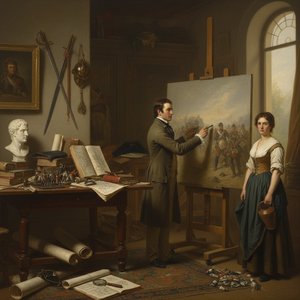
Historical Realism: A Pursuit of Truthful Representation in 19th-Century Art
Explore the captivating world of 19th-century Realism! Discover key artists like Courbet, groundbreaking techniques & the social context behind this influential art movement. Expert insights at ArtsDot.
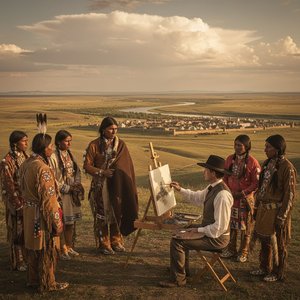
George Catlin: Witnessing & Representing Indigenous Life on the American Frontier
Explore the captivating art of George Catlin, renowned for his vivid portraits & landscapes documenting Native American life on the frontier. Discover a vanishing world through stunning paintings and historical context.



