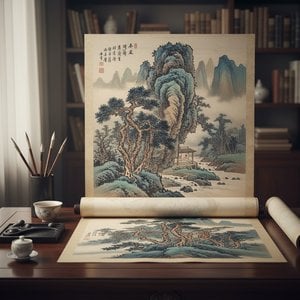
Wang Fuyang: Bridging Tradition and Contemporary Vision
Born in Dalian, China, in , Wang Fuyang’s artistic journey is a compelling narrative of absorbing diverse influences – from the vibrant imagery of early cartoons to the rigorous training of the Liaoning Art School. Initially drawn to the accessible world of illustrated stories, his path evolved into a sophisticated practice encompassing novels, short stories, and, most notably, comics. This multifaceted approach reveals an artist deeply interested in storytelling, visual language, and the complex interplay between tradition and modernity within Chinese culture. His work isn’t simply about depicting scenes; it's about conveying atmosphere, emotion, and often, subtle social commentary.
Wang Fuyang’s early artistic development was profoundly shaped by his childhood exposure to popular media. Like many young artists in China during that era, he began by meticulously copying the dynamic figures and bold colors of animated cartoons found in newspapers and periodicals. This foundational practice instilled a keen eye for composition, character design, and storytelling – skills that would later inform his more ambitious projects. The Liaoning Art School provided him with a formal grounding in traditional Chinese painting techniques, introducing him to brushwork, ink washes, and the philosophical underpinnings of classical art. However, rather than simply replicating these established methods, Wang Fuyang sought to integrate them into a distinctly personal style.
The Evolution of a Visual Storyteller
Wang’s transition from cartooning to comics represents a significant shift in his artistic focus. Comics, with their inherent ability to combine sequential imagery and narrative text, offered him an ideal medium for exploring complex themes and engaging audiences on multiple levels. His early comic work often drew inspiration from Chinese folklore and mythology, reimagining these ancient tales with a contemporary sensibility. He skillfully blended traditional motifs – dragons, phoenixes, emperors, and mythical landscapes – with modern settings and characters, creating a visually arresting and intellectually stimulating experience for the reader.
Beyond comics, Wang Fuyang’s novels and short stories demonstrate his continued fascination with storytelling. His narratives frequently delve into themes of identity, memory, and the changing landscape of China. He masterfully employs vivid descriptions and evocative imagery to transport readers to specific locations and immerse them in the emotional lives of his characters. While distinct from his visual work, these literary endeavors share a common thread: a deep appreciation for Chinese culture and a desire to explore its complexities through compelling narratives.
A Unique Artistic Style
Wang Fuyang’s artistic style is characterized by a remarkable balance between traditional and contemporary elements. He skillfully incorporates techniques learned during his formal training in Chinese painting – particularly the use of ink washes, layered brushstrokes, and a nuanced understanding of color – into his comics and illustrations. However, he also embraces modern design principles, employing dynamic layouts, bold colors, and a streamlined approach to visual storytelling. This fusion creates a distinctive aesthetic that is both familiar and refreshingly innovative.
Furthermore, Wang’s work often reflects a deep engagement with the concept of “qi” – the vital life force believed to permeate all things in traditional Chinese philosophy. This principle manifests itself in his art through flowing lines, dynamic compositions, and an emphasis on capturing the essence of movement and energy. His use of negative space is particularly noteworthy, creating a sense of openness and allowing the viewer’s eye to wander freely across the page.
Recognition and Legacy
While Wang Fuyang's work may not always receive the widespread recognition afforded to some of his contemporaries, he has steadily gained respect within the Chinese art community. His unique blend of traditional techniques and contemporary sensibilities has resonated with audiences who appreciate both the richness of China’s artistic heritage and its evolving cultural landscape. His contributions to comics have helped to elevate the medium's status as a legitimate form of artistic expression.
Further research into Wang Fuyang’s work reveals connections to other prominent figures in Chinese art, including Wang Fangyu (a calligrapher and scholar), suggesting a shared interest in exploring the relationship between art, literature, and cultural heritage. His ongoing practice demonstrates a commitment to pushing the boundaries of visual storytelling and continuing to engage with the complexities of modern China.