


1


Оновлено Листопад 2026 · за рейтингом нашої популярності (кількість пошукових запитів, переглядів та замовлень для кожної роботи) · 3 робіт Mogens Hoff у нашому каталозі
Коротко кажучи
Найвідоміший твір Mogens Hoff — це The Omnipresent Hooded Vultures, Taking Flight (1980). Його можна побачити в Statens Museum For Kunst у місті Копенгаген. Наступні у списку — Desert Rose (1980) та Speaker Erik Ninn Hansen. У нашому каталозі представлено 3 робіт Mogens Hoff; цей путівник містить 3 найвідоміших із них із зазначенням року, музею та історії кожного твору.
2 музеїв, у яких зберігається більшість картин із цього списку.
| Музей | Місто | Твори Mogens Hoff | Картини зі цього списку |
|---|---|---|---|
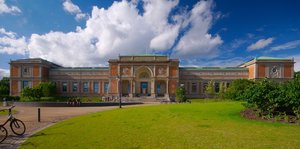 Statens Museum For Kunst |
Копенгаген | 2 | The Omnipresent Hooded Vultures, Taking Flight, Desert Rose |
 Данський парламент |
Копенгаген | 1 | Speaker Erik Ninn Hansen |
Усі представлені на цій сторінці роботи Mogens Hoff, датовані 1980 роком. Ось вони, у порядку популярності.
Оберіть рік, щоб переглянути його витвори.
На вершині списку — The Omnipresent Hooded Vultures, Taking Flight (1980), Statens Museum For Kunst, Копенгаген. Слідом за нею: Desert Rose (1980) та Speaker Erik Ninn Hansen.
46 років. Mogens Hoff народився у 1934, а The Omnipresent Hooded Vultures, Taking Flight датується 1980 роком.
У нашому каталозі 3 робіт Mogens Hoff.
Більшість із них можна знайти в Statens Museum For Kunst (Копенгаген) та Данський парламент (Копенгаген). У списку музеїв вище наведено повну розбивку.
У 1980 — більше, ніж у будь-який інший час: 2 із 3 творів на цій сторінці датуються саме цим періодом, The Omnipresent Hooded Vultures, Taking Flight серед них.
На цій сторінці ви можете побачити 2 творів із Statens Museum For Kunst, Копенгаген, зокрема The Omnipresent Hooded Vultures, Taking Flight та Desert Rose.
Mogens Hoff (1934-2008) emerged from Denmark’s artistic landscape as a painter who seamlessly blended lyrical abstraction with the energetic pulse of pop art, leaving an indelible mark on Danish visual culture. Born in Frederiksberg, his creative spirit was nurtured within a home steeped in artistic tradition; his grandfather was a painter, and his mother, a romantic soul, encouraged his path toward the canvas. His formative years were spent absorbing the avant-garde currents swirling through Paris in the late 1960s—a period that profoundly shaped his artistic sensibilities and propelled him toward experimentation with bold color palettes and graphic forms.
Hoff’s artistic journey began with a profound fascination for the natural world, particularly landscapes imbued with atmospheric depth and subtle tonal variations. This initial preoccupation would become a recurring motif throughout his oeuvre, informing compositions characterized by meticulous observation and an intuitive understanding of how light interacts with surface textures. He was not merely depicting scenery; he sought to convey emotion—a feeling of quiet contemplation mingled with the dynamism of existence itself. The influence of Abstract Expressionism is palpable in his early works, evident in expansive canvases dominated by washes of color that prioritize gesture and spontaneity over precise representation.
As his career progressed, Hoff demonstrated a remarkable ability to evolve without losing his foundational connection to nature. He quickly embraced the stylistic innovations of pop art, incorporating halftone printing techniques and referencing imagery from popular culture—a deliberate move to engage with the zeitgeist of his time and challenge traditional artistic conventions. This duality—a grounding in contemplative abstraction alongside an engagement with contemporary visual language—distinguishes him as a truly unique artist.
During the 1970s, his horizons expanded far beyond the European landscape. His travels to Kenya and encounters with the Turkana people introduced new dimensions to his work, leading him to explore themes of African nature and wildlife. This period was not only marked by a shift in subject matter but also by a multidisciplinary approach, as he published illustrated books documenting these profound cultural and natural encounters. His ability to weave the exotic and the ethnographic into his painterly language added a layer of global significance to his Danish roots.
Throughout his long and prolific career, Hoff continued to refine his technique, mastering oil paints and experimenting with mixed media approaches. He developed a distinctive style marked by layered textures and luminous colors, achieved through the careful application of glazes and impasto—a deliberate effort to imbue his paintings with palpable physicality. In the 1980s, he further expanded his repertoire by exploring landscapes infused with mythological themes, occasionally drawing inspiration from the masters of the past to create works that felt both ancient and contemporary.
The historical significance of Mogens Hoff lies in his ability to bridge disparate movements, creating a cohesive visual language that spoke to both the intimate beauty of the natural world and the loud, graphic energy of the modern era. His contributions to the art world are cemented by his presence in prestigious collections, including:
Through his mastery of color, his adventurous spirit, and his unwavering commitment to the expressive power of paint, Mogens Hoff remains a vital figure in the history of Danish modernism.

