Henri-Joseph Harpignies: A Pioneer of Atmospheric Landscape Painting
Henri-Joseph Harpignies (1819 – 1916) stands as a pivotal figure in the history of French landscape painting, embodying the spirit of the Barbizon School and leaving an indelible mark on subsequent generations of artists. Born in Valenciennes, Belgium—though his family’s roots lay firmly in France—Harpignies defied parental expectations for a conventional business life to pursue his passion for art with unwavering dedication.
- Early Life & Training: From the outset, Harpignies demonstrated exceptional artistic talent. Encouraged by his father, he enrolled at Valenciennes High School where he excelled in drawing, music and geography—subjects that would nurture his burgeoning creative spirit. His formative years were spent amidst a bourgeois upbringing, fostering an appreciation for observation and meticulous detail.
- The Barbizon Influence: Harpignies’ artistic trajectory took its decisive turn when he embarked on a journey to Italy in 1848. This immersive experience profoundly shaped his worldview, introducing him to the principles of direct observation championed by luminaries like Jean-Baptiste-Camille Corot and establishing a lifelong connection with the Barbizon School’s ethos. The Barbizon painters rejected academic conventions, prioritizing capturing the essence of rural landscapes with uncompromising realism.
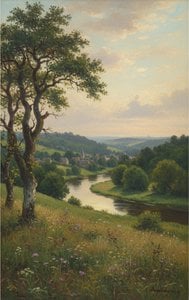
- Technique & Style: Harpignies' distinctive style is characterized by serene depictions of French countryside bathed in subtle atmospheric light. He achieved this mastery through painstaking study and a refined understanding of composition—techniques honed during his atelier training with Jean Achard. His palette favored muted tones, reflecting the quiet beauty of dawn and dusk, and he skillfully rendered textures to convey the palpable presence of nature.
- Notable Works: Harpignies’ oeuvre comprises iconic landscapes that continue to inspire admiration. Among his most celebrated paintings are *Soir sur les bords de la Loire*, *Les Corbeaux*, *Le Soir*, *Le Saut-du-Loup*, and *La Loire*. These works exemplify his ability to evoke emotion through precise rendering of light, color, and form—a testament to his artistic vision.
- Legacy & Influence: Harpignies’ impact extended beyond his own paintings. He served as a devoted teacher, imparting his knowledge to numerous students who carried forward his stylistic innovations. His influence can be discerned in the work of artists like Émile Appay and James Wilson Morrice—individuals who embraced Harpignies' approach to landscape painting and solidified the Barbizon School’s legacy.
Harpignies’ artistic contribution is recognized globally, with his paintings housed in prestigious museums across Europe. He died peacefully in Saint-Prive in 1916, leaving behind a rich artistic heritage that continues to resonate with audiences today—a beacon of Impressionistic realism and an enduring symbol of the sublime beauty of the French countryside.