The Explorer’s Eye: The Life and Legacy of George Francis Lyon
In the annals of nineteenth-century exploration, few figures possess a legacy as dualistic and evocative as George Francis Lyon. A man of both the sword and the sketchbook, Lyon navigated the treacherous boundaries between naval duty and artistic expression. Born in 1795 in the historic environs of East Sussex, his early life was shaped by the disciplined traditions of the British military class. As the son of a Lieutenant Colonel, he was destined for a life of service, yet beneath the rigid structure of his Royal Navy training beat the heart of a sensitive observer. His journey would eventually lead him far beyond the familiar shores of England, into the biting frosts of the Arctic and the sun-drenched landscapes of North Africa, transforming him from a mere officer into a vital visual chronicler of the unknown.
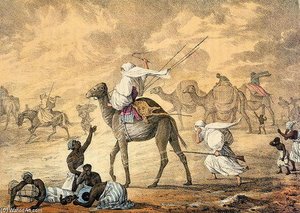
Lyon’s artistic development was inextricably linked to his maritime adventures. Unlike many contemporary artists who sought the idealized beauty of classical landscapes, Lyon’s work was forged in the crucible of real-world hardship. During his service in the Napoleonic Wars and subsequent missions, he developed a keen eye for the ethnographic and the environmental. His time in North Africa, particularly his government mission in 1819, allowed him to immerse himself in Arabic culture and landscapes. It was during these years that he began to master the art of the engraving, creating works that captured the intricate textures of Tuareg life and the stark, atmospheric beauty of the desert. His ability to translate the heat and dust of the Maghreb into the precise language of pen, ink, and watercolor provided a rare, unvarnished window into a world seldom seen by European eyes.
A Vision of Ice and Endurance
The most profound chapter of Lyon’s life began in 1821, when he joined Captain William Parry’s expedition to the Hudson Strait. This voyage, aimed at discovering the elusive Northwest Passage, would become the defining subject of his artistic output. In the frozen reaches of the Arctic, Lyon found a landscape that demanded a new kind of visual language—one stripped of ornament and focused on the raw power of nature. His sketches from this period are masterpieces of atmospheric realism; they do not merely depict ice and snow, but convey the crushing weight of the silence and the biting chill of the polar winds.
His work during these expeditions served a purpose far greater than mere aesthetic pleasure. Lyon’s meticulous pencil drawings and engravings provided essential scientific and geographical data for future explorers. He documented the flora, the fauna, and the profound interactions between European sailors and the Inuit communities with a level of detail that was both respectful and profoundly accurate. Through his eyes, the Arctic ceased to be a mythical void and became a tangible, living environment. His artistic technique, characterized by a muted palette of ochres, grays, and deep browns, mirrored the austere reality of the polar night, creating a sense of somber majesty that remains hauntingly beautiful to this day.
Historical Significance and Final Horizons
Tragically, the very environments that fueled Lyon’s creativity also claimed his life. He died in 1832, at the young age of thirty-six, leaving behind a body of work that stands as a bridge between the era of romantic exploration and the dawn of scientific documentation. While he may not have achieved the widespread fame of some of his contemporaries in the London art salons, his contribution to the visual record of human exploration is unparalleled.
The enduring significance of George Francis Lyon lies in his ability to marry the precision of a naval officer with the soul of an artist. His legacy can be summarized through several key contributions:
- Documentary Precision: His journals and sketches provided indispensable visual evidence for the study of Arctic geography and Inuit ethnography.
- Atmospheric Realism: He pioneered a style of landscape art that prioritized the emotional weight of environmental conditions over decorative embellishment.
- Cultural Bridge-Building: Through his depictions of North African and Arctic peoples, he offered a nuanced perspective on the human element within global exploration.
Today, when we look upon his engravings or study his delicate watercolors, we are not just viewing art; we are witnessing the firsthand observations of a man who stood at the edge of the known world, capturing the fleeting beauty of the Earth's most extreme frontiers.