Меню
БЕЗКОШТОВНА КОНСУЛЬТАЦІЯ З МИСТЕЦТВА

Короткі факти

  • Works on APS: 8
  • Also known as:
    • Jacopo Bassano
    • Francesco Da Ponte The Elder
    • Giambattista Bassano
    • Girolamo Bassano
    • Leandro Bassano
  • Museums on APS:
    • Фитцвільямський коледж
    • Museum of Fine Arts
    • National Trust
    • The National Trust For Scotland
  • Typical colors: espresso
  • Більше…

Квіз про мистецтво

У кожному запитанні лише одна правильна відповідь.

Запитання 1:
Q1
Запитання 2:
Q2
Запитання 3:
Q3
Запитання 4:
Q4
Запитання 5:
Q5

Francesco Bassano II: A Venetian Visionary

Francesco Bassano II (1560 – 1592) stands as a pivotal figure in Venetian Renaissance art, embodying the serene beauty and meticulous detail characteristic of his era. Born into a celebrated artistic lineage—his father, Jacopo Bassano, was himself a renowned painter—Francesco inherited not only talent but also an unwavering dedication to capturing the essence of nature and religious devotion. His life tragically ended prematurely at the age of thirty-two, leaving behind a legacy of remarkable paintings that continue to inspire admiration for their masterful execution and profound emotional resonance.

Early Life and Artistic Training

Francesco’s formative years were spent in Bassano del Grappa, where he honed his artistic skills under the watchful eye of his father. Jacopo Bassano established a thriving workshop, fostering an environment conducive to artistic experimentation and familial collaboration. Francesco's brothers—Giambattista, Girolamo, and Leandro—became fellow artists, creating a dynamic creative ecosystem that profoundly shaped their individual styles. This immersive training instilled in Francesco a deep understanding of Venetian painting techniques and traditions, preparing him for his burgeoning career as an independent artist.

Style and Technique: Landscape Serenity and Religious Drama

Bassano II’s artistic style is instantly recognizable by its tranquil landscapes infused with luminous color palettes and subtle atmospheric effects. He possessed an unparalleled ability to depict pastoral scenes—shepherds tending flocks under expansive skies—capturing the sublime grandeur of the Venetian countryside. However, his oeuvre extends beyond landscape painting; he excelled in portraying biblical narratives with remarkable sensitivity and psychological depth. Works like “Abraham Leaves Haran” exemplify his meticulous attention to detail, capturing the solemn expressions of the figures and conveying a palpable sense of spiritual contemplation. Bassano II’s technique involved layering thin glazes of pigment—a hallmark of Venetian Baroque—creating surfaces that shimmer with iridescent hues and imbue scenes with an ethereal quality.

Notable Works and Commissions

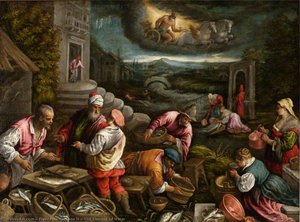
Francesco Bassano II gained considerable renown during his lifetime through prestigious commissions from influential patrons, including the Doge’s Palace in Venice. He undertook ambitious projects depicting historical events and mythological subjects, demonstrating his versatility as a painter and cementing his reputation as one of Venice's foremost artists. Among his most celebrated paintings are “Landscape with Shepherds,” showcasing his masterful command of color and composition, and "Battle Scene: Charles VIII Receiving the Crown of Naples," which portrays a dramatic confrontation with impressive realism and expressive dynamism. These works stand testament to Bassano II’s artistic prowess and contribute significantly to our understanding of Venetian art history.

Legacy and Influence

Francesco Bassano II's influence extended beyond his own lifetime, shaping the artistic sensibilities of subsequent generations of Venetian painters. His dedication to capturing natural beauty alongside profound spiritual themes established a precedent for artists seeking to elevate visual art as a vehicle for conveying moral and aesthetic ideals. Leandro Bassano, Francesco’s brother, continued the family tradition of painting, upholding the legacy of their father and ensuring that Bassano II's artistic vision endured. Today, Francesco Bassano II remains revered as a master of Venetian Renaissance art—a testament to his enduring contribution to the history of painting and an inspiration for artists striving to achieve sublime beauty and emotional depth.