

Navigating Nuance: Contemporary Art's Themes & Techniques (1945 – Present)

Зміст
The Shifting Sands: Defining Contemporary Art After Modernism
Contemporary art is a term used to describe the art of today, generally referring to art created from the 1970s onwards. Contemporary artists work in a globally influenced, culturally diverse, and technologically advancing world. Their art is a dynam...
The demarcation between “modern” and “contemporary” art is often less a definitive line and more a shifting of sands, a gradual evolution rather than a sudden rupture. While the mid-20th century—roughly post-World War II—signals the emergence of what we now understand as contemporary art, pinning down its precise beginning remains a complex endeavor. Modernism, with its emphasis on formal innovation, utopian ideals, and a belief in progress, had largely exhausted itself by the 1970s. The horrors of war, coupled with increasing social and political upheaval, fostered a deep skepticism towards grand narratives and universal truths—a sentiment that would come to define the new artistic landscape. The very notion of a singular “style” or movement began to dissolve, replaced by a diverse and often contradictory array of approaches. This wasn’t simply a rejection of the past; it was a questioning of the very foundations upon which art had been built. The focus moved away from purely aesthetic concerns towards conceptual explorations, social commentary, and an interrogation of the artwork's role within a rapidly changing world.
Postmodern Disruption: Challenging Grand Narratives & Embracing Plurality
Postmodernism encompasses a variety of artistic, cultural, and philosophical movements. It emerged in the mid-20th century as a skeptical response to modernism, emphasizing the instability of meaning, rejection of universal truths, and critique of gr...
The rise of Postmodernism acted as a catalyst for this shift. Emerging in the mid-20th century, it wasn’t so much a style *per se* but rather an attitude—a skepticism towards established norms and a rejection of overarching ideologies. Artists began to deliberately blend styles, appropriating imagery from popular culture, history, and other artistic traditions with playful irony and self-awareness. Joseph Kosuth, a pioneering conceptual artist, exemplifies this approach. His work often deconstructs the very definition of art, presenting language itself as the subject matter rather than relying on traditional visual forms. This questioning extended to the authority of the artist and the institution of the museum. John Baldessari similarly challenged conventional artistic practices through his use of photography, text, and film, creating works that were often deliberately fragmented and ambiguous. The embrace of eclecticism meant a rejection of stylistic purity; artists freely borrowed from diverse sources, blurring the boundaries between high and low culture. This period saw an explosion of new media—performance art, video installations, land art—further expanding the definition of what constituted “art” and challenging traditional notions of authorship and originality.
Materiality & Process: Exploring New Forms and Techniques in the Late 20th Century
Beyond conceptual explorations, contemporary artists also demonstrated a renewed interest in materiality and process. The late 20th century witnessed an increasing experimentation with unconventional materials—found objects, industrial components, even organic matter—often chosen for their inherent symbolic weight or textural qualities. This wasn’t simply about aesthetics; it was about engaging with the physical world in new ways and challenging traditional hierarchies of artistic mediums. Artists moved away from the pristine surfaces favored by Modernism, embracing imperfection, decay, and the visible traces of the creative process. The work of Elias Sime provides a compelling example of this trend. His intricate assemblages, constructed from discarded electronic components—e-waste—transform seemingly worthless materials into vibrant and captivating works of art. The meticulous arrangement of these fragments not only creates visually stunning patterns but also raises important questions about consumerism, technology, and the environmental impact of our modern world. This focus on process often involved a deliberate rejection of traditional artistic skills in favor of more direct and immediate forms of expression.
Identity, Culture, and Globalization: Key Themes in Contemporary Expression
As the world became increasingly interconnected, themes of identity, culture, and globalization took center stage in contemporary art. Artists began to explore their personal histories, cultural backgrounds, and political affiliations with greater urgency and complexity. The rise of multiculturalism challenged traditional Western-centric perspectives, giving voice to marginalized communities and celebrating diverse artistic traditions. This exploration often involved a critical examination of power structures, colonialism, and the legacy of historical trauma. Contemporary art became a platform for social commentary, addressing issues such as race, gender, sexuality, and environmental degradation. The work frequently transcends national boundaries, reflecting a globalized world where cultural exchange is both pervasive and fraught with tension. Artists increasingly engaged with local materials, traditions, and narratives, challenging the dominance of Western artistic conventions and fostering a more inclusive and representative art world.
Conceptual Art & Beyond: The Dematerialization of the Artwork
The legacy of Conceptual Art continues to resonate throughout contemporary practice. While initially radical in its rejection of traditional aesthetic values, it fundamentally altered our understanding of what constitutes an artwork. The idea behind the work—the concept—became paramount, often overshadowing the physical object itself. This dematerialization challenged the very notion of artistic ownership and commodification. Performance art, for example, exists primarily as a fleeting experience, documented through photographs or videos rather than existing as a tangible artifact. Installation art similarly emphasizes spatial relationships and immersive environments, prioritizing the viewer's interaction with the work over its inherent objecthood. Hiro Yamagata’s installations, such as his piece at the Contemporary Arts Center in Cincinnati, exemplify this approach, creating dazzling reflections that disorient and challenge our perception of reality. This emphasis on experience and participation has led to a blurring of boundaries between art and life, where the artwork is often inseparable from its context and audience.
Collecting Contemporary Art: Navigating Trends and Building a Visionary Collection
For collectors, navigating the contemporary art world can be both exhilarating and daunting. Unlike established masters with well-defined markets, contemporary artists are often subject to fluctuating trends and critical reassessments. Building a visionary collection requires not only discerning taste but also a deep understanding of artistic movements, cultural contexts, and emerging talent. It’s crucial to move beyond simply following market hype and instead focus on works that resonate personally and demonstrate genuine artistic merit. Researching artists thoroughly, visiting galleries and museums, and engaging with art professionals are essential steps in the process. Consider the artist's conceptual framework, technical skill, and potential for long-term growth. At ArtsDot.com, we offer a curated selection of handmade oil paintings and museum-quality prints, providing access to both established and emerging artists. Our team of experts can provide personalized guidance, helping you discover artworks that align with your aesthetic preferences and investment goals. Ultimately, collecting contemporary art is about more than simply acquiring objects; it’s about supporting artistic innovation, fostering cultural dialogue, and building a legacy for future generations. Explore our collection today and embark on your own journey of discovery.
Пов'язані статті

Reflections on Representation: Exploring the Meta-Narrative of 'Artwork' within Artistic Discourse
Explore the complex layers of artistic representation with ArtsDot.com's expert analysis of art history, self-reflexivity, and cultural context. Discover insights for discerning collectors.

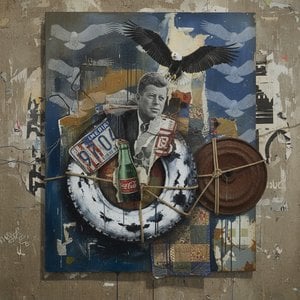
Robert Rauschenberg: Bridging Painting & Life – A Comprehensive Exploration of Combines, Silkscreens, and the Erasure of Boundaries
Explore the revolutionary art of Robert Rauschenberg – Combines, silkscreens & more. Discover his impact on Pop Art, investment potential & collecting insights for discerning art collectors.

