

James McBey: A Life Painted Across Borders – Artistic Innovation & Global Encounters
Зміст
Early Life & Self-Taught Beginnings: From Aberdeenshire Clerk to Etching Pioneer
James McBey (23 December 1883 – 1 December 1959) was a largely self-taught Scottish artist and etcher whose prints were highly valued during the later stages of the etching revival in the early 20th century. He was awarded an Honorary Doctor of Lette...
James McBey’s story is one of remarkable self-invention, a narrative that defies the conventional trajectory of artistic training. Born in 1883 in Newburgh, Aberdeenshire, Scotland – an illegitimate child in a rigidly Victorian society – his early life offered little indication of the profound impact he would have on the art world. He wasn’t nurtured within the walls of academies or guided by established masters; instead, his artistic awakening began amidst the mundane realities of a bank clerk's existence. A chance encounter with an article on etching sparked a fervent curiosity, leading him to borrow Maxime Lalanne’s treatise from Aberdeen public library and embark on a journey of self-education. The domestic mangle, repurposed for printing etchings on zinc plates, became his first studio – a testament to his ingenuity and unwavering dedication. By 1910, this relentless pursuit had borne fruit; confident in his burgeoning talent, McBey abandoned the security of banking for the uncertain path of an artist. That summer, a sojourn to the Netherlands proved pivotal, immersing him in the works of Rembrandt and inspiring a series of twenty-one etchings that would soon capture attention.
The Allure of Morocco: McBey’s Artistic Exploration of North Africa and the Orientalist Tradition
In art history, literature, and cultural studies, Orientalism is the imitation or depiction of aspects of the Eastern world (or "Orient") by writers, designers, and artists from the Western world. Orientalist painting, particularly of the Middle East...
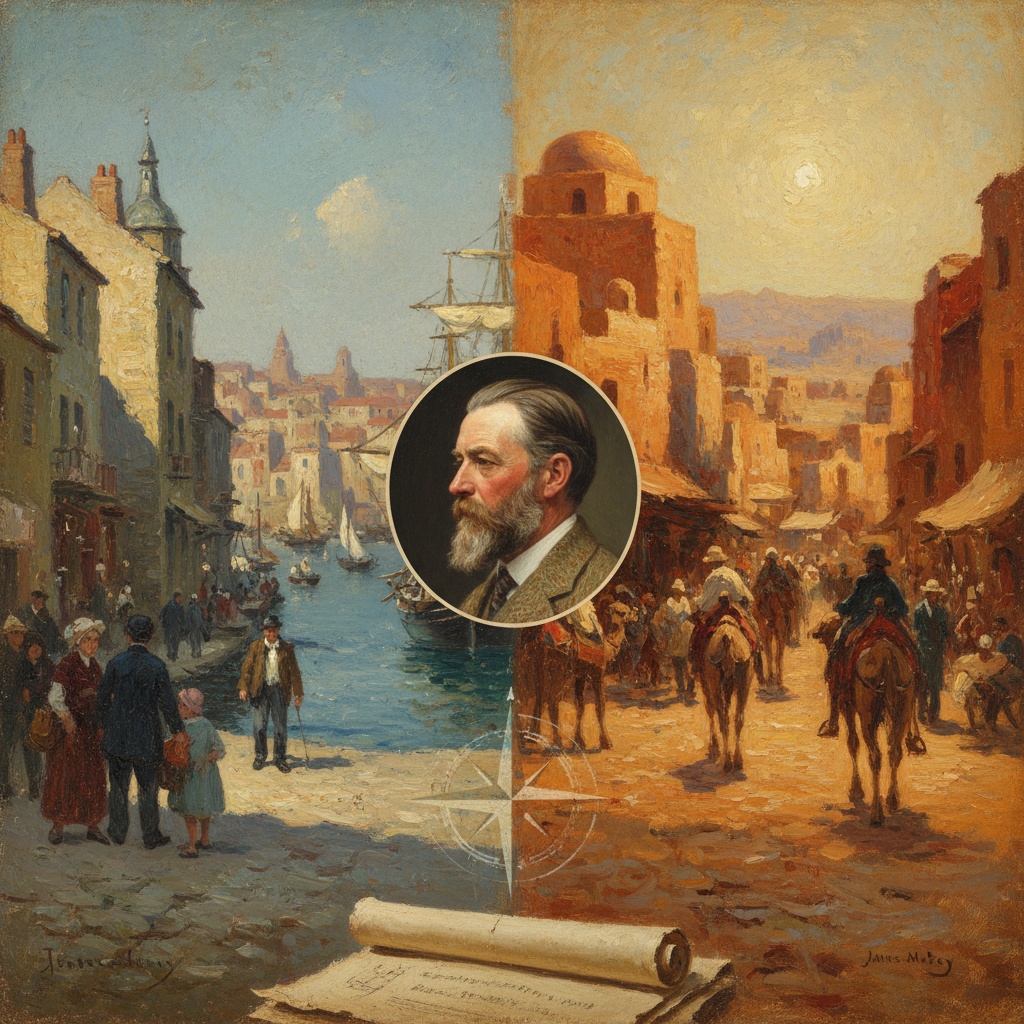
McBey's artistic sensibility found its most compelling expression in his travels to Morocco, beginning in 1912 with James Kerr Lawson. This wasn’t merely a geographical shift; it was an immersion into a world brimming with vibrant colors, exotic textures, and a culture profoundly different from his Scottish upbringing. He quickly became captivated by the bustling marketplaces, the dramatic landscapes, and the enigmatic faces of the Moroccan people. His watercolors from this period are particularly striking, capturing the light and atmosphere with a sensitivity that foreshadows his later oil paintings. However, it’s crucial to acknowledge the context of this fascination – the prevailing artistic movement of Orientalism. While McBey's depictions were often imbued with genuine admiration for Moroccan life, they also reflect the Western gaze of the era, a tendency towards romanticization and exoticization. His work exists within this complex dialogue, offering both an intimate portrayal of his subjects and a glimpse into the cultural biases of the time. The raw energy and immediacy of his style, however, set him apart from more conventional Orientalist painters.
Witness to War: McBey as an Official Artist in Egypt and Palestine During WWI
'He was born illegitimate in the Victorian era in the North East of Scotland and died 75 years later in Tangier, Morocco. He painted Lawrence of ...
The outbreak of World War I presented McBey with a unique opportunity – and challenge. His poor eyesight precluded active military service, but his artistic talent led to a commission within the Army Printing & Stationery Service in 1916. Initially stationed in Rouen, he documented the industrial landscape of France, capturing the furnaces and factories that fueled the war effort. These sketches garnered attention, leading to his appointment as an official war artist with the Egyptian Expeditionary Force in 1917. For two years, McBey traveled alongside Allied troops across Palestine, from Gaza to Damascus, creating a remarkable visual record of the conflict. He worked prolifically in both watercolors and oils, producing over 300 pieces that offered a starkly realistic portrayal of war – devoid of romantic glorification. His portraits of Emir Faisal and T.E. Lawrence are particularly noteworthy, capturing the complexities of these figures against the backdrop of political upheaval. A daring reconnaissance mission into the Sinai Desert with an Australian Camel Corps patrol further informed his work, providing firsthand experience of the harsh realities of desert warfare.
Master of Mediums: Examining McBey’s Skill in Etching, Watercolor & Oil Painting
 Felix Sanchez (The Picador)
James McBey’s "Felix Sanchez (The Picador)" – a raw, expressive 1921 oil painting of a Spanish figure. Explore Iberian modernism's unique style & rich textures. #SpanishArt #PortraitPainting
While often celebrated as an etcher – earning comparisons to Rembrandt and Whistler – James McBey was a remarkably versatile artist who excelled across multiple mediums. His etchings are characterized by their masterful use of light and shadow, intricate detail, and expressive lines. He possessed an exceptional ability to capture the essence of his subjects with minimal strokes, conveying both physical likeness and emotional depth. However, to limit McBey to etching alone would be a disservice to his broader artistic achievements. His watercolors demonstrate a keen eye for color and atmosphere, particularly evident in his Moroccan scenes. These works often possess a fluidity and spontaneity that complements the precision of his etchings. Later in life, he embraced oil painting with equal passion, developing a distinctive style characterized by bold brushwork and vibrant palettes. “Felix Sanchez (The Picador)”, for example, showcases his mastery of texture and expressive form, embodying the spirit of Iberian modernism. His ability to seamlessly transition between mediums speaks to his innate artistic talent and unwavering dedication to his craft.
A Cosmopolitan Life: Travels, Portraiture & The Pursuit of Artistic Recognition
McBey’s life was defined by a restless spirit of exploration and a relentless pursuit of artistic recognition. Following the war, he continued to travel extensively, revisiting North Africa and venturing further afield. He cultivated a reputation as a sought-after portraitist, capturing the likenesses of prominent figures such as Sir Harry Lauder in 1921 – a work now held in the Glasgow Museums. The post-war print boom saw his etchings command unprecedented prices, rivaling those of established Old Masters. However, this period of financial success was tempered by the Wall Street Crash of 1929, which brought an abrupt end to speculative art market excesses. In 1931, he married Marguerite Loeb, a photographer and bookbinder from Philadelphia, and together they established homes in both Tangier, Morocco, and London. He navigated a complex personal life, documented in coded entries within his diaries, revealing numerous affairs alongside enduring friendships with his muses. Despite the challenges, McBey remained committed to his art, constantly refining his technique and exploring new subjects.
McBey’s Enduring Legacy: Rediscovering a Forgotten Modern Master
Despite achieving considerable acclaim during his lifetime, James McBey has largely faded from mainstream art historical narratives. This is perhaps due to his independent spirit – he resisted easy categorization and eschewed the confines of established artistic circles. However, recent scholarship and renewed interest in his work are beginning to redress this oversight. His paintings and etchings offer a unique window into a pivotal period of cultural exchange, capturing the complexities of colonialism, the allure of the exotic, and the realities of war. “Volendam Girl”, painted in 1910, exemplifies his early talent for capturing rural solitude with impressionistic sensitivity. His legacy is preserved in numerous public collections, including the National Portrait Gallery, London, and the Imperial War Museum. The McBey Art Reference Library at Aberdeen Art Gallery stands as a testament to his enduring influence, providing invaluable resources for scholars and art enthusiasts alike. As we revisit his work today, we recognize not only his technical brilliance but also his remarkable ability to capture the human spirit across diverse cultures and challenging circumstances.
Пов'язані статті

Reflections of Power: Aristocratic Life in Western Art & the Rococo Era
Explore the captivating world of aristocratic life through Western art history. Discover Rococo masterpieces & portraits of European nobility. Expert insights for collectors and enthusiasts.


Illuminating Rembrandt's Chiaroscuro in The Night Watch - Nature
Explore the brilliance of Rembrandt's chiaroscuro technique & the Dutch Golden Age. Discover iconic artworks, expert analysis, and museum-quality reproductions at ArtsDot.com.

