

Barbara Hepworth: A Sculptural Dialogue with Form, Space & the Human Condition
Зміст
Early Influences & The Genesis of Abstract Form
 Wikipedia: Barbara Hepworth
Dame Jocelyn Barbara Hepworth (10 January 1903 – 20 May 1975) was an English artist and sculptor. Her work exemplifies Modernism and in particular modern sculpture. Along with artists such as Ben Nicholson and Naum Gabo, Hepworth was a leading figure...
Barbara Hepworth, a name synonymous with the power and grace of modern sculpture, didn’t emerge from a vacuum. Her artistic journey began in Wakefield, Yorkshire, amidst a landscape that would subtly but profoundly shape her aesthetic sensibility. Early studies at Leeds School of Art and later at the Royal College of Art in London provided foundational training, yet it was the burgeoning dialogue surrounding abstraction – particularly the work of Constantin Brâncuși and Jean Arp – that truly ignited her creative spirit. These pioneers demonstrated a radical departure from representational form, prioritizing instead the essential qualities of shape, material, and space. Hepworth’s initial explorations reflected this influence, moving away from traditional figurative sculpture towards a more reductive language. However, unlike some contemporaries who embraced pure abstraction, Hepworth's path was uniquely interwoven with her personal experiences and observations of the natural world.
The 1920s saw Hepworth experimenting with direct carving – a technique she would champion throughout her career. This process, involving directly shaping stone or wood rather than modeling clay for casting, fostered an intimate relationship between artist and material. It demanded a responsiveness to the inherent qualities of the medium, allowing the form to emerge organically from within the block. Early works like those produced during her travels in Italy reveal this nascent exploration of form, though still retaining echoes of figurative tradition. The seeds of her distinctive style – characterized by smooth, flowing lines and an emphasis on negative space – were beginning to take root.
St Ives & The Cornish Landscape: A Crucible of Creativity
 Sea Form (Porthmeor)
Discover 'Sea Form (Porthmeor)' by Dame Barbara Hepworth – a mesmerizing bronze sculpture embodying abstract expressionism. Explore its textured surface & evocative form.
The outbreak of World War II proved a pivotal moment in Hepworth’s artistic development. Along with Ben Nicholson, she sought refuge in St Ives, Cornwall, a remote coastal town that would become a haven for artists and a crucible of creativity. This move wasn't merely geographical; it was a profound shift in perspective. The rugged Cornish landscape – its dramatic cliffs, expansive skies, and the constant presence of the sea – permeated her work. The isolation fostered an intense focus on artistic exploration, free from the distractions of London’s art scene. St Ives became a hub for abstract artists, including Peter Lanyon and Trevor Bell, creating a vibrant community that challenged conventional norms.
Sea Form (Porthmeor), created during this period, exemplifies the impact of her surroundings. The bronze sculpture embodies the energy and rhythm of the ocean, its textured surface evoking the feel of weathered rock and crashing waves. Hepworth wasn’t simply *depicting* the landscape; she was attempting to capture its essence – its underlying structure and emotional resonance. This connection to nature wasn't merely aesthetic; it was deeply philosophical, reflecting a belief in the inherent beauty and power of the natural world. The St Ives group, influenced by Abstract Expressionism but forging their own distinct path, shared a commitment to exploring these themes.
Materiality & Process: Carving, Texture, and the Language of Stone
Hepworth’s dedication to direct carving set her apart from many sculptors of her generation. She believed that the act of physically engaging with the material – feeling its weight, texture, and resistance – was essential to the creative process. “Carving is like music,” she once stated, highlighting the rhythmic, intuitive nature of her work. Unlike modeling, which allows for greater flexibility and manipulation, carving demanded a deliberate and considered approach. Each cut had to be precise, each surface carefully smoothed and polished.
Her choice of materials – primarily stone, wood, and bronze – was also significant. Stone, with its inherent solidity and permanence, provided a grounding force, while wood offered a greater sense of warmth and organic texture. Bronze allowed for more complex forms and the exploration of negative space. Hepworth masterfully manipulated these materials, revealing their natural beauty and transforming them into objects of profound emotional power. The visible tool marks on her sculptures weren’t considered imperfections; they were evidence of the artist's hand, a testament to the physical labor and intellectual engagement involved in the creative process.
Hepworth's Pierced Forms: Exploring Space, Light, and Symbolism
Abstract expressionism in the United States emerged as a distinct art movement in the aftermath of World War II and gained mainstream acceptance in the 1950s, a shift from the American social realism of the 1930s influenced by the Great Depression an...
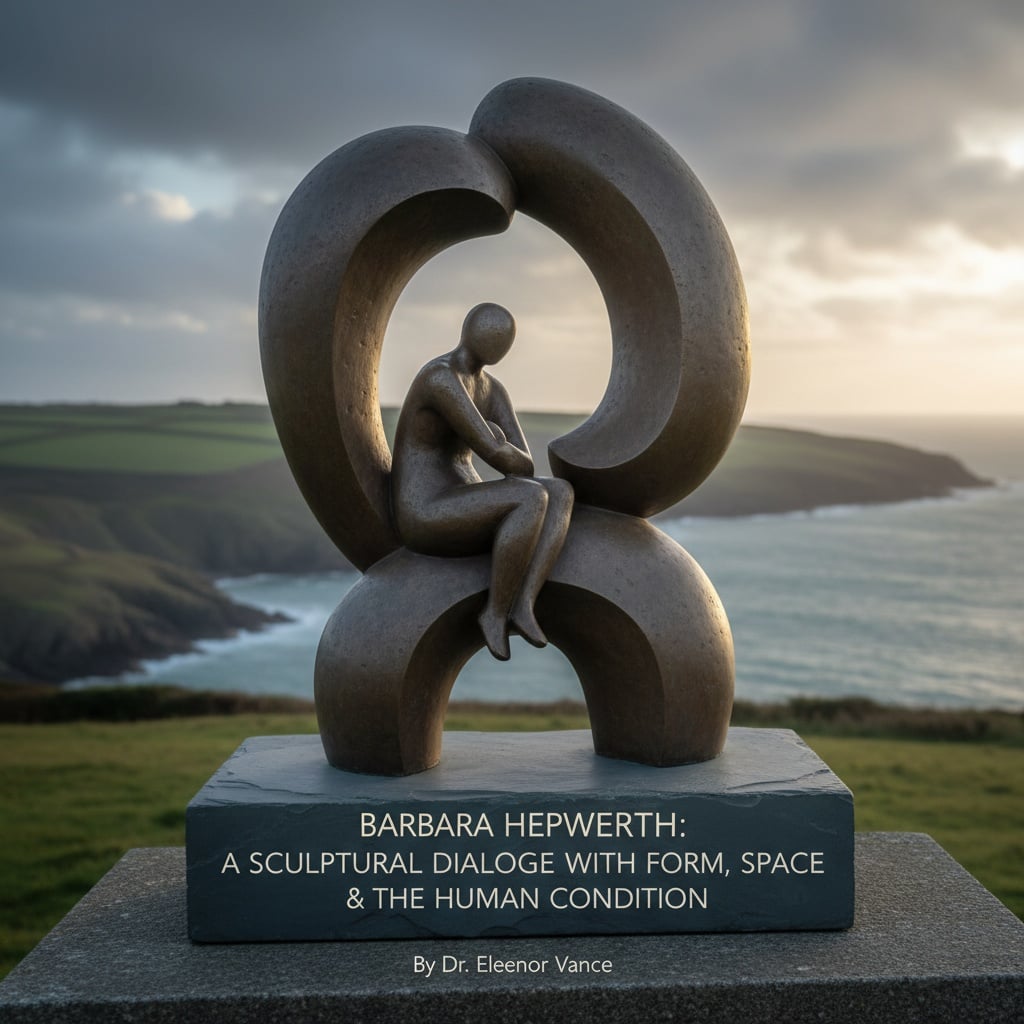
Perhaps the most recognizable aspect of Hepworth’s work is her use of pierced forms. Beginning in the 1930s, she began to carve openings into her sculptures, creating a dynamic interplay between solid form and empty space. These voids weren't merely decorative; they were integral to the sculpture’s meaning. They allowed light to penetrate the work, casting shadows that shifted and changed with the time of day, imbuing the sculptures with a sense of movement and life.
The symbolism of these pierced forms is open to interpretation, but often relates to themes of containment, release, and connection. Some scholars suggest they represent the human body – particularly the female form – while others see them as metaphors for spiritual awakening or the exploration of inner space. Hepworth herself remained deliberately ambiguous about their meaning, preferring to allow viewers to interpret them based on their own experiences. The sculptures invite contemplation, encouraging a dialogue between the artwork and the observer.
The Human Condition in Abstraction: Motherhood, Memory, and Loss
Despite her embrace of abstraction, Hepworth’s work was deeply rooted in human experience. Her personal life – particularly her role as a mother and wife – profoundly influenced her artistic vision. The series of ‘Hospital Drawings’, created during her daughter’s hospitalization in 1944, offer a poignant glimpse into the emotional intensity of this period. These drawings, depicting surgeons at work, are starkly realistic yet imbued with a sense of vulnerability and compassion.
The sculptures themselves often evoke themes of motherhood, memory, and loss. The ‘Two Forms’ series, for example, explores the tender relationship between mother and child, while other works suggest a longing for connection or a sense of absence. Hepworth wasn't interested in creating literal representations of these experiences; she sought to capture their underlying emotional essence through abstract form. Her sculptures are not simply objects to be admired; they are vessels of feeling, inviting viewers to connect with universal human emotions.
Legacy and Influence: Hepworth’s Enduring Impact on Modern Sculpture
Barbara Hepworth's influence on modern sculpture is undeniable. She paved the way for a generation of artists who embraced abstraction, direct carving, and the exploration of space and form. Her work continues to inspire sculptors today, challenging conventional notions of beauty and representation. Her commitment to materiality, her intuitive understanding of form, and her ability to imbue abstract shapes with profound emotional resonance set her apart as one of the most significant artists of the 20th century.
Hepworth’s legacy extends beyond her sculptures themselves. Her writings on art and philosophy continue to be studied by students and scholars alike, offering valuable insights into the creative process. Institutions like The Hepworth Wakefield ensure that her work remains accessible to a wide audience, fostering a deeper appreciation for her artistic vision. For collectors seeking works of enduring beauty and intellectual depth, Barbara Hepworth represents an exceptional investment – not just in art, but in a profound exploration of the human condition.
Пов'язані статті

The Sublimity of Color: Exploring the Emotional Landscapes of Mark Rothko's Abstract Expressionism
Explore the profound emotional depth of Mark Rothko's abstract expressionism. Discover the history, techniques & lasting impact of this pivotal Color Field painter. Expert insights for collectors and art enthusiasts.


Navigating the Art Market: A Collector's Guide to Acquisition & Investment
Expert guidance for art collectors. Learn to assess value, authenticate artworks, build a lasting investment portfolio & navigate the fine art market with confidence. Discover your next masterpiece.

Frank McClure: A Study in Abstract Expressionism's Emotional Landscape & Material Innovation
Discover the profound emotional depth & innovative techniques of Frank McClure, a key figure in Abstract Expressionism. Explore his woodcuts, influences, and lasting legacy – essential reading for serious art collectors.

Beyond Representation: Emotional Depth & Formal Innovation in Abstract Expressionism
Explore the profound emotional depth & formal innovation of Abstract Expressionism. Discover key artists, collecting insights, and investment potential with expert guidance. Learn more now.

