

 Замовити друк Купити цифрове зображення
 Надіслати
 Поділитися
 Details
 Додати до улюблених

 Завантажити
 Схожі вироби
 X-Ray
X-Ray
 Слайд-шоу
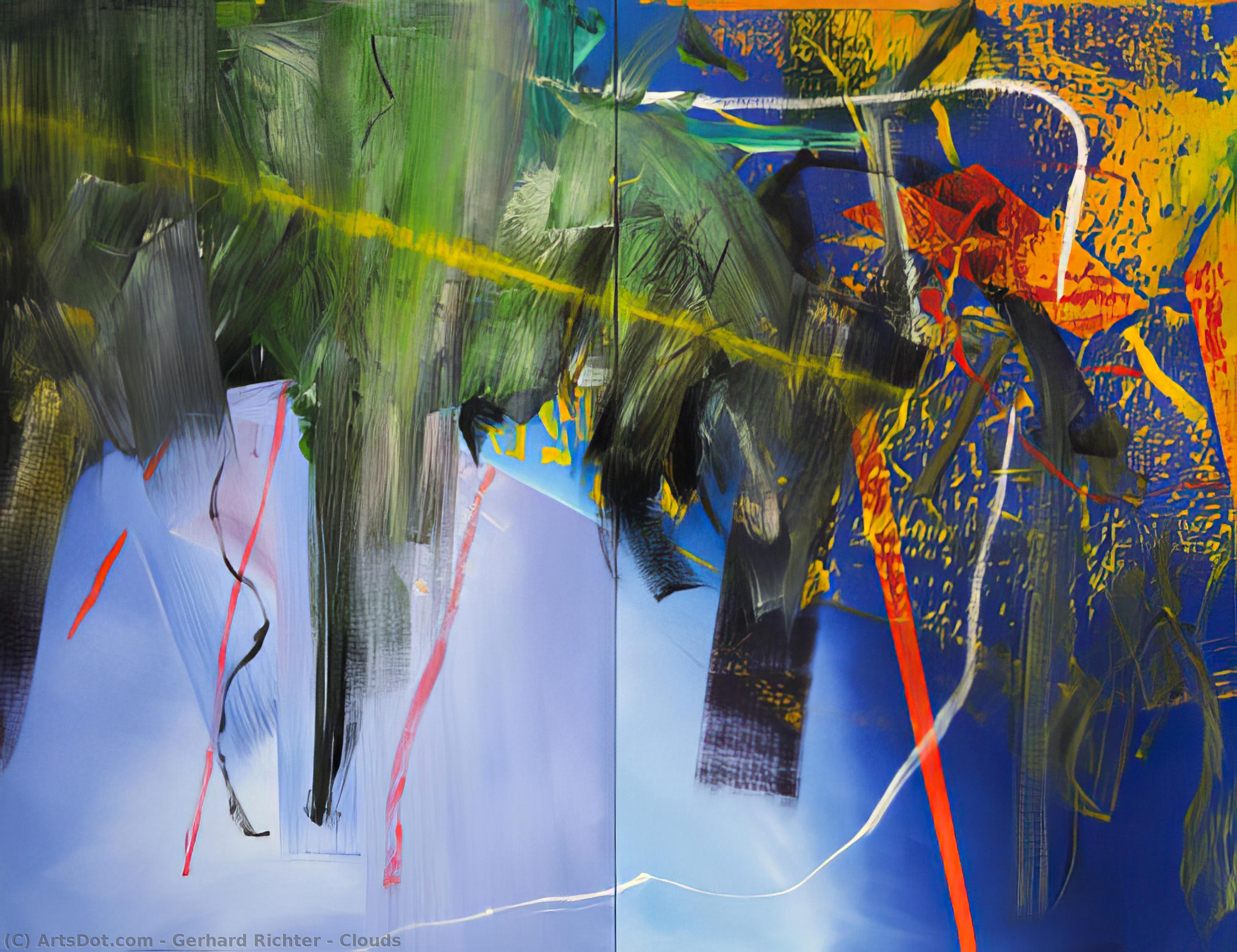
Облака
 Олія на полотні
- Настінне мистецтво
- Abstract Expressionism
 1982
1982- Сучасне мистецтво
 200.0 x 206.0 cm
Олійная репродукція ручної роботи
Написана вручну олією на полотні у вашому розмірі та рамі, виготовлена на замовлення нашими художниками.




P118B $10

P118H $10

P118W $10

P438Z $10

P508JH $12

P508YH $12

P805H $10

P805Z $10

P919BZ $10

P919G $10

P919XJ $10

P959ZH $10

P968JZ $12

W106C $8

W218G $10

W218JH $8

W218Y $10

W307PJ $10

W316G $10

W316PJ $8

W316Y $10

W398PJ $8

W4111J $10

W500HY $15

W500JH $15

W692G $12

W849H $8

W940BG $15

W953PJ $8




 Читати далі
Обирайте з наших стандартних розмірів, що відповідають оригінальним пропорціям твору мистецтва.

Ви можете вказати власні розміри, щоб репродукція підійшла до конкретної рами або інтер'єру. Якщо вибраний вами розмір не відповідає пропорціям оригіналу, ми або обріжемо полотно, або доповнимо картину додатковими елементами, промальованими вручну. Цифровий макет буде надіслано вам на затвердження перед початком виробництва.
Зверніть увагу, що попередній перегляд на екрані не відображає фактичне обрізання або розширення зображення. Тільки макет точно покаже остаточну композицію.
Хоча ми можемо виготовити виріб у нестандартному розмірі, для збереження оригінальних пропорцій рекомендуємо обирати варіанти зі встановленого списку.
Після оформлення замовлення команда ArtsDot.com зв'яжеться з клієнтом електронною поштою для отримання інструкцій та надасть попередній макет
Доставка по всьому світу () за 3–4 тижні замість стандартних 5 тижнів. (1 Липень). Без жодних компромісів у якості.

Безкоштовна експрес-доставка по всьому світу

Високоякісне лляне полотно

Повне страхове покриття доставки

Гарантія відшкодування митних зборів

Гарантія точного відтворення кольорів

Політика повернення протягом 60 днів (лише у разі виявлення дефектів)

Гарантія повернення 100% коштів

Знижка на багатоелементні замовлення
 Скляний варіант доступний лише для розмірів до 110 см

Облака
Матеріал репродукції
Розмір репродукції
-


Підсумкова ціна
-
Опис твору
Gerhard Richter’s “Clouds”: A Symphony of Abstraction
Gerhard Richter's 1982 masterpiece, "Clouds," stands as a cornerstone of contemporary art, embodying his lifelong quest to reconcile representation with pure visual experience. This monumental canvas—measuring 200 x 260 cm—isn’t merely an image *of* clouds; it’s a profound meditation on perception itself, inviting viewers to question what constitutes beauty and artistic significance. Richter deliberately eschewed literal depiction, opting instead for a technique that captures the essence of atmosphere – a bold decision that cemented his reputation as one of Germany's most influential artists.Deconstructing Reality: Style & Technique
“Clouds” exemplifies Richter’s signature approach—a masterful fusion of abstract expressionism with subtle realism. He achieved this remarkable feat through meticulous layering of oil paint, applied with expansive brushstrokes and punctuated by deliberate scrapes and smudges. This isn't an attempt to faithfully reproduce the contours of cumulus formations; it’s a purposeful distortion that prioritizes emotional resonance over photographic accuracy. The resulting texture—characterized by impasto—adds palpable physicality to the artwork, conveying a sense of dynamism and movement that mirrors the turbulent beauty of a storm-laden sky.- Impasto & Layering: Richter’s generous application of paint creates visible ridges and valleys across the canvas, emphasizing the materiality of the painting and enhancing its visual impact.
- Color Palette: The artwork explodes with color—primarily blues, greens, yellows, reds, and oranges—suggesting a dynamic interplay between sunlight and shadow. These hues aren’t blended seamlessly; rather, they are juxtaposed in ways that heighten their expressive power.
- Gestural Abstraction: Richter's sweeping brushstrokes convey an immediacy and spontaneity that contrasts with the meticulous control required for photorealistic painting. They capture the fleeting nature of observation and invite contemplation about the process of seeing.
Richter’s Artistic Journey & Context
Gerhard Richter (born 1932) emerged from the postwar German landscape as a sculptor, but quickly transitioned to painting, establishing himself as a leading figure in abstract art. His early works explored themes of memory and trauma—influenced by his childhood experiences under Nazi rule—reflecting a deep engagement with history’s complexities. Richter's artistic trajectory is marked by a constant negotiation between representation and abstraction, mirroring his philosophical skepticism about fixed meanings. “Clouds” embodies this duality perfectly, playfully disrupting conventional expectations of landscape painting while simultaneously upholding Richter’s commitment to formal innovation. It belongs to a series of cloud paintings he created throughout his career, exploring the ephemeral qualities of these atmospheric phenomena.Symbolism & Emotional Resonance
Despite its apparent simplicity—a depiction of clouds—“Clouds” resonates with profound symbolic significance. The amorphous shapes evoke feelings of turbulence and vastness, mirroring the unpredictable forces of nature but also tapping into deeper psychological states. Richter’s intention wasn't to convey a specific narrative or moral lesson; rather, he sought to create an experience that stimulates contemplation and fosters personal connection. The painting subtly questions our desire for definitive answers—suggesting instead that art can offer solace in its embrace of ambiguity and beauty.Legacy & Accessibility
“Clouds” remains a pivotal work within Richter’s oeuvre and modern art history, securing its place among the most celebrated paintings of the 20th century. Currently housed at MoMA in New York City, it exemplifies Richter's unwavering dedication to artistic experimentation and continues to inspire artists and collectors alike. Reproductions of “Clouds” are available from ArtsDot.com, allowing enthusiasts worldwide to experience the transformative power of Richter’s vision.For further exploration into Gerhard Richter's artistic philosophy and his contribution to contemporary art, consult Wikipedia’s History of Painting page.
Схожі витвори мистецтва


Біографія митця
A Life Shaped by Division: The Early Years and Artistic Formation of Gerhard Richter
Gerhard Richter’s story is inextricably linked to the fractured history of 20th-century Germany. Born in Dresden in 1932, his childhood unfolded under the shadow of a rising National Socialist regime. This formative period, marked by displacement – his family moved several times during the war years – instilled within him a profound sense of uncertainty and a questioning spirit that would permeate his artistic practice for decades to come. The idyllic landscapes of his early upbringing in Reichenau and Waltersdorf were soon disrupted by conflict, leaving an indelible mark on his psyche. His father, though not a fervent supporter of the Nazi party, navigated the complexities of life under authoritarian rule as a schoolteacher, while his mother fostered a love for literature and music within the family. This duality – a pragmatic acceptance of circumstance alongside a yearning for cultural expression – became a defining characteristic of Richter’s own artistic approach. He began formal training at the Dresden Academy of Fine Arts in 1951, initially immersed in the tradition of socialist realism demanded by the East German state. However, even within this constrained environment, a desire for artistic freedom simmered beneath the surface, fueled by a growing dissatisfaction with ideological constraints and a longing to explore more expansive creative possibilities.Escaping Constraints: Düsseldorf and the Exploration of Style
The year 1961 proved pivotal. Richter, along with his wife Marianne Eufinger, made the daring decision to flee East Germany, seeking refuge in the burgeoning art scene of Düsseldorf. This move marked a radical shift in his artistic trajectory. The West German landscape offered a liberating environment where experimentation and innovation were not only permitted but actively encouraged. In Düsseldorf, he encountered a vibrant community of artists grappling with questions of identity, representation, and the legacy of history. He quickly began to dismantle the rigid stylistic conventions of socialist realism, embarking on a period of intense exploration that would define his early mature work. This era saw him oscillate between seemingly disparate approaches – from photorealism, meticulously recreating photographic images with astonishing precision, to abstract compositions characterized by bold colors and dynamic brushstrokes. His collaboration with Sigmar Polke led to the coining of the term ‘Capitalist Realism,’ a deliberately ambiguous label that reflected their shared skepticism towards established artistic norms and their appropriation of imagery from advertising and mass media. This period wasn’t about finding *a* style, but rather questioning the very notion of stylistic coherence, embracing contradiction as a fundamental principle.Blurring Boundaries: Photorealism, Abstraction, and the Power of Chance
Richter's artistic vocabulary expanded throughout the 1960s and beyond, encompassing a remarkable range of techniques and themes. His photorealistic paintings, often based on family photographs or newspaper images, are not merely copies of reality but rather investigations into the nature of perception and representation. By meticulously rendering these images with an almost clinical detachment, he forces viewers to confront the inherent ambiguity of photographic truth. Simultaneously, Richter delved deeper into abstraction, creating canvases layered with vibrant colors and gestural marks. These abstract works are often created using a unique technique involving squeegees – tools typically used for cleaning windows – which he drags across the surface of the canvas, manipulating the paint in unpredictable ways. This embrace of chance and spontaneity is central to his artistic philosophy, allowing him to relinquish control and invite unexpected outcomes. His ‘Color Charts,’ systematic arrangements of colored squares, further challenge traditional notions of artistic expression, questioning the very definition of painting itself. These works are not about individual aesthetic preferences but rather about exploring the inherent properties of color and its organizational possibilities.The Weight of History: From Dresden to Berlin
Richter’s early life was profoundly shaped by the tumultuous events of mid-20th century Germany. Growing up in Dresden, a city repeatedly devastated during World War II, instilled within him a deep awareness of loss and destruction. The constant rebuilding efforts, the displacement of families, and the pervasive atmosphere of uncertainty left an enduring mark on his psyche. His father’s experience as a teacher under the Nazi regime – navigating a complex and often oppressive system – further contributed to Richter's critical perspective on authority and ideology. This historical context is subtly woven into many of his works, particularly those exploring themes of memory, identity, and the relationship between art and history. The destruction of Dresden in 1945 served as a powerful catalyst for artistic exploration, prompting Richter to grapple with questions about representation, truth, and the impossibility of fully capturing reality on canvas. Later, after moving to West Germany, he continued to confront these themes through his engagement with photographic imagery, often juxtaposing images of destruction with scenes of everyday life.A Legacy of Innovation: Influence and Recognition
Gerhard Richter’s impact on contemporary art is undeniable. His willingness to challenge conventions, his relentless experimentation with technique, and his profound engagement with historical and political themes have established him as one of the most important artists of our time. He has consistently resisted easy categorization, defying attempts to pigeonhole his work into a single stylistic framework. This refusal to be defined, coupled with his technical virtuosity and intellectual rigor, has earned him widespread critical acclaim and commercial success – his paintings regularly fetch record prices at auction. Beyond the market value, however, lies a deeper significance. Richter’s art speaks to the complexities of modern existence, grappling with issues of memory, identity, and the search for meaning in a fragmented world. He doesn't offer answers but rather poses questions, prompting viewers to confront their own preconceptions and engage in critical dialogue. His influence can be seen in the work of countless artists who have followed in his footsteps, drawn to his innovative techniques and his unwavering commitment to artistic exploration. Richter’s legacy is not simply about creating beautiful objects; it's about expanding the possibilities of painting itself. He remains a vital force in contemporary art, continuing to inspire and provoke audiences with his challenging and deeply resonant work.
Герхард Ріхтер
1932 - , Німеччина
Короткі факти
- Artistic Movement Or Style:
- Фотореалізм
- Абстракція
- Капіталіст реалізм
- Artists Or Movements Influenced By This Artist: ['Сучасні художники']
- Artists Who Influenced This Artist:
- Пабло Пікассо
- Сіґмар Полке
- Date Of Birth: 9 лютого 1932
- Full Name: Gerhard Richter
- Nationality: Німецький
- Notable Artworks:
- Абстрактне зображення 610-1
- Gilbert
- S. з дитиною
- Жовтень 18, 1977
- Place Of Birth: Дрезден, Німеччина
Пов'язані статті

Ефемерні виміри світла: Трансформація сучасної абстрактної живопису під впливом освітлення
Дослідіть трансформацію сучасної абстрактної живопису під впливом освітлення. Експертний аналіз, інноваційні техніки та поради для колекціонерів і поціновувачів мистецтва. Відкрийте нові виміри сприйняття!


From Concept to Canvas: Leveraging Digital Mockups for Precision & Client Satisfaction in Custom Oil Painting Reproduction
Transform your vision into reality with ArtsDot's custom oil painting reproductions. Experience precision & peace of mind through our expert digital mockup process, ensuring a flawless masterpiece tailored to your style. Discover the art of bespoke creation today!

Від миттєвого знімка до вічного полотна: мистецтво перетворення туристичної фотографії на безсмертний олійний живопис
Перетворіть ваші улюблені фотографії на безсмертні олійні живописи ручної роботи! Професійні художники, висока якість, індивідуальний підхід. Замовте ексклюзивний подарунок або прикрасьте свій інтер'єр шедевром від ArtsDot.com.

From Imagination to Canvas: Commissioning Bespoke Fantasy Art with Traditional Oil Painting Techniques
Commission breathtaking bespoke fantasy art with skilled oil painters. Explore techniques, artist selection & preservation tips. Invest in a unique masterpiece today!

Індустріальний Естетизм: 10 Шедеврів Мистецтва, Що Відображають Еру Машин та Металу | ArtsDot
Відкрийте для себе 10 шедеврів мистецтва, що передають дух індустріальної епохи! Дізнайтесь історії Моне, Піссаро та інших художників. Репродукції картин в стилі лофт – ідеальний декор для вашого дому від ArtsDot.



