

 Переглянути в інтер'єрі
 Надіслати як листівку
 Поділитися
 Детальніше

 Завантажити
 Схожі експонати
 Рентгенівське дослідження
 Слайд-шоу
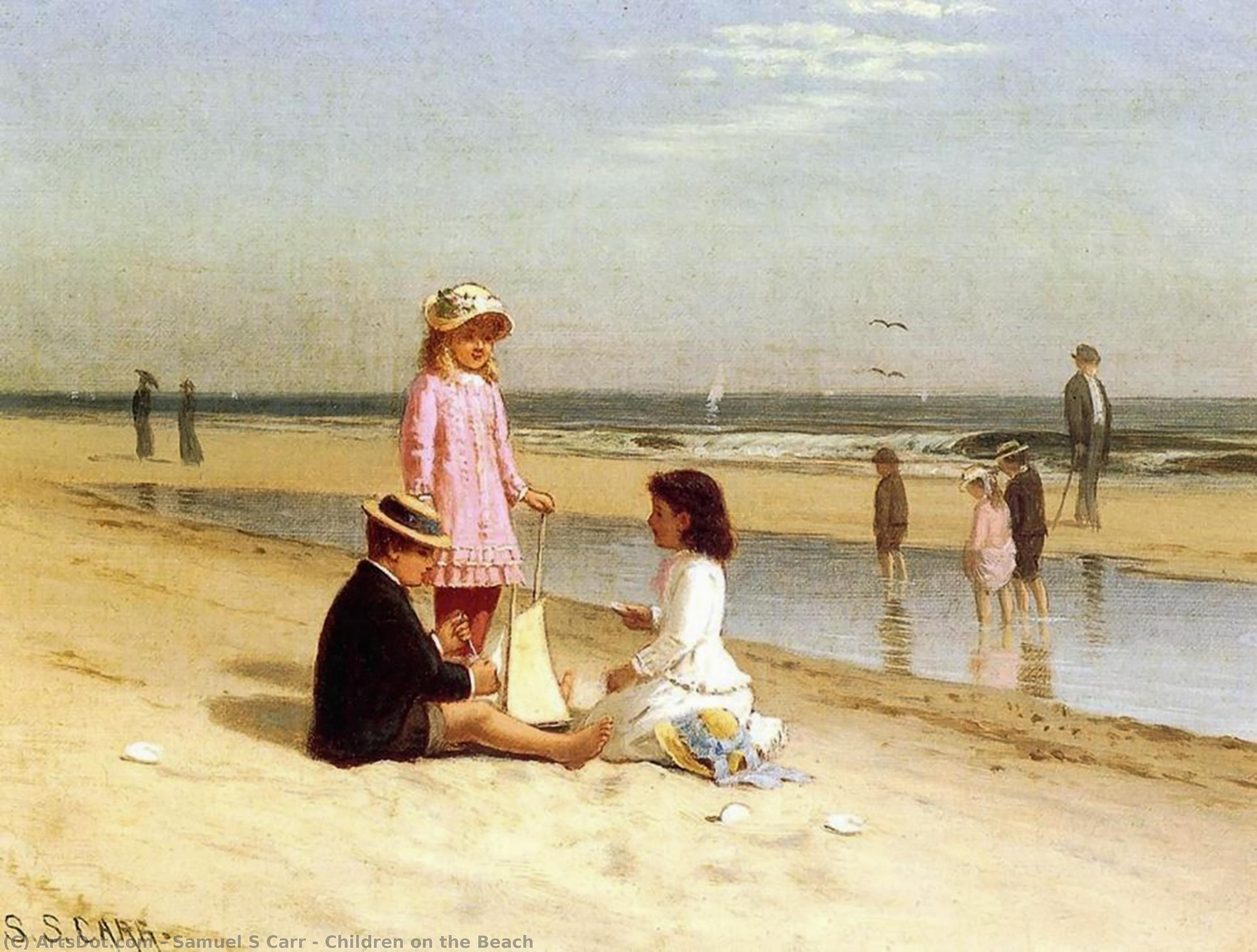
Children on the Beach

 Читати далі
Олійная репродукція ручної роботи
Написана вручну олією на полотні у вашому розмірі та рамі, виготовлена на замовлення нашими художниками. ( Замовити принт Купити цифрове зображення)




































Обирайте з наших стандартних розмірів, що відповідають оригінальним пропорціям твору мистецтва.

Ви можете вказати власні розміри, щоб репродукція ідеально підійшла до конкретної рами або інтер'єру. Якщо вибраний вами розмір не відповідає пропорціям оригіналу, ми або обріжемо полотно, або доповнимо картину додатковими елементами, промальованими вручну. Цифровий макет буде надіслано вам на затвердження перед початком виробництва.
Зверніть увагу, що попередній перегляд на екрані не відображає фактичне обрізання або розширення зображення. Тільки макет точно покаже остаточну композицію.
Хоча ми можемо виготовити виріб у нестандартному розмірі, для збереження оригінальних пропорцій рекомендуємо обирати варіанти зі встановленого списку.
Після оформлення замовлення команда ArtsDot.com зв'яжеться з клієнтом електронною поштою для отримання інструкцій та надасть попередній макет
Доставка по всьому світу () за 3–4 тижні замість стандартних 5 тижнів. (14 Серпень). Без жодних компромісів у якості.

Безкоштовна експрес-доставка по всьому світу

Високоякісне лляне полотно

Повне страхове покриття доставки

Гарантія відшкодування митних зборів

Гарантія точного відтворення кольорів

Політика повернення протягом 60 днів (лише у разі виявлення дефектів)

Гарантія повернення 100% коштів

Пропозиція на оптові замовлення
 Скляний варіант доступний лише для розмірів до 110 см

Children on the Beach
Матеріал репродукції
Розмір репродукції
-


Підсумкова вартість
$ 263
Опис твору
Artistic Style and Influences
Samuel S Carr, an American pastoral and landscape painter, was originally from England, where he trained at the Royal School of Design in Chester. His relocation to the U.S. in 1862 had a significant impact on his artistic style, as seen in Children on the Beach. The painting's composition, with its emphasis on light and color, reflects Carr's unique blend of European and American influences.Key Elements and Symbolism
The painting features several key elements that contribute to its charm:- The children playing on the beach, carefree and joyful, symbolize innocence and youth.
- The presence of adults in the background, engaged in conversation or relaxation, adds a sense of community and social bonding.
- The two birds flying above the beach introduce a touch of dynamism and freedom to the scene.
The Somerville College, a prestigious educational institution in Oxford, United Kingdom, also houses numerous masterpieces from renowned artists, including Helen Galloway Mcnicoll's The Blue Sea, which can be found on /art/list/?Filter=D4GDLK-Helen-Galloway-Mcnicoll-The-Blue-Sea.
Схожі твори мистецтва


Біографія митця
Samuel S. Carr: Weaver of Eerie Landscapes
Samuel S. Carr (1837–1908) emerged from the bustling, rapidly changing landscape of late 19th-century America as a singular and somewhat enigmatic figure in the realm of pastoral and landscape painting. Born in England, his artistic journey led him to New York City around 1862, where he eventually settled in Brooklyn, forging a distinctive style deeply rooted in observation yet imbued with an unsettling, almost dreamlike quality. Carr’s work isn't easily categorized; it exists at the intersection of realism and abstraction, drawing inspiration from both the burgeoning American Impressionist movement and his own unique visual sensibilities. He was a man of quiet industry, meticulously crafting scenes that invite prolonged contemplation, prompting viewers to question the nature of perception itself.Early Life and Artistic Training
Carr’s early artistic education took place at the Royal School of Design in Chester, England – an institution renowned for its rigorous training in traditional techniques. However, it was during his time in New York City that he truly began to develop his distinctive approach. He initially pursued studies in mechanical drawing, a skill that likely informed his later fascination with repetition and geometric patterns within his compositions. This early exposure to technical precision seems to have subtly influenced the underlying structure of his paintings, providing a foundation upon which he built his more surreal visual language. He was described as a man who lived quietly alongside his sister and brother-in-law, Annie and John Bond, fostering an atmosphere of contemplative solitude that undoubtedly shaped his artistic perspective.A Style Defined by Repetition and Distortion
Carr’s most recognizable characteristic is the deliberate repetition and subtle distortion of shapes within his landscapes. He wasn't simply depicting scenes; he was constructing visual puzzles, layering images upon themselves in a manner that creates an unsettling sense of familiarity and disorientation. Figures – often children playing, families gathering, or rural laborers engaged in their daily routines – appear to be caught in loops, endlessly repeating actions or gestures. Buildings seem to warp and shift, while fields stretch into infinite horizons. This technique wasn’t intended as mere trickery; rather, it served to explore the limitations of human perception and the subjective nature of reality. Critics often described his work as “eerie,” a perfectly apt descriptor for the unsettling yet captivating effect he achieved. He frequently signed his pieces "S.S. Carr," a simple signature that belies the complexity of his artistic vision.Brooklyn Scenes and Coney Island Visions
While Carr’s oeuvre encompasses a variety of subjects – rural landscapes, portraits, and even some maritime scenes – he is perhaps most celebrated for his depictions of Brooklyn life and, particularly, his vibrant portrayals of Coney Island during the late 19th century. These paintings capture the burgeoning excitement and chaotic energy of this seaside resort town, filled with crowds, amusements, and a sense of boundless possibility. The repetition and distortion techniques were particularly evident in these works, mirroring the dizzying spectacle of Coney Island itself – a place where reality seemed to bend and shift under the influence of entertainment and novelty. These scenes offer a fascinating glimpse into the social fabric of late Victorian America, revealing both its charm and its underlying anxieties.Critical Reception and Legacy
Despite his talent and distinctive style, Carr’s work received relatively little attention during his lifetime. He primarily exhibited at local Brooklyn art clubs and academies, and his paintings rarely achieved widespread recognition. However, in recent decades, there has been a growing appreciation for his unique vision. Several of his works have sold at auction for significant sums – exceeding $70,000 – demonstrating the enduring value of his artistic contributions. Today, Samuel S. Carr is recognized as a pivotal figure in American art, a quietly innovative painter who challenged conventional notions of representation and invited viewers to engage with their own perceptions of reality. His legacy lies not only in his captivating imagery but also in his willingness to explore the unsettling beauty that can be found at the edges of our understanding.
samuel s carr
1837 - 1908 , United Kingdom
Короткі факти
- Artistic Movement Or Style: Repetitive landscapes
- Artists Or Movements Influenced By This Artist: ['']
- Artists Who Influenced This Artist: ['']
- Date Of Birth: 1837
- Date Of Death: 1908
- Full Name: Samuel S. Carr
- Nationality: American
- Notable Artworks:
- Children on the Beach
- Coney Island scenes
- Place Of Birth: England

