


Картина відповідає вашим виборам: , .
Опис експоната
This 1949 Abstract Expressionist drip painting by Jackson Pollock is a visceral display of emotion. Explore this masterpiece today.
 Розгорнути текст
Біографія митця
Американський абстрактний експресіоніст, відомий ритмічною технікою розбризкування та композиціями all-over.
Замовте ваш у чотири прості кроки
Не поспішайте. Ви можете змінити будь-яку відповідь; ціна у вашій кошику буде оновлюватися відповідно до кожного вибору.
1 Перший крок із чотирьох
На якому матеріалі його надрукувати?
Полотно друкується джикле-чорнилами та може бути натягнуте на підрамник або оформлене в раму, як справжня картина; папір постачається пласким або в рамі зі склом.
2 Другий крок із чотирьох
Який розмір ви бажаєте обрати?
Ці розміри зберігають пропорції оригінальної картини. На малюнку показано ваш вибір на стіні над двометровим диваном.
Або вкажіть власні розміри
Обирайте з наших стандартних розмірів, що відповідають оригінальним пропорціям твору мистецтва.

Введіть необхідну ширину та висоту, щоб принт ідеально підійшов до вашої рами або стіни. Принт можна лише обрізати, але не можна зробити більшим за оригінал, тому при зміні пропорцій частина зображення буде втрачена. Перед друком ми надсилаємо вам цифровий макет для затвердження. Зображення на цій сторінці не відображає реальну обрізку — її можна побачити лише на макеті.
3 Третій крок із чотирьох
Як його підготувати: у рулоні, на підрамнику чи в рамі?
Наведені нижче ціни вказані для розміру, обраного вами на першому кроці.
Оберіть тип країв натяжного полотна
Оберіть свою раму

Білий край ₴1

Розмитий край ₴1

З розширенням ₴1

P118B ₴10

P118H ₴10

P118W ₴10

P438Z ₴10

P508JH ₴12

P508YH ₴12

P805H ₴10

P805Z ₴10

P919BZ ₴10

P919G ₴10

P919XJ ₴10

P959ZH ₴10

P968JZ ₴12

W106C ₴8

W218G ₴10

W218JH ₴8

W218Y ₴10

W307PJ ₴10

W316G ₴10

W316PJ ₴8

W316Y ₴10

W398PJ ₴8

W4111J ₴10

W500HY ₴15

W500JH ₴15

W692G ₴12

W849H ₴8

W940BG ₴15

W953PJ ₴8

H24-GOLD ₴30

H24-SILVER ₴30

H36-GOLD ₴45

H36-SILVER ₴45
У рамі
Багет: . Загальний розмір із рамою: .
4 Четвертий крок із чотирьох
Кілька варіантів фінішного покриття
Усі вони є необов'язковими. Вибір уже вибраних варіантів не потребує додаткової оплати.
Доставка по всьому світу () за 2 тижні замість стандартних 4/5 тижнів. (23 Листопад)
Табличка, як у музеї?
Деталі гравірування на бронзовій табличці
This elegant plaque features the artist's name and the title of the artwork, finely engraved for a timeless presentation.
It is made from bronze with a refined, elegant finish. The text is precisely laser-engraved for a sharp and permanent result. Measuring 9x2 cm, the plaque is compact yet easy to read. It's built to be durable and scratch-resistant, offering a professional, museum-quality look. Mounting is simple thanks to the included adhesive backing.
Деталі прозорої акрилової таблички
The plaque includes essential engraved details such as the artist's name, the title of the artwork, the date it was created, the type of media used-like oil on canvas or watercolor-a brief description of the piece, and a QR code that links to the complete artwork information.
It is crafted from clear acrylic, offering a sleek, modern appearance. The text is UV-engraved in black to ensure strong visual contrast. With a size of 10x15 cm, it ensures optimal readability. It comes equipped with two metal hooks for secure wall mounting. The plaque is designed to be weather-resistant, making it suitable for various environments, and it includes interactive features that work seamlessly with smartphone scanning.
Деталі чорної акрилової таблички
This elegant plaque includes engraved information such as the artist's name, the title of the artwork, the date it was created, the type of media used (like oil on canvas or watercolor), a short description of the artwork, and a QR code for quick access to more information.
The plaque itself is made from refined black acrylic with a premium finish. The text is laser-engraved in white for high contrast and readability. Its size is 10x15 cm, designed to be easy to read. It comes with two metal hooks for professional mounting. The design is sleek and fits any interior style. It is also weather-resistant and durable, with built-in digital integration for mobile compatibility.
Захисний лак?
Коли вам це потрібно?
✓ Перевірити та замовити
Ваш принт у тому вигляді, як ви його замовили

Composition
Матеріал репродукції
Розмір репродукції
-

Рама для репродукції
-
-
Для творів мистецтва або репродукцій, розмір яких перевищує 105 см (приблизно 41 дюйм) з будь-якого боку, рама доставляється у вигляді розібраного комплекту. Такий метод гарантує безпечну доставку та запобігає пошкодженням під час транспортування.
Потребує професійного збирання — це не продукт для самостійного виготовлення (DIY).
Комплект має бути зібраний, а полотно натягнуте досвідченим майстром багетних робіт із використанням клейового дерева (не входить у комплект), щипців для натягування полотна та затискачів, щоб підрамник залишався рівним під час висихання клею. Неправильне збирання або нерівномірне натягування полотна може призвести до незворотного пошкодження твору мистецтва, що не підпадає під дію нашої гарантії.
 Для творів мистецтва або репродукцій, розмір яких перевищує 105 см (приблизно 41 дюйм) з будь-якого боку, рама доставляється у вигляді розібраного комплекту. Такий метод гарантує безпечну доставку та запобігає пошкодженням під час транспортування.
У комплект входять усі бруски з цільного дерева, точно вирізані за розміром.
Збирається за допомогою гвинтів, що входять до комплекту, а також клейового розчину для кутових з'єднань, який не входить до комплекту і має бути підготовлений вашим майстром.
Потрібні професійні інструменти, які не входять до комплекту: щипці для натягування полотна (натягувач) та затискачі, щоб утримувати рейки рівно під час висихання клею.
Важливо:
Для з'єднання кутів потрібен клей для дерева, перекладини необхідно затиснути струбцинами до повного висихання клею, а для натягування полотна на зібрану раму знадобляться щипці для натягування полотна. Жоден із цих інструментів не входить до комплекту. Будь ласка, проконсультуйтеся з досвідченим майстром багетного оформлення перед замовленням рами такого розміру.

Етикетка експоната
-
-

Захисний лак
Глянцевий лак (підсилює яскравість кольорів, захищає від світла та вологи)
-

Прискорено
Доставка по всьому світу () за 2 тижні замість стандартних 4/5 тижнів. (23 Листопад)
-
Експрес-доставка
Доставка по всьому світу () протягом 4–5 тижнів. (30 Листопад).
Включено в ціну
Підсумкова вартість
₴ 2848
Скляний варіант доступний лише для розмірів до 110 см
До кожного замовлення додається
- Безкоштовна експрес-доставка по всьому світу
- Високоякісне лляне полотно
- Повне страхове покриття доставки
- Гарантія повернення митних зборів
- Гарантія точного відтворення кольорів
- Політика повернення протягом 100 днів (лише у разі виявлення дефектів)
- Гарантія повернення 100% коштів
- Пропозиція на оптові замовлення


The Creation of Composition by Jackson Pollock
Jackson Pollock executed the painting titled Composition in 1949. This work emerged during a period when the artist was developing a specific approach to the canvas, moving away from traditional easel painting toward a method involving the floor. The piece is a product of the artist's mid-career period, following his move to New York City and his subsequent studies at the Art Students League.
Born in Cody, Wyoming, in 1912, Jackson Pollock brought a background shaped by the landscapes of the American West to his later abstract works. His practice involved a physical engagement with the medium, often utilizing unconventional tools to apply pigment. The creation of Composition occurred several years before his death in East Hampton, New York, USA, in 1956.
Visual Elements and Dynamic Composition
The surface of the painting presents a variety of colors and textures. A large central area is defined by a mix of blue and white hues. Surrounding this core, smaller sections feature red and black tones. These colors intersect in an intricate network of lines and marks. The distribution of pigment creates a sense of movement across the canvas.
The arrangement of these elements relies on deliberate asymmetry. This lack of a central focal point contributes to an unsettling beauty within the work. The interplay between the blue and white expanse and the darker, smaller sections creates a dynamic tension. The texture of the paint varies across the surface, appearing in different densities and thicknesses.
Technique and Artistic Materials
The physical construction of this work relies on oil applied to canvas. Pollock moved away from the traditional use of an easel, opting instead to lay the canvas horizontally on the floor. This orientation allowed for a direct engagement with the surface from multiple sides. He utilized a method known as the drip technique, which replaced standard brushstrokes with the act of flinging or dripping liquid pigment onto the support.
The application of paint was dictated by the interaction between the medium and the surface. This process relied on chance encounters, where the movement of the paint was determined by gravity and the momentum of the pour. The resulting texture is a complex network of lines and layers. The artist used various tools to manipulate the fluid, including sticks, knives, and syringes to achieve specific patterns and thicknesses of pigment.
Related Works by Jackson Pollock
The artist's body of work includes several pieces that share similar formal qualities or chronological proximity to this piece. Composition with Pouring II, dated 1943, utilizes oil on canvas to present an abstract arrangement of color and texture. This work features the drip painting and action painting styles that characterize much of his output. Similarly, Composition with Woman is an artwork by Pollock that incorporates oil and household enamel paints on canvas. This piece contains an implied female figure and fragmented forms within its abstract composition.
Other notable examples from his career include Convergence and Number 1, 1949, 1950. The latter is held in a private collection in New York City. These works demonstrate the development of his rhythmic, all-over compositions and his specific approach to managing paint on a large scale. Each piece reflects the movement's focus on gesture and the physical act of applying pigment to the surface.
Питання та відповіді
Яка насиченість кольорів у творі «Composition» роботи Джексон Поллок?
Насиченість кольорів у творі «Composition» — Balanced. Насиченість описує, наскільки яскравими та виразними є кольори.
Для якої кімнати рекомендується «Composition» роботи Джексон Поллок, враховуючи її кольорову гаму?
Кольорова палітра Neutrals у творі «Composition» роботи Джексон Поллок ідеально підходить для рекомендованого інтер'єру: це Living Room.
Яка палітра та домінуючий колір визначають "Composition"?
Колірна ідентичність «Composition» роботи Джексон Поллок: палітра у стилі Neutrals, де домінує Sap Green (#5f6954).
Більше про цю картину
 Переглянути в інтер'єрі
 Замовити картину ручної роботи
 Надіслати як листівку
 Поділитися
 Деталі витвору
 Посібник

 Завантажити
 Схожі екземпляри
 Рентгенівське дослідження
 Слайд-шоу
 Питання та відповіді
 Статистика
Схожі твори мистецтва


Джексон Поллок
1912 - 1956, Сполучені Штати Америки
Біографія митця
Ранні роки, сім'я та навчання
Історія Пола Джексона Поллока бере свій початок у суворих краєвидах Коді, штат Вайомінг, де він народився 28 січня 1912 року. Він був наймолодшим із п'яти братів у сім'ї Стелли Мей Маклур та Лероя Поллока. Його батько працював геодезистом — професія, що вимагала постійного руху через безкраї простори американського Заходу. Це кочове існування означало, що ранні роки хлопчика пройшли у постійних переїздах; ця невгамовність, здавалося, дзеркально відображала мінливі горизонти батьківської праці. Ранні мандрівки Заходом подарували йому безпосередній, чистий контакт із природою та духовним резонансом мистецтва індіанців — враження, що тихо осіли в його підсвідомості задовго до того, як він вперше взяв у руки пензель.
З віком пошук свого місця у світі привів його до урбаністичної енергії узбережжя. Він вступив до середньої школи Manual Arts у Лос-Анджелесі, намагаючись знайти певну структуру для своїх щойно народжуваних імпульсів. Проте справжнє формування його майстерності відбулося набагато пізніше, коли він переїхав до Нью-Йорка. Саме там, у Лізі художників-студентів (Art Students League), розпочався його тривалий і трансформаційний період навчання. З 1929 по 1942 рік він працював під керівництвом Томаса ГАРТА Бентона. І хоча Бентон наголошував на ритмічних композиціях та наративній глибині американського життя, молодий студент уже тоді починав відхилятися від цих канонів, шукаючи власні, більш абстрактні, внутрішні істини.
Розвиток унікальної техніки
До 1947 року у підході художника до полотна відбувся глибокий тектонічний зсув. Він відмовився від традиційного мольберта, натомість вирішивши класти свої полотна безпосередньо на підлогу. Ця зміна дозволила йому стояти над своєю роботою, стаючи повноцінною частиною самого акту творення. Він не просто наносив фарбу; він розбризкував, стікав і розкидав її зверху, дозволяючи рідині падати непередбачуваними візерунками. Цей метод перетворив процес малювання на фізичний перформанс, де гравітація та жест диктували остаточну форму твору.
Його інструменти були такими ж нетрадиційними, як і самі методи. Він використовував палички, ножі та навіть шприци, щоб маніпулювати рідкою масою фарби. Іноді він застосовував кельми або стікаючу фарбу для створення специфічних текстур. Він часто процарапував поверхню або використовував незвичні предмети, щоб вибудувати товстий шар фарби, додаючи роботі тактильної, майже скульптурної якості. Цей процес був менше про контрольовану роботу пензлем і більше про ритмічне, майже первісне вивільнення енергії на поверхню полотна.
Ключові твори та художні вираження
Відмовившись від обмежень традиційного станцва, його полотна почали відображати більш вісцеральний, первісний зв'язок із матеріалом. У 1943 році він створив Mural — масштабне полотно розміром 2,4 на 6,1 метра, що продемонструвало його здатність опановувати величезний простір. У цей період дослідження підсвідомого та сам акт малювання привели до появи таких робіт, як Eyes in the Heat, створеної приблизно у 1946 році. Ці твори були не просто зображеннями, а записами фізичної присутності, де рух усього тіла диктував розташування кожної бризки та кожної плями кольору.
Наступні роки присвятилися вдосконаленню ритмічних, всеохопних композицій, які згодом стали основою його слави. Він прагнув створити відчуття безмежного простору, де жодна окрема точка не домінувала б над іншими. Цей підхід чітко простежується у роботі Number 1, 1949, що втілює необузданий виплеск енергії, та в Lavender Mist, Number 1, 1950, яка залишається одним із найважливіших його досягнень. У цих творах взаємодія між контролем і випадковістю створює витончений баланс, наче фарба не наносилася, а вивільнялася назовні.
Його пізніші експерименти продовжували розсувати межі того, як можна маніпулювати фарбою на горизонтальній поверхні. Він часто використовував палички, ножі або навіть самі банки, щоб розкидати пігмент, створюючи складні мережі ліній. Цей метод чітко виражений у Blue Poles, Number 11, 1952 та в енергійній Convergence. Завдяки цим роботам він досяг стану, коли картина, здавалося, мала власне життя, народжуючись із глибокого занурення у власну уяву.
Меценати, майстерня та замовлення
Шлях його кар'єри формувався під впливом як суспільних потреб, так і щедрості кількох надзвичайно важливих покровительів. У період з 1938 по 1942 рік він мав стабільну роботу художником у Федеральному мистецькому проєкті WPA, що забезпечило необхідний ритм його творчій практиці, яка на той час лише починала розкриватися. Ця стабільність змінилася більш особистим та трансформаційним союзом, коли у липні 1943 року Пеггі Гуггенхайм запропонувала йому контракт для своєї галереї. Її підтримка виявилася значно більшою за професійну: у 1945 році вона надала йому 2000 доларів першого внеску, щоб допомогти придбати житло — жест, що глибоко переплетив його особисте життя з виживанням як митця.
Зрештою, центр його творчого життя змістився до Іст-Гемптона, штат Нью-Йорк. Там, у будинку-студії Поллока та Краснер, він жив і працював разом зі своєю дружиною, Lii Krasner. Студія була простором інтенсивного фізичного руху, де межі між художником і полотном розчинялися. Він часто відмовлявся від традиційного станцва, віддаючи перевагу тому, щоб розкладати полотна прямо на підлозі, взаємодіючи з фарбою з усіх боків. Це робоче місце було не просто кімнатою для створення картин, а місцем глибокої, неспокійної енергії, де відбувалися його найрадикальніші експерименти.
Останні роки та смерть
Особисте життя митця було нерозривно переплетене з його творчими пошуками та внутрішньою боротьбою. У 1945 році він одружився з художчею Лі Краснер — цей союз став визначальною силою у його житті в період найважливіших трансформацій. Проте за зовнішнім блиском професійного злету приховувалася невблагадна тінь. Протягом усього свого життя він ведення незриму боротьбу з алкогольною залежністю — битву, яка часто ускладнювала його існування та заважала справлятися з тиском зростаючої слави.
Цей внутрішній та зовнішній хаос завершився трагічно в Іст-Гемптоні, штат Нью-Йорк, США. 11 серпня 1956 року, у віці 44 років, його життя обірвалося в раптовій та жорстокій аварії. Під час керування автомобілем він потрапив у ДТП, спричинену алкогольним сп'янінням. Катастрофа стала фатальною, залишивши по собі спадщину, настільки ж бурхливу та непередбачувану, як і фарби, що він розкидав по своїх полотнах.
Спадщина та вплив на сучасне мистецтво
Відлуння його радикальних методів розійшлося далеко за межі стін студії в Іст-Гемптоні. Розірвавши традиційний зв'язок між пензлем та станком, він став центральною постаттю у русі абстрактного експресіонізму — зсув, що докорінно змінив траєкторію американської творчості. Його присутність допомогла зміцнити статус Нью-Йорка як світового центру сучасного мистецтва, перемістивши серце авангарду з-під європейського домінування. Він був серед перших американських художників, кого визнали рівним великим європейським майстрам XX століття, довівши, що нова, вісцера мова може виникнути безпосередньо на американській землі.
Його вплив став каталізатором для багатьох наступних мистецьких течій, що виникли на його слідах. Те, як він взаємодіяв із полотном — сприймаючи його як арену для фізичної дії, а не просто поверхню для репрезентації, — відкрило двері для багатьох митців, що прагнули виразити підсвідоме через жест. Цей акцент на самому процесі творення залишив незгладимий слід в історії сучасного мистецтва, гарантуючи, що спонтанність та непередбачуваність назавжди займатимуть своє місце в інструментарії художника.
- Number 1, 1949
- Blue Poles: Number 11, 1952
- Convergence
- Autumn Rhythm. Number 30, 1950
Де можна побачити його роботи сьогодні
Щоб побачити фізичні сліди його рухів, необхідно відвідати великі інституції, які зберегли його радикальну енергію. У Нью-Йорку Музей сучасного мистецтва зберігає кілька його полотен, дозволяючи глядачам стояти перед розлогими, нецентрованими композиціями, що визначили його епоху. Національна галерея мистецтв у Вашингтоні також тримає його роботи, пропонуючи простір для спостереження за складними мережами кольору, яких він досяг завдяки своїм унікальним методам. По той трансатлантичний берег, Галерея Тейт в Лондоні підтримує його присутність у своїх колекціях, гарантуючи, що його вплив сягає далеко за межі американських берегів.
Для тих, хто прагне більш інтимного зв'язку з його творчим процесом, будинок-студія Поллока та Краснер у Іст-Гамптоні пропонує глибоке відчуття місця. Цей об'єкт, що є національною історичною пам'яткою, був простором, де він та його дружина Лі Краснер жили та працювали. Ця територія залишається життєво важливим зв'язком з його життям, зберігаючи середовище, що плекало його перехід від традиційних форм до спонтанних методів роботи на підлозі, які змінили хід розвитку сучасного живопису. Прогулянка цими просторами дарує відчуття масштабу та фізичної реальності його творчої боротьби.
- Number 1, 1949
- Blue Poles: Number 11, 1952
- Mural (1943)
- Convergence


Пов'язані статті
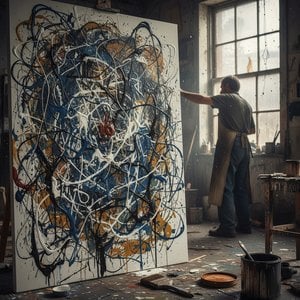
Paul Jackson Pollock: A Radical Departure – Exploring Abstract Expressionism's Pioneering Figure and His Enduring Legacy
Explore the revolutionary art of Jackson Pollock & Abstract Expressionism. Discover his iconic drip paintings, lasting impact, and considerations for collecting this pivotal American artist. Expert insights at ArtsDot.

За межами зображення: Розшифровуючи емоції та значення в сучасному абстрактному мистецтві
Розкрийте глибину абстрактного мистецтва! Дослідіть історію, техніки та вплив ключових художників. Експертна аналітика для колекціонерів та поціновувачів. Відчуйте силу емоцій через форму і колір.

Oil on Board: A Historical Survey of Technique, Aesthetic Qualities & Enduring Appeal
Explore the rich history of oil on board painting! Discover techniques, aesthetic qualities & enduring appeal from early masters to modern practice. Expert insights for collectors and art enthusiasts.