


The picture follows your choices: , .
Опис експоната
Кубистський натюрморт від Хуана Гріса – новаторське бачення повсякденності, де звичайні предмети перетворюються на геометричні фігури та кольорові акценти. Відчуйте енергію раннього модернізму!
 Розгорнути текст
Біографія митця
Хуан Гріс – видатний іспанський кубіст! Його геометричний стиль, синтетична кубізм та вплив на сучасне мистецтво вражають. Відкрийте для себе світ його яскравих творів!
Олійная репродукція ручної роботи
Написана вручну олією на полотні у вашому розмірі та рамі, виготовлена на замовлення нашими художниками. ( Перейти до друку Перейти до цифрових зображень)
More about this painting
 Переглянути в інтер'єрі
 Надіслати як листівку
 Поділитися
 Деталі витвору
 Посібник

 Завантажити
 Схожі екземпляри
 Рентгенівське дослідження
 Слайд-шоу
 Q&A
Q&A Статистика
Order your painting in four simple steps
Take your time. You can change any answer; the price in your order card follows each choice.
1 Step one of four
Which size would you like?
These sizes keep the proportions of the original painting. The drawing shows your choice on a wall, above a two-metre sofa.
Or give your own measurements
Обирайте з наших стандартних розмірів, що відповідають оригінальним пропорціям твору мистецтва.

Введіть необхідну ширину та висоту, щоб картина підійшла до вашої рами або стіни. Оскільки це ручний розпис, для зміни пропорцій художник може дописати трохи більше по краях або дещо обрізати композицію — вибір за вами. Перед початком роботи ми надішлемо вам цифровий макет для затвердження. Зображення, показане на цій сторінці, не є реальним результатом — лише макет відображає майбутній вигляд.
2 Step two of four
How should it be prepared: rolled, stretched or framed?
The prices below are for the size you chose in step one.
Choose the edges of the stretched canvas
Choose your frame

White ₴1

Blurside ₴1

Extended ₴1

P118B ₴10

P118H ₴10

P118W ₴10

P438Z ₴10

P508JH ₴12

P508YH ₴12

P805H ₴10

P805Z ₴10

P919BZ ₴10

P919G ₴10

P919XJ ₴10

P959ZH ₴10

P968JZ ₴12

W106C ₴8

W218G ₴10

W218JH ₴8

W218Y ₴10

W307PJ ₴10

W316G ₴10

W316PJ ₴8

W316Y ₴10

W398PJ ₴8

W4111J ₴10

W500HY ₴15

W500JH ₴15

W692G ₴12

W849H ₴8

W940BG ₴15

W953PJ ₴8

H24-GOLD ₴30

H24-SILVER ₴30

H36-GOLD ₴45

H36-SILVER ₴45
У рамі
Moulding: . Overall size with the frame: .
3 Step three of four
Would you like anything changed in the painting?
Most people answer no. Because each painting is made by hand, our artist can also adapt it for you.
After order, ArtsDot.com team will email client for instructions and provide a mockup preview
4 Step four of four
A few finishing options
All of them are optional. The answers already selected cost nothing extra.
Who paints it?
Доставка по всьому світу () за 3–4 тижні замість стандартних 5 тижнів. (30 Жовтень). Без жодних компромісів у якості.
A nameplate, as in a museum?
Деталі гравірування на бронзовій табличці
This elegant plaque features the artist's name and the title of the artwork, finely engraved for a timeless presentation.
It is made from bronze with a refined, elegant finish. The text is precisely laser-engraved for a sharp and permanent result. Measuring 9x2 cm, the plaque is compact yet easy to read. It's built to be durable and scratch-resistant, offering a professional, museum-quality look. Mounting is simple thanks to the included adhesive backing.
Деталі прозорої акрилової таблички
The plaque includes essential engraved details such as the artist's name, the title of the artwork, the date it was created, the type of media used-like oil on canvas or watercolor-a brief description of the piece, and a QR code that links to the complete artwork information.
It is crafted from clear acrylic, offering a sleek, modern appearance. The text is UV-engraved in black to ensure strong visual contrast. With a size of 10x15 cm, it ensures optimal readability. It comes equipped with two metal hooks for secure wall mounting. The plaque is designed to be weather-resistant, making it suitable for various environments, and it includes interactive features that work seamlessly with smartphone scanning.
Деталі чорної акрилової таблички
This elegant plaque includes engraved information such as the artist's name, the title of the artwork, the date it was created, the type of media used (like oil on canvas or watercolor), a short description of the artwork, and a QR code for quick access to more information.
The plaque itself is made from refined black acrylic with a premium finish. The text is laser-engraved in white for high contrast and readability. Its size is 10x15 cm, designed to be easy to read. It comes with two metal hooks for professional mounting. The design is sleek and fits any interior style. It is also weather-resistant and durable, with built-in digital integration for mobile compatibility.
A protective varnish?
When do you need it?
✓ Check and order
Your painting, as you ordered it

Сніданок
Матеріал репродукції
Розмір репродукції
-

Видатний майстер-художник
Більше деталізації, витонченості та додаткового часу на створення твору
-

Рама для репродукції
-
-
Для творів мистецтва або репродукцій, розмір яких перевищує 105 см (приблизно 41 дюйм) з будь-якого боку, рама доставляється у вигляді розібраного комплекту. Такий метод гарантує безпечну доставку та запобігає пошкодженням під час транспортування.
Потребує професійного збирання — це не продукт для самостійного виготовлення (DIY).
Комплект має бути зібраний, а полотно натягнуте досвідченим майстром багетних робіт із використанням клейового дерева (не входить у комплект), щипців для натягування полотна та затискачів, щоб підрамник залишався рівним під час висихання клею. Неправильне збирання або нерівномірне натягування полотна може призвести до незворотного пошкодження твору мистецтва, що не підпадає під дію нашої гарантії.
 Для творів мистецтва або репродукцій, розмір яких перевищує 105 см (приблизно 41 дюйм) з будь-якого боку, рама доставляється у вигляді розібраного комплекту. Такий метод гарантує безпечну доставку та запобігає пошкодженням під час транспортування.
У комплект входять усі бруски з цільного дерева, точно вирізані за розміром.
Збирається за допомогою гвинтів, що входять до комплекту, а також клейового розчину для кутових з'єднань, який не входить до комплекту і має бути підготовлений вашим майстром.
Потрібні професійні інструменти, які не входять до комплекту: щипці для натягування полотна (натягувач) та затискачі, щоб утримувати рейки рівно під час висихання клею.
Важливо:
Для з'єднання кутів потрібен клей для дерева, перекладини необхідно затиснути струбцинами до повного висихання клею, а для натягування полотна на зібрану раму знадобляться щипці для натягування полотна. Жоден із цих інструментів не входить до комплекту. Будь ласка, проконсультуйтеся з досвідченим майстром багетного оформлення перед замовленням рами такого розміру.

Етикетка експоната
-
-

Захисний лак
Глянцевий лак (підсилює яскравість кольорів, захищає від світла та вологи)
-

Персоналізувати мій витвір
Приклади можливих змін: заміна обличчя на фото клієнта; додавання домашньої тварини (наприклад, заміна кота на собаку); додавання прихованого повідомлення на фоні; зміна пейзажу або елементів фону.
-

Прискорено
Доставка по всьому світу () за 3–4 тижні замість стандартних 5 тижнів. (30 Жовтень). Без компромісів у якості.
-
Експрес-доставка
Доставка по всьому світу () протягом 5 тижнів. (6 Листопад).
Включено в ціну
Підсумкова вартість
₴ 11790
Скляний варіант доступний лише для розмірів до 110 см
Included with every order
- Безкоштовна експрес-доставка по всьому світу
- Високоякісне лляне полотно
- Повне страхове покриття доставки
- Гарантія повернення митних зборів
- Гарантія точного відтворення кольорів
- Політика повернення протягом 100 днів (лише у разі виявлення дефектів)
- Гарантія повернення 100% коштів
- Пропозиція на оптові замовлення


Exploring the Subject and Composition
Juan Gris’s “Breakfast” (Le Petit Déjeuner), painted in 1915, is far more than a simple depiction of morning fare. It's a dynamic exploration of everyday objects rendered through the revolutionary lens of Cubism. The artwork presents a carefully constructed still life – a coffee grinder, a delicate cup and saucer, a bowl holding fruit, and a newspaper bearing the cryptic “JOURNAL” – all fragmented and reassembled into a mesmerizing mosaic. Gris doesn’t offer a realistic portrayal of depth or space; instead, he invites us to see these familiar elements from multiple perspectives simultaneously, as if peering at them through a fractured prism. The composition is deliberately layered, with overlapping planes and sharp angles that challenge our traditional understanding of representation. It's a visual puzzle designed to engage the viewer’s intellect and spark curiosity about how we perceive the world around us.
Innovative Style and Technique
“Breakfast” firmly establishes Gris as a key figure in Synthetic Cubism, a movement characterized by bold experimentation and a move away from the more analytical approach of its predecessor. The painting’s vibrant palette – dominated by greens, blues, oranges, and reds – immediately commands attention. Gris masterfully employs a technique known as *papier collé*, meticulously assembling fragments of printed paper—wallpaper, newspaper clippings, even packaging labels—onto a canvas. These elements are then painted over, creating a rich textural surface that blends the matte quality of the paper with the sheen of oil paint. The use of contrasting colors and sharp lines creates a dynamic tension within the composition, while the careful layering of paint builds up forms and suggests depth through subtle shifts in tone and shadow. Notice how the rigid geometry of the objects is juxtaposed against the softer textures of the pasted materials – a testament to Gris’s innovative approach.
Historical Context and Artistic Significance
Created during a period of intense artistic ferment, “Breakfast” reflects the spirit of Cubism's evolution. Juan Gris was deeply influenced by Pablo Picasso and Georges Braque, but he sought to synthesize their fragmented perspectives with a greater sense of harmony and control. Unlike some of his contemporaries who embraced the chaotic experimentation of early Cubism, Gris developed a more refined style – one that retained the core principles of multiple viewpoints while achieving a remarkable level of visual clarity. This painting represents a crucial transitional moment in modern art history, demonstrating a shift towards a more structured and polished approach within the movement. It’s important to note that this work was created during a time of significant social and political upheaval, mirroring the broader anxieties and uncertainties of the early 20th century.
Symbolism and Conceptual Depth
Beyond its purely visual qualities, “Breakfast” is rich in symbolic layers. The inclusion of the "JOURNAL" – a deliberate reference to communication and information – invites us to contemplate the role of media in shaping our perceptions. The geometric reconfiguration of everyday objects can be interpreted as a metaphor for the fractured nature of modern experience, suggesting that reality itself is often fragmented and subject to multiple interpretations. The vibrant colors evoke a range of emotions—from curiosity and contemplation to a subtle sense of unease—encouraging viewers to engage with the artwork on a deeper, more personal level. Consider how the seemingly mundane objects are transformed into something far more complex and thought-provoking through Gris’s artistic vision.
Emotional Impact and Interior Inspiration
“Breakfast” exudes an undeniable vitality and intellectual engagement, making it an ideal focal point for contemporary interiors. Its energetic composition and bold colors can invigorate a space, sparking creativity and stimulating conversation. Whether displayed in a private collection, a sophisticated gallery, or a modern office setting, this artwork offers a timeless connection to the innovative spirit of Cubism. The intricate layers and vibrant hues not only provide visual delight but also serve as a source of inspiration for art lovers, collectors, and interior designers seeking to elevate their environment with a piece that embodies modernist brilliance and artistic mastery. It’s a reminder that even the most ordinary subjects can be transformed into something extraordinary through the power of artistic vision.
Питання та відповіді
Чи можу я скористатися доповненою реальністю, щоб побачити «Сніданок» роботи Хуан Гріс у своїй кімнаті?
Сторінка Перегляд в AR для твору «Сніданок» роботи Хуан Гріс використовує технологію доповненої реальності, щоб показати витвір у вашому власному просторі за допомогою сумісного пристрою.
Які емоції дарує «Сніданок» як подарунок?
«Сніданок» передає Задумливий настрій, а рекомендований варіант для подарунка — Подарунок для корпоративних подій.
Чи можу я переглянути «Сніданок» роботи Хуан Гріс перед замовленням?
Щоб переглянути репродукцію «Сніданок» роботи Хуан Гріс, відкрийте сторінку попереднього перегляду Перегляд у інтер'єрі цього твору.
Схожі твори мистецтва


Хуан Гріс
1887 - 1927, Іспанія
Біографія митця
A Spanish Visionary of Cubism: The Life and Art of Juan Gris
José Victoriano González-Pérez, a name that would become synonymous with artistic innovation, was born in Madrid in 1887 – a city steeped in history and tradition. Yet, this young man harbored an unconventional spirit, one that led him far from the familiar landscapes of his homeland to the vibrant, pulsating heart of Paris. Initially pursuing a path in engineering at the School of Arts and Sciences, he demonstrated a keen analytical mind, a trait that would later profoundly shape his artistic approach. Even during these early years, however, a creative spark flickered within him – evidenced by his contributions to local periodicals with captivating drawings, hinting at a burgeoning talent waiting to be unleashed. It was in 1905 that he adopted the pseudonym Juan Gris, a name resonating with newfound identity and purpose as he embarked on formal painting studies under José Moreno Carbonero, marking a pivotal shift towards artistic expression.Parisian Awakening and the Embrace of Cubism
The year 1906 witnessed a transformative relocation to Paris – a city then brimming with an unparalleled energy that captivated artists from across Europe. Gris immersed himself completely in this vibrant milieu, forging enduring friendships with luminaries such as Henri Matisse, Georges Braque, and Fernand Léger. Initially engaged in satirical illustration for publications like *L'Assiette au Beurre*, he honed his observational skills and developed a remarkable sense of visual wit, capturing the essence of Parisian life with sharp commentary and playful exaggeration. However, the magnetic pull of Pablo Picasso proved particularly influential. Around 1910, Gris began to seriously dedicate himself to painting, moving away from caricature towards the burgeoning language of Cubism – a movement that would define his artistic legacy. This wasn’t merely imitation; it was a deliberate quest to distill the very essence of form and space, seeking a new visual order, a way to represent reality not as it appears but as it *is* perceived. His early explorations were marked by a bold departure from traditional representation, embracing abstraction as a powerful tool for capturing the underlying structure of objects and experiences.The Geometry of Perception: Style and Key Works
Juan Gris’s artistic output is characterized by an extraordinary clarity and intellectual rigor. He didn't simply deconstruct objects; he meticulously reconstructed them, emphasizing geometric forms and a carefully considered palette. This approach led to what became known as his “crystal period,” exemplified in masterpieces such as *Still Life Before an Open Window* (1912) and *Place Ravignan* (1915). These works showcase a remarkable interplay of planes and angles, creating a sense of depth and solidity while simultaneously challenging conventional notions of perspective. The influence of Picasso is undeniable here, yet Gris developed his own distinct voice within the Cubist framework – one characterized by a precise logic and an almost mathematical precision. He moved beyond mere fragmentation, striving for a new visual harmony. Following this period, he embraced Synthetic Cubism, pioneering the innovative use of *papier collé* – collage – incorporating real-world materials like newspaper clippings, fabric scraps, and wood grain into his compositions. This technique added another layer of complexity and tactility to his work, blurring the boundaries between painting and sculpture, inviting viewers to engage with the artwork on a more visceral level. Notable examples include *Guitar in front of the sea* (1925), a testament to his simplified forms and adherence to cubist principles, and *Homage à Pablo Picasso* (1912), which signaled his growing recognition within the avant-garde art world as a truly original voice.Influences and Legacy
Juan Gris’s artistic journey was shaped by a confluence of influences – from the analytical rigor of Cézanne to the vibrant color palettes of Matisse, and crucially, the revolutionary ideas of Picasso and Braque. However, he wasn't simply a follower; he synthesized these influences into a uniquely personal style. His emphasis on geometric forms, harmonious color palettes, and the integration of everyday objects into his art established him as a pivotal figure in 20th-century art. He moved beyond the analytical phase, towards a more organized and synthetic approach, advocating for order and precision. His work profoundly influenced the Purist style championed by Amédée Ozenfant and Charles Edouard Jeanneret (Le Corbusier), who sought to return to classical principles of form and composition after the perceived chaos of modernism. Gris’s legacy extends far beyond his individual creations; he fundamentally reshaped our understanding of perception and representation, leaving an indelible mark on the course of art history. His paintings continue to resonate with viewers today, offering a glimpse into a brilliant mind grappling with the complexities of the modern world.


Пов'язані статті

Deconstructing Identity: A Comprehensive Exploration of Cubist Portraiture
Explore the revolutionary world of Cubist portraiture with our comprehensive guide. Discover Picasso, Braque, Gris & the movement's impact on modern art. Expert analysis for collectors and enthusiasts.
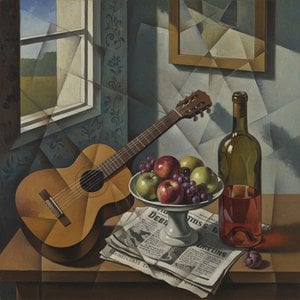
Deconstructing Reality: A Comprehensive Exploration of Cubist Still Life
Explore the revolutionary world of Cubist Still Life with ArtsDot. Discover Picasso & Braque's groundbreaking techniques, its philosophical roots, and lasting impact on modern art. Expert insights for collectors.

Deconstructing Reality: A Comprehensive Exploration of Synthetic Cubism's Evolution & Impact
Explore the revolutionary world of Synthetic Cubism! Discover its origins, key artists like Picasso & Braque, techniques, and lasting impact on modern art. A comprehensive guide for enthusiasts.