


 Переглянути в інтер'єрі
 Надіслати
 Поділитися
 Деталі
 Посібник

 Завантажити
 Схожі предмети колекціонування
 Рентгенівське дослідження
 Слайд-шоу
 Статистика переглядів
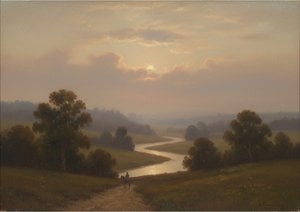
Moonlight
 Oil On Canvas
- WallArt
- Tonalist Landscape
 1887
1887 36.0 x 56.0 cm
 Музей Метрополітен
 Читати далі
Гікле / Художній принт
Музейна якість друку جيкле або на полотні з оперативним виготовленням та різноманітними варіантами фінішної обробки. ( Купити картину ручної роботи Перейти до цифрових зображень)




P118B ₴10

P118H ₴10

P118W ₴10

P438Z ₴10

P508JH ₴12

P508YH ₴12

P805H ₴10

P805Z ₴10

P919BZ ₴10

P919G ₴10

P919XJ ₴10

P959ZH ₴10

P968JZ ₴12

W106C ₴8

W218G ₴10

W218JH ₴8

W218Y ₴10

W307PJ ₴10

W316G ₴10

W316PJ ₴8

W316Y ₴10

W398PJ ₴8

W4111J ₴10

W500HY ₴15

W500JH ₴15

W692G ₴12

W849H ₴8

W940BG ₴15

W953PJ ₴8




Обирайте з наших стандартних розмірів, що відповідають оригінальним пропорціям твору мистецтва.

Введіть необхідну ширину та висоту, щоб принт ідеально підійшов до вашої рами або стіни. Принт можна лише обрізати, але не можна зробити більшим за оригінал, тому при зміні пропорцій частина зображення буде втрачена. Перед друком ми надсилаємо вам цифровий макет для затвердження. Зображення на цій сторінці не відображає реальну обрізку — її можна побачити лише на макеті.
Доставка по всьому світу () за 2 тижні замість стандартних 4/5 тижнів. (23 Жовтень)

Безкоштовна експрес-доставка по всьому світу

Високоякісне лляне полотно

Повне страхове покриття доставки

Гарантія повернення митних зборів

Гарантія точного відтворення кольорів

Політика повернення протягом 100 днів (лише у разі виявлення дефектів)

Гарантія повернення 100% коштів

Знижка на оптові замовлення
 Скляний варіант доступний лише для розмірів до 110 см

Moonlight
Гікле / Художній принт
Розмір репродукції
-


Загальна вартість
₴ 2782
Moonlight: A Study in Tranquil Luminosity
Dwight William Tryon’s “Moonlight,” painted in 1887, isn't merely a depiction of a rural landscape; it’s an immersion into a profound sense of quietude and the evocative power of light. Born in Hartford, Connecticut, during a period when American art was grappling with its own identity, Tryon emerged from a childhood deeply rooted in the rhythms of rural life – a formative experience that would profoundly shape his artistic vision. He eschewed the prevailing trends of the time, choosing instead to embrace the principles of tonalism, a style characterized by subdued colors and atmospheric effects, prioritizing mood and emotion over precise representation. This decision led him away from the bright palettes and detailed renderings favored by many of his contemporaries, establishing “Moonlight” as a cornerstone of his distinctive oeuvre. The painting captures a serene nighttime scene – rolling hills bathed in the soft glow of the moon, punctuated by scattered trees and hinting at a distant farmhouse nestled within the landscape. It’s a scene that invites contemplation, a moment suspended between darkness and light, reality and dream.The Language of Tone: Technique and Composition
Tryon's mastery lies not in meticulous detail but in his skillful manipulation of tone – the subtle variations in value that create depth, form, and atmosphere. He achieves this through loose, expressive brushstrokes, layering washes of gray and white to build up the forms of the hills and trees. Notice how the darker tones recede into the distance, creating a convincing illusion of space and atmospheric perspective. The composition is deliberately horizontal, emphasizing the breadth of the landscape and drawing the eye across the scene. A carefully considered break in the treeline directs the viewer’s gaze towards the luminous center, where the moon hangs suspended in the sky. This strategic arrangement guides the viewer's eye through the painting, fostering a sense of peaceful exploration. The use of impasto – thick application of paint – adds textural interest to the foreground, grounding the scene and anchoring it within the viewer’s perception.Symbolism and the Nocturne
The symbolism embedded within “Moonlight” is rich and layered. Moonlight itself has long been associated with mystery, introspection, and tranquility—qualities Tryon expertly captures in this work. The muted palette reinforces these associations, creating a mood of quiet contemplation. The distant farmhouse suggests a sense of rural simplicity and connection to the land, while the scattered trees evoke a feeling of solitude and isolation. The painting’s overall effect is one of profound stillness – a moment frozen in time, inviting the viewer to step into its serene embrace. It's not simply a representation of a landscape; it’s an evocation of a state of being. The choice of a nighttime scene further amplifies this symbolism, suggesting a realm beyond the everyday, where thoughts and emotions can freely roam.Historical Context: Tonalism and American Identity
“Moonlight” emerged during a pivotal moment in American art history – the rise of tonalism in the late 19th century. Influenced by the Barbizon School painters of France, American tonalists sought to capture the essence of nature through subtle color gradations and atmospheric effects, rejecting the academic emphasis on realism and detailed representation. Tryon’s work exemplifies this movement perfectly, demonstrating a deep understanding of light and shadow and a commitment to expressing mood and emotion rather than simply depicting visual reality. His decision to focus on American landscapes—particularly those imbued with the quiet beauty of rural life—contributed to the development of a distinctly American artistic voice. The painting reflects a desire to capture the spirit of the nation, rooted in its connection to the land and its appreciation for simple pleasures.A Legacy of Tranquility: Reproductions and Interior Design
Today, “Moonlight” stands as a testament to Tryon’s artistic vision—a timeless masterpiece that continues to resonate with viewers across generations. High-quality reproductions capture the painting's subtle nuances and atmospheric depth, making it an ideal addition to any home or office space. The painting’s calming palette and evocative imagery create a sense of serenity and tranquility, transforming any room into a haven of peace. Consider incorporating “Moonlight” into your interior design scheme—perhaps above a fireplace or in a study—to infuse your surroundings with its quiet beauty and timeless appeal. Its enduring power lies not just in its aesthetic qualities but also in its ability to transport the viewer to a place of profound stillness and contemplation.Запитання та відповіді
Який основний відтінок пронизує «Moonlight» Двійт Вільям Тріон?
У «Moonlight» Двійт Вільям Тріон переважає Green to Violet Spectrum відтінок.
Як «Moonlight» Двійт Вільям Тріон пов’язує Tonalist Landscape з батьківщиною митця?
Твір у стилі Tonalist Landscape «Moonlight» був створений художником, який народився в США.
Де я можу побачити оригінал «Moonlight» Двійт Вільям Тріон?
«Moonlight» Двійт Вільям Тріон експонується в Музей Метрополітен, New York City, United States of America. У переліку музею йдеться про оригінальний твір, а не про репродукції.
Схожі твори мистецтва


Біографія митця
Early Life and Artistic Beginnings
Dwight William Tryon, a name synonymous with serene American landscapes, was born in Hartford, Connecticut, on August 13, 1849. His early life unfolded within the quiet embrace of New England’s countryside, a formative period that would profoundly shape his artistic sensibilities. The untimely death of his father at a young age cast a shadow over his childhood, leading to an upbringing largely entrusted to his grandparents' farm in East Hartford. This immersion in rural life—the rhythms of nature, the changing seasons, and the subtle beauty of the landscape—became the bedrock of his artistic vision, providing him with a deep connection to the natural world that would permeate his work throughout his career. Initially without formal training, Tryon’s innate talent for observation and representation blossomed organically. He found solace and inspiration in a local bookstore, not merely as a customer but as an employee, absorbing the knowledge of art books and instructional manuals. These early explorations were characterized by tireless sketching sessions, meticulously translating the nuances of light and shadow onto paper—a practice that foreshadowed his later mastery of atmospheric effects. His dedication culminated in his first sale in 1870, followed by a series of local exhibitions that hinted at the burgeoning talent awaiting recognition within the broader art world. His acceptance into the National Academy of Design in 1873 marked a significant milestone, providing him with access to formal training and a platform for showcasing his work.European Influences and the Shaping of a Style
Driven by an ambition to refine his skills and broaden his artistic horizons, Tryon embarked on a transformative journey to France in 1876. This pivotal move allowed him to immerse himself in the vibrant artistic currents of Europe, seeking guidance from some of the era’s most influential figures. He studied under Jacquesson de la Chevreuse at the École des Beaux-Arts, absorbing the techniques and philosophies of French academic art. However, his education extended far beyond the confines of the classroom; he actively sought mentorship from luminaries like Charles-François Daubigny, Henri Harpignies, and Jean Baptiste-Antoine Guillemet – artists deeply connected to the Barbizon School. Initially, Tryon’s style leaned towards Luminism, a movement characterized by its emphasis on capturing the effects of light and atmosphere through subtle gradations of tone. Yet, his artistic path soon diverged, drawn to the principles of the Barbizon School—a movement that prioritized direct observation of nature, a muted palette, and a focus on conveying mood and emotion rather than precise detail. The Barbizon School’s emphasis on capturing the essence of a scene resonated deeply with Tryon's own sensibilities, shaping his approach to landscape painting. Crucially, he found inspiration in the work of James McNeill Whistler, whose tonalist style—characterized by harmonious color arrangements and subtle gradations—proved particularly influential. Whistler’s ability to evoke atmosphere and mood through carefully considered color palettes profoundly impacted Tryon's artistic development, leading him to prioritize emotional resonance over strict realism.Mature Style and Atmospheric Landscapes
By the late 1880s, Dwight William Tryon had fully realized his distinctive style—a signature approach that would define his legacy as a leading American Tonalist. His canvases often feature a carefully considered composition: a grouping or broken row of trees positioned in the middle distance, acting as a visual bridge between a luminous sky above and a foreground marsh or pasture below. These scenes are frequently imbued with autumnal hues—russets, ochres, and browns—evoking a sense of tranquility, melancholy, and the passage of time. Beyond landscapes, Tryon also excelled at seascapes, utilizing pastel to capture the expansive beauty of water, sky, and beach under varying weather conditions – from misty mornings to dramatic sunsets. His mastery lay not in meticulous detail but in his ability to convey atmosphere—the subtle shifts in light, the delicate play of color, and the overall mood of a scene. *Salt-Marsh, December*, which garnered first prize at the Tennessee Centennial Exposition in 1897, stands as a prime example of this skill, showcasing his talent for capturing the serene beauty of the natural world with remarkable sensitivity. His paintings were consistently exhibited nationally, gaining recognition at prestigious venues such as the Pennsylvania Academy of Fine Arts and the Montross Gallery.Patronage, Recognition, and Lasting Legacy
The trajectory of Tryon’s career was significantly enhanced by his relationship with Charles Lang Freer, a discerning collector who became his most important patron. Freer acquired dozens of Tryon's works, providing him with financial security and enabling him to dedicate himself fully to his art. Furthermore, Freer collaborated with the artist on interior design projects for his Detroit home, further solidifying their connection. This generous support allowed Tryon to flourish creatively, and many of these paintings now reside in the esteemed Freer Gallery of Art as part of the Smithsonian Institution—a testament to Freer’s foresight and Tryon's enduring artistic merit. Additional recognition came in 1908 when he received the Carnegie Prize at the Carnegie Exhibition, solidifying his position among the leading artists of his time. Throughout his career, Tryon remained an active member of several prestigious art organizations, including the Society of American Artists, the American Watercolor Society, and the National Institute of Arts and Letters (now the American Academy of Arts and Letters). In 1887, he established a summer home in South Dartmouth, Massachusetts, which served as his primary residence for the remainder of his life—a sanctuary where he could continue to draw inspiration from the surrounding landscape. Dwight William Tryon passed away on July 1, 1925, leaving behind a rich artistic legacy defined by his contribution to American Tonalism and his exceptional ability to capture atmospheric landscapes and seascapes with delicate color and refined feeling. His works continue to be celebrated and are held in prominent collections such as the Smithsonian American Art Museum and the Freer Gallery of Art, ensuring that his vision endures for generations to come.
Двійт Вільям Тріон
1849 - 1925 , США
Довідкова інформація
- Artistic Movement Or Style: Тоналізм, Барбізонська школа
- Artists Or Movements Influenced By This Artist: ['Американський тоналізм']
- Artists Who Influenced This Artist:
- Чарлз-Франсуа Дабньоі
- Джеймс Макнейл Уілстер
- Date Of Birth: 13 серпня 1849
- Date Of Death: 1 липня 1925
- Full Name: Dwight William Tryon
- Nationality: Американський
- Notable Artworks:
- Болото, грудень
- Весна
- Висінки Ньюбері в місяць
- Place Of Birth: Гартем, США
Схожі статті

Топ-25 шедеврів Джона Констебла: пейзажі Англії для вашого дому | ArtsDot
Відкрийте для себе 25 найкращих шедеврів Джона Констебла! Англійські пейзажі, романтизм та емоційне світло в живописі. Репродукції картин високої якості для вашого дому від ArtsDot.com. Дослідіть повну колекцію онлайн!

Grant Wood & American Regionalism: Identity, Myth & the Rural Landscape
Explore the world of Grant Wood & American Regionalism with ArtsDot. Discover the symbolism behind 'American Gothic', recurring themes, and the movement's lasting impact on art history. High-quality reproductions available.

Evocations of Place: A Historical Journey Through Landscape Art
Explore the rich history of landscape art with ArtsDot. Discover renowned artists, movements like Impressionism & Romanticism, and expert guidance for collecting timeless pieces. Find your perfect serene escape today!
Atmospheric Visions: Exploring Tonalism in American Painting
Explore the captivating world of American Tonalism! Discover its history, key artists like Whistler & Inness, techniques, and lasting influence on art. Expert insights for collectors & enthusiasts.

Cultivating Visions: A Historical Journey Through Rural Landscapes in Art
Explore the rich history of rural landscape painting with ArtsDot. Discover Impressionist masterpieces, key artists & movements. Find your perfect serene artwork and bring nature's beauty home.