


 Переглянути в інтер'єрі
 Надіслати як листівку
 Поділитися
 Детальніше

 Завантажити
 Схожі експонати
 Рентгенівське дослідження
 Слайд-шоу
Художник і Модель
 Олія на полотні
- Настінне мистецтво
- Classical Revival
 1981
1981 226.0 x 230.0 cm
 Читати далі
Гікле / Художній принт
Музейна якість друку جيкле або на полотні з оперативним виготовленням та різноманітними варіантами фінішної обробки. ( Замовити репродукцію ручної роботи Купити цифрове зображення)




P118B $10

P118H $10

P118W $10

P438Z $10

P508JH $12

P508YH $12

P805H $10

P805Z $10

P919BZ $10

P919G $10

P919XJ $10

P959ZH $10

P968JZ $12

W106C $8

W218G $10

W218JH $8

W218Y $10

W307PJ $10

W316G $10

W316PJ $8

W316Y $10

W398PJ $8

W4111J $10

W500HY $15

W500JH $15

W692G $12

W849H $8

W940BG $15

W953PJ $8




Обирайте з наших стандартних розмірів, що відповідають оригінальним пропорціям твору мистецтва.

Ви можете вказати власні розміри, щоб репродукція ідеально підійшла до конкретної рами або інтер'єру. Якщо обраний вами розмір не відповідає пропорціям оригіналу, ми або обріжемо полотно, або розширимо зображення за допомогою дзеркального відображення чи суцільної заливки країв. Перед початком виробництва вам буде надіслано цифровий макет для затвердження.
Будь ласка, зверніть увагу, що попередній перегляд на екрані не відображає фактичне обрізання або розширення. Тільки макет точно покаже фінальну композицію.
Хоча можливість замовлення індивідуальних розмірів доступна, ми рекомендуємо обирати формат із попередньо визначеного списку, щоб зберегти оригінальні пропорції.
Доставка по всьому світу () за 2 тижні замість стандартних 4/5 тижнів. (6 Вересень)

Безкоштовна експрес-доставка по всьому світу

Високоякісне лляне полотно

Повне страхове покриття доставки

Гарантія відшкодування митних зборів

Гарантія точного відтворення кольорів

Політика повернення протягом 60 днів (лише у разі виявлення дефектів)

Гарантія повернення 100% коштів

Пропозиція на оптові замовлення
 Скляний варіант доступний лише для розмірів до 110 см

Художник і Модель
Гікле / Художній принт
Розмір репродукції
-


Підсумкова вартість
$ 62
Художник і Модель: Шедевр Експресіонізму Бalthуса
«Художник і Модель» Бalthуса, створений у 1981 році, є одним із найвражаючіших творів мистецтва епохи та безсумнівним прикладом експресіоністичного стилю. Його полотно розміром 226 х 230 см пропонує глибокий погляд у світ людської психології та філософію мистецтва, викликаючи захоплення дослідників і колекціонерів по всьому світу.
Стиль Експресіонізму та Його Вплив Бalthasar Klossowski де Рола, який у світі знайомий як Бalthus, залишається одним із найпривабливіших і найбільш суперечливих фігур у мистецтві XX століття. Народжений у Парижі 29 лютого 1908 року в родині інтелектуалів та художників, його життя було позначено раннім зануренням у культуру та свідомим відходом від загальноприйнятих тенденцій мистецтва. Його батько, Еріх Клосковський, був шанованим мистецтвознавцем, а мати, Баладине Клосковська, сама була художницею, що створило середовище, де естетична роздумність заохочувалася не лише як традиція, але й як спосіб життя. Ця освіта закріпила в молодому Бalthусу глибоку повагу до майстерності класичних художників і скептицизм щодо бурхливих мистецьких течій епохи.
Він не прагнув руйнувати традиції; радше він шукав відродження класичних форм із сучасним сенсом, створюючи світ унікальний для себе — світ часто дивний, завжди захоплюючий. Його творчість була тісно пов’язана з впливом символізму та особливо з ретельною увагою до деталей і атмосферної ілюзії Густава Мореау, що призвело до розвитку особливого стилю.
Детальний Огляд Карти Картина «Художник і Модель» зображує чоловіка біля вікна та жінку на стільці, оточену яблуками та обіднім столом у фоні. Атмосфера в полотні тепла та затишна, запрошуючи глядача до роздумів про відносини між художником і його моделлю. Бalthus майстерно використовує чіарскуро — драматичну взаємодію світла й тіні — щоб скульптурувати форми своїх персонажів, передаючи не лише їх фізичний вигляд, але й внутрішній стан душі.
Техніка та Матеріали Бalthus застосовує техніку тонкого шарування фарб — особливість темпера живопису — що дозволяє досягти неймовірної тональної чутливості та сяйва. Цей ретельно розрахований процес вимагав великої терпіння й точності від художника, результатом чого є полотна, які мають майже скульптурну текстуру.
Емоційний Відгук та Символізм «Художник і Модель» переходить межі простої візуальної репрезентації; він викликає глибокий емоційний відгук у глядача. Картина передає момент нерозказаної зв’язку між двома людьми — зв’язок, сповнений вразливості та ніжності. Бalthus відмовився від романтизації своїх персонажів — він представляє їх як складних людей, що борються з внутрішніми реаліями — що резонує потужно через час і підтверджує спадок Бalthуса як одного із найвидатніших голос Мистецтва XX століття.
Цю вишукану репродукцію можна придбати на сайті ArtsDot та додати елемент класичної епохи у свій інтер'єр.
Схожі твори мистецтва


Біографія митця
A World Apart: The Enigmatic Vision of Balthus
Balthasar Klossowski de Rola, universally known as Balthus, remains one of the most compelling and persistently debated figures in 20th-century art. Born in Paris on February 29, 1908, into a family steeped in intellectual and artistic circles—his father, Erich Klossowski, was a respected art historian, while his mother, Baladine Klossowska, possessed a remarkable artistic sensibility herself—his life unfolded as a deliberate rejection of prevailing artistic trends. He wasn’t driven by a desire to break with tradition; rather, he sought to revitalize classical forms with a distinctly modern sensibility, crafting a world uniquely his own – a realm often unsettling, perpetually captivating. From the outset, Balthus cultivated an aura of mystery, resisting biographical interpretations and insisting that his paintings should be experienced directly, without the mediation of external commentary.Early Years: A Nomadic Existence and Artistic Foundations
Balthus’s early life was marked by a constant state of flux. The outbreak of World War I dramatically disrupted his upbringing, forcing his family to relocate repeatedly. His father, a Prussian art historian, had previously lived in East Prussia (now part of Russia), while his mother, Baladine, was born into a Polish noble family. This itinerant existence instilled within him a profound sense of displacement and introspection – an experience that would profoundly shape the themes and mood of his artistic output. He began drawing at a remarkably young age, demonstrating an exceptional aptitude for capturing form and atmosphere. Crucially, he received early encouragement from Rainer Maria Rilke, who recognized his talent and fostered his artistic inclinations during his mother’s relationship with the poet. This formative period instilled in Balthus a deep appreciation for psychological depth and symbolic resonance, profoundly influencing his approach to representation. He absorbed influences from diverse sources – pre-Renaissance Italian painters like Piero della Francesca and Simone Martini, alongside literary figures such as Emily Brontë and Lewis Carroll—creating an artistic language that defied easy categorization, blending classical restraint with a subtle undercurrent of unease.The Shaping Years: Italy and the Renaissance Revival
A pivotal moment in Balthus’s development occurred when he traveled to Italy in 1924. This immersion in the art of the Italian Renaissance proved transformative. He became utterly captivated by the frescoes of Masaccio, Paolo Uccello, and Piero della Francesca – masters who had perfected the illusion of depth and light. These artists' meticulous attention to detail, their ability to imbue inanimate objects with a sense of life, and their mastery of perspective profoundly influenced Balthus’s technique. He sought to emulate their pale, powdery surfaces, striving for a similar ethereal quality in his own paintings. This period marked a decisive shift towards a more classical style, one that would become the hallmark of his mature work. It was during this time that he adopted the pseudonym “Balthus,” a name derived from his childhood nickname and imbued with an air of deliberate obscurity.Controversy and Recognition: The Unsettling Beauty
Balthus’s early public exhibitions sparked immediate controversy, largely due to the suggestive nature of his paintings. Works like *The Guitar Lesson* (1933-35), depicting a young girl receiving instruction from an older man, ignited debate about the artist's intentions and the potential for erotic interpretation. Critics were divided – some lauded the painting’s psychological complexity and technical mastery, while others condemned its perceived obscenity. Balthus deliberately cultivated this ambiguity, resisting attempts to impose definitive interpretations on his work. He understood that controversy was an integral part of his artistic practice, a means of challenging conventional notions of beauty and prompting viewers to confront uncomfortable truths about desire, power, and the human condition. Throughout the 1930s and 40s, he continued to develop his distinctive style, characterized by elongated figures, dramatic lighting, and a meticulous attention to detail – often depicting adolescent girls in states of reverie or contemplation.A Legacy of Introspection: Later Works and Enduring Influence
Despite the persistent controversy surrounding his work, Balthus achieved significant recognition during his lifetime. He held major exhibitions at the Museum of Modern Art in New York (1956), throughout Europe, and was appointed director of the Académie de France in Rome in 1961 – a prestigious position that further cemented his standing within the artistic establishment. His influence can be seen in the work of numerous contemporary artists, including Jan Saudek, Will Barnet, and Duane Michals, who share his interest in figurative painting, psychological realism, and the exploration of complex emotional states. Balthus’s enduring appeal lies not only in his technical virtuosity but also in his ability to tap into universal human experiences – the longing for connection, the fear of isolation, and the search for meaning in a chaotic world. His paintings are not merely images; they are portals into a realm of dreams, anxieties, and unspoken desires—a testament to the enduring power of art to challenge our perceptions and illuminate the hidden corners of the human soul. He died in 2001, leaving behind a body of work that continues to provoke, intrigue, and inspire debate.
Балтаз
1908 - 2001 , Франція
Короткі факти
- Artistic Movement Or Style: Класицизм, Фігуративізм
- Artists Or Movements Influenced By This Artist:
- Рейнер Марія Рільке
- Гюстав Курбе
- Artists Who Influenced This Artist:
- Мазаччо
- Пієро делла Франческа
- Когере
- Date Of Birth: 29 лютого 1908
- Date Of Death: 18 лютого 2001
- Full Name: Балтазар Клосковскі де Рола
- Nationality: Франко-польський
- Notable Artworks:
- La Rue
- The Mountain
- Girl at a Window
- Place Of Birth: Париж, Франція
Пов'язані статті

Charles Le Brun: Master of French Baroque Classicism & His Enduring Legacy
Explore the life & art of Charles Le Brun, master of French Baroque Classicism. Discover his royal commissions, influence on Versailles, and enduring legacy through detailed analysis & stunning artworks.

Топ-10 шедеврів неокласицизму: мистецтво, що визначало епоху | ArtsDot.com
Відкрийте для себе 10 шедеврів неокласицизму від Давида, Енгр та Канови! Історія мистецтва, техніка живопису та скульптури. Купіть репродукції картин неокласицизму преміум-якості на ArtsDot.com. Натхнення для вашого інтер'єру.
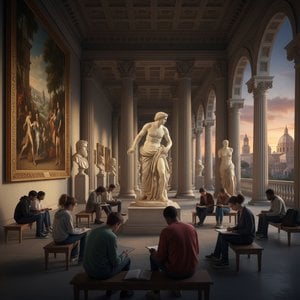
The Enduring Legacy of Classicism: Principles, Evolution & Influence in Western Art
Explore the enduring legacy of Classicism in Western art! Discover its historical context, key principles, iconic masterpieces & lasting influence. Learn about Renaissance and Neoclassical movements with ArtsDot.

Clyfford Still's Abstract Expressionism: A Study of Color, Form & the Existential Landscape
Explore the profound world of Clyfford Still's Abstract Expressionism with ArtsDot. Discover his unique style, existential themes & investment potential. Expert analysis for discerning collectors.

Timeless Resonance: Exploring Classic Vibe in Art – A Historical & Aesthetic Analysis
Explore the rich history & enduring aesthetic of Classicism art! Discover key movements, iconic artists like Raphael & David, and its lasting influence on Western art. Deepen your appreciation today.



