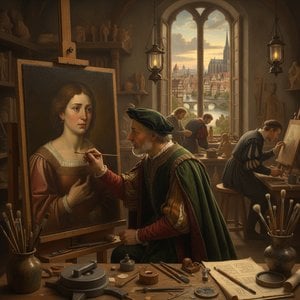
Saksonya'nın Rönesans Ustası: Yaşlı Lucas Cranach'ın Yaşamı ve Sanatı
Almanya'nın Kronach kentinde 1472 civarında dünyaya gelen Yaşlı Lucas Cranach, Alman Rönesansı'nın en kilit figürlerinden biri olarak tarihe geçmiştir. Hayatı, muazzam dini ve siyasi çalkantıların yaşandığı bir dönemde şekillenmiş; sanatı ise hem filizlenen Protestan Reformu ile hem de hizmet ettiği görkemli saraylarla ayrılmaz bir bağ kurmuştur. İlk eğitimini babası Hans Maler'den alan Cranach'ın erken dönem sanatsal gelişimi, her ne kadar biraz gizem perdesi altında kalsa da, evrilen üslubunda Güney Alman ustaların izleri açıkça görülmektedir. O, kısa sürede sadece yetenekli bir zanaatkâr olarak değil, teknik hassasiyetin yanı sıra psikolojik derinliği de yakalayabilen bir sanatçı olarak kendini kanıtlamış; bu nitelikler çok geçmeden güçlü hamilerin dikkatini çekmiştir. 1504 yılında Saksonya Seçmeni III. Friedrich'in hizmetine girmesi, kariyerinin büyük bir kısmını tanımlayacak ve ona hem istikrar hem de nüfuzlu çevrelerle temas kurma imkânı sağlayacak olan o köklü ilişkiyi başlatmıştır. Wittenberg'deki saray ressamlığı görevi, yalnızca dekoratif eserler üretmekten ibaret değildi; bu atama Cranach'ı Avrupa tarihinin en dönüştürücü hareketlerinden birinin tam kalbine yerleştirmiştir.Himaye, Reform ve Sanatsal Yenilik
Cranach'ın Sakson sarayındaki konumu, sadece geçim kaynağı için değil, sanatsal gelişimi için de hayati bir önem taşımaktaydı. O, olayları yalnızca belgelemekle kalmıyor, derin değişimlerin yaşandığı bir dönemde görsel anlatıları aktif bir şekilde şekillendiriyordu. En kalıcı mirası, kuşkusuz Protestan Reformu'nun merkezi figürü Martin Luther ile olan yakın bağıdır. Cranach, Luther'in ondan az olmayan on bir portresini yapmıştır ve her biri reformcunun kişiliğine ve değişen rolüne eşsiz bir bakış sunar. Bunlar basit benzerlikler değildi; yerleşik dini düzene meydan okuyan bir lider için elzem olan otorite, dindarlık ve entelektüel gücü yansıtmak üzere titizlikle kurgulanmış imgelerdi. Portre sanatının ötesinde Cranach, Reform teolojisini görsel bir forma dönüştürerek Protestan fikirlerini geniş kitlelere yayan ahşap baskılar ve tablolar üretmiştir. İncil sahnelerindeki tasvirleri, geleneksel Katolik ikonografisinden uzaklaşarak kutsal metinle doğrudan etkileşimi vurgulamış ve izleyici ile inanç arasında daha kişisel bir bağ kurulmasını sağlamıştır. Örneğin, Joachim'e Müjde eseri, reformcu kilise içindeki bireysel dindarlığa verilen yeni önemi yansıtarak neşeli bir ruh yayar. Bu yenilikçi yaklaşım dini konuların ötesine de taşmıştır; Cranach'ın Venüs ve diğer klasik figürleri içeren mitolojik tabloları, sıklıkla dönemin siyasi ve sosyal meseleleriyle ilgili alegorik anlamlar taşımıştır.Bir Atölye Hanedanlığı: Üslup ve Teknik
Yaşlı Lucas Cranach, tek başına çalışan izole bir sanatçı değildi. Sayısız asistan ve çırağın görev aldığı, oldukça üretken bir atölyeyi yönetiyordu. Bu iş birlikçi yaklaşım, Cranach'a atfedilen birçok eserin aslında onun yönetiminde veya oğlu Genç Lucas Cranach da dahil olmak üzere çevresindeki üyeler tarafından üretildiği anlamına geliyordu. Cranach atölyesi; uzun oranlı zarif figürler, canlı renkler ve titiz bir detaycılıkla karakterize edilen kendine özgü üslubuyla tanınır hale geldi. Tekniği; yağlı boya, ahşap baskı ve gravürün bir kombinasyonunu içeriyor, bu da ona hem orijinal sanat eserleri hem de uygun fiyatlı baskılar aracılığıyla geniş bir kitleye ulaşma imkânı tanıyordu. Seçmen III. Friedrich'in Geyik Avı adlı eseri, asil sembolizmin yanı sıra detaylı realizmi sergileyerek Kuzey Rönesansı üslubundaki ustalığını örnekler. Kompozisyon dinamiktir; avın enerjisini yakalarken aynı zamanda seçmenin gücünü ve statüsünü aktarır. Cranach'ın ışık ve gölge kullanımı, izleyiciyi sahnenin içine çeken bir derinlik ve atmosfer duygusu yaratır. Portreleri de aynı derecede etkileyicidir; psikolojik içgörü ve rafine icra ile karakterize edilirler.Miras ve Kalıcı Etki
Yaşlı Lucas Cranach 1553 yılında hayata gözlerini yumduğunda, geride bugün bile yankılanmaya devam eden olağanüstü bir sanatsal miras bıraktı. O, portre sanatının bir ustası, dini temaların yetenekli bir yorumcusu ve görsel iletişimin gücünü kavramış kurnaz bir iş insanıydı. Çalışmaları sadece döneminin kültürel ve entelektüel akımlarını yansıtmakla kalmadı, aynı zamanda bu akımların şekillenmesine de yardımcı oldu. Cranach atölyesi, ölümünden sonra da gelişmeye devam ederek üslubunun ve tekniklerinin nesiller boyu yaşamasını sağladı. Etkisi, kendisinden sonra gelen sayısız sanatçının eserlerinde görülebilir ve tabloları dünya çapındaki koleksiyoncular ve müzeler tarafından hâlâ büyük bir ilgiyle aranmaktadır. Martin Luther'in ikonik portrelerinden büyüleyici mitolojik sahnelere kadar Cranach'ın sanatı, Alman Rönesansı dünyasına büyüleyici bir pencere açıyor; hem derin ruhsal sorgulamaların hem de sanatsal yeniliklerin damga vurduğu bir dünyaya... Dini coşkuyu, siyasi zekayı ve sanatsal yeteneği harmanlama becerisi, onun çağının en önemli sanatçılarından biri olarak yerini sağlamlaştırdı ve katkıları yüzyıllar sonra bile izleyicileri büyülemeye devam ediyor.Soru & Cevap
Yaşlı Lucas Cranach sanatçısının doğum yeri olan şehir ve ülke neresidir?
Yaşlı Lucas Cranach, Almanya sınırları içerisindeki Kronach şehrinde doğmuştur.
Yaşlı Lucas Cranach sanatçısının doğum yeri ve yılı nedir?
Yaşlı Lucas Cranach, 1472 yılında Kronach şehrinde doğdu.
Yaşlı Lucas Cranach nereli?
Yaşlı Lucas Cranach, Almanya ülkesinde doğmuştur.
Yaşlı Lucas Cranach adlı sanatçının eserlerini anahtar kelimelere göre keşfedebilir miyim?
Yaşlı Lucas Cranach'in eserlerini, sanatçının Anahtar Kelimelere Göre sayfasında anahtar kelimelere göre keşfedebilirsiniz. Her anahtar kelime ilgili eserleri bir araya getirir.
Yaşlı Lucas Cranach adlı sanatçının eserlerine ruh haline göre göz atabilir miyim?
Yaşlı Lucas Cranach'in eserleri, sanat çalışmalarını hissedilen duygulara göre düzenleyen Ruh Haline Göre Oda sayfasında, ruh haline göre incelenebilir.
Yaşlı Lucas Cranach adlı sanatçıya ait incelemek için kaç adet sanat eseri mevcut?
Tüm Eserler sayfasında Yaşlı Lucas Cranach imzalı 893 sanat eseri eseri inceleyebilirsiniz.
Yaşlı Lucas Cranach tarafından üretilen tüm eserleri belirli bir teknik/materyal türünde nasıl bulabilirim?
Yaşlı Lucas Cranach tarafından belirli bir teknikte üretilmiş tüm eserleri bulmak için sanatçının Tüm Teknikler sayfasını kullanabilirsiniz.