Portrait of Jean Dubuffet

Meet the 100 Most Famous Paintings by Jean Dubuffet

Updated Ekim 2026 · ranked by our popularity score (searches, visits and orders for each work) · 441 works by Jean Dubuffet in our catalogue

In short

If you know one Jean Dubuffet painting, it's probably Grand Maitre of the Outsider (1947). The Cow With The Subtle Nose (1954) and Monsieur Plume with Creases in his Trousers (Portrait of Henri Michaux) (1947) round out the three pieces people recognise right away. Our catalogue has 441 works by Jean Dubuffet. Below are the 100 people know best, each with its year, where to find it and what makes it special.

1901 – 1985, Le Havre Art brut Most works: İsrail Müzesi

Start here: the top 10 Jean Dubuffet paintings

1
Grand Maitre of the Outsider (1947) by Jean Dubuffet

Grand Maitre of the Outsider

1947 · Oil On Canvas

The canvas confronts the viewer with a face that seems to have been pulled directly from the earth. It is a portrait, yet it mocks the very idea of a formal likeness. An older male figure emerges from a deep, dark void, his features rendered in crude, simple shapes that feel urgent and unpolished. His eyes are wide, fixed in a stare that radiates annoyance, while his mouth hangs slightly…

2
The Cow With The Subtle Nose (1954) by Jean Dubuffet

The Cow With The Subtle Nose

1954 · Enamel

The Cow With The Subtle Nose is an artwork by Jean Dubuffet. Created in 1954, this work belongs to the Vaches series. It is also categorized within the Petites statues de la vie précaire series.

3
Monsieur Plume with Creases in his Trousers (Portrait of Henri Michaux) (1947) by Jean Dubuffet

Monsieur Plume with Creases in his Trousers (Portrait of Henri Michaux)

1947 · Oil On Canvas

The gaze of Monsieur Plume with Creases in his Trousers (Portrait of Henri Michaux) meets the viewer from across the years, a silent encounter frozen in 1947. Jean Dubuffet captures the essence of Henri Michaux within this singular frame, presenting a face that seems to hold a world of unspoken thought. The portrait exists as a direct confrontation between the subject and the observer, stripped of any unnecessary ornament.

5
Grand jazz band by Jean Dubuffet

Grand jazz band

Oil On Canvas

Grand jazz band, also known as Grand Jazz Band (New Orleans), is a painting by the French artist Jean Dubuffet. The work was created in December 1944. It depicts six African-American musicians performing as part of a jazz orchestra. The composition focuses on these figures as they engage with their instruments.

7
Logologie (1974) by Jean Dubuffet

Logologie

1974 · Screenprint · İsrail Müzesi, Kudüs

In this 1974 work, titled Logologie, we find ourselves drawn into a scene of quiet, concentrated intensity. A group of men is gathered around a table, their bodies leaning inward as if caught in a moment of profound significance. The composition is anchored by a deep, saturated cobalt blue backdrop that meets a textured, tan-colored wall, creating a sharp, theatrical contrast. This division of space directs the eye immediately to…

More Jean Dubuffet favourites, 11 to 100

11Rue de l'Entourloupe (1963) by Jean DubuffetRue de l'Entourloupe1963 12Times and places (1979) by Jean DubuffetTimes and places1979 13Grande traite solitaire (The Large Solitary Milking) (1943) by Jean DubuffetGrande traite solitaire (The Large Solitary Milking)1943 14The Grand Arab (He Only Has Sand) (1947) by Jean DubuffetThe Grand Arab (He Only Has Sand)1947 · Şikago Sanat Enstitüsü 15Man Eating a Small Stone (Homme mangeant une petite pierre) (1944) by Jean DubuffetMan Eating a Small Stone (Homme mangeant une petite pierre)1944 16Mangeurs d'oiseaux from Matière et mémoire ou les lithographies à l'école (1945) by Jean DubuffetMangeurs d'oiseaux from Matière et mémoire ou les lithographies à l'école1945 17Wall and Man (Mur et homme) (1945) by Jean DubuffetWall and Man (Mur et homme)1945 18Group of Faces IV (Suite de visages IV) (variant) (1946) by Jean DubuffetGroup of Faces IV (Suite de visages IV) (variant)1946 19Snack for Two (1945) by Jean DubuffetSnack for Two1945 20Decayed Walls at 34 Rue Lhomond (Les Murs vétustes du 34 rue Lhomond), rejected plate for the book Les Murs by Eugène Guillevic (1945) by Jean DubuffetDecayed Walls at 34 Rue Lhomond (Les Murs vétustes du 34 rue Lhomond), rejected plate for the book Les Murs by Eugène Guillevic1945 21Limbour as a Crustacean (1946) by Jean DubuffetLimbour as a Crustacean1946 22Woman II (Corps de dame II) (1950) by Jean DubuffetWoman II (Corps de dame II)1950 23Woman V (Corps de dame V) (1950) by Jean DubuffetWoman V (Corps de dame V)1950 24Woman VI (Corps de dame VI) (1950) by Jean DubuffetWoman VI (Corps de dame VI)1950 25The Poacher (Le Braconnier) (1953) by Jean DubuffetThe Poacher (Le Braconnier)1953 26Landscape with Ghosts (Paysage aux fantasmes) (1953) by Jean DubuffetLandscape with Ghosts (Paysage aux fantasmes)1953 27Landscape with Bulldog (Paysage au bouledogue) (1953) by Jean DubuffetLandscape with Bulldog (Paysage au bouledogue)1953 28Personnage (Femme nue) (1951) by Jean DubuffetPersonnage (Femme nue)1951 29Traveler in rich soil (1954) by Jean DubuffetTraveler in rich soil1954 30Eater (Mangeur) (1954) by Jean DubuffetEater (Mangeur)1954 31(Turbulent) Texturologie XXXII (Texturologie XXXII (turbulente)) (1958) by Jean Dubuffet(Turbulent) Texturologie XXXII (Texturologie XXXII (turbulente))1958 · İsrail Müzesi 32Statue of a Shadow (1958) by Jean DubuffetStatue of a Shadow1958 · İsrail Müzesi 33Clear Song of Soil (Claire Chanson du sol) (1960) by Jean DubuffetClear Song of Soil (Claire Chanson du sol)1960 · İsrail Müzesi 34Six Characters, Landscape Background (1961) by Jean DubuffetSix Characters, Landscape Background1961 35Figure, Black Background (Personnage fond noir) (1961) by Jean DubuffetFigure, Black Background (Personnage fond noir)1961 36Figure in a Landscape (1960) by Jean DubuffetFigure in a Landscape1960 37Site Plan (Plan de site) from the portfolio Eléments, Moments from Phenomena (Les Phénomènes) (1958) by Jean DubuffetSite Plan (Plan de site) from the portfolio Eléments, Moments from Phenomena (Les Phénomènes)1958 38Decoding (Déchiffrement) from the portfolio Scrap Plates II (Planches de rebut II) from Phenomena (Les Phénomènes) (1960) by Jean DubuffetDecoding (Déchiffrement) from the portfolio Scrap Plates II (Planches de rebut II) from Phenomena (Les Phénomènes)1960 39Figure with Hat in a Landscape (Personnage au chapeau dans un paysage) (1960) by Jean DubuffetFigure with Hat in a Landscape (Personnage au chapeau dans un paysage)1960 40Le Vin de barbe (1959) by Jean DubuffetLe Vin de barbe1959 41Stains (Salissures) from the portfolio Textures from Phenomena (Les Phénomènes) (1959) by Jean DubuffetStains (Salissures) from the portfolio Textures from Phenomena (Les Phénomènes)1959 42Torrent from the portfolio Waters, Stones, Sand (Eaux, Pierres, Sable) from Phenomena (Les Phénomènes) (1959) by Jean DubuffetTorrent from the portfolio Waters, Stones, Sand (Eaux, Pierres, Sable) from Phenomena (Les Phénomènes)1959 43Poster for As tu cueilli la fleur de barbe, Galerie Daniel Cordier, Paris, April 27 May 31, 1960 (1960) by Jean DubuffetPoster for As tu cueilli la fleur de barbe, Galerie Daniel Cordier, Paris, April 27 May 31, 19601960 44Disque no. 6 from Expériences musicales (1961) by Jean DubuffetDisque no. 6 from Expériences musicales1961 45Disque no. 2 from Expériences musicales (1961) by Jean DubuffetDisque no. 2 from Expériences musicales1961 46Ground Soil (Dispositif au sol) from the portfolio Clean Slates (Tables rases) from Phenomena (Les Phénomènes) (1958) by Jean DubuffetGround Soil (Dispositif au sol) from the portfolio Clean Slates (Tables rases) from Phenomena (Les Phénomènes)1958 47Le Mirivis des Naturgies (1962) by Jean DubuffetLe Mirivis des Naturgies1962 48Frontispiece from Le Mirivis de Naturgies by André Martel (1962) by Jean DubuffetFrontispiece from Le Mirivis de Naturgies by André Martel1962 49Comings and goings (1965) by Jean DubuffetComings and goings1965 50Trémolo sur l'oeil (1963) by Jean DubuffetTrémolo sur l'oeil1963 51Meal for Four III (1962) by Jean DubuffetMeal for Four III1962 52Comments (1978) by Jean DubuffetComments1978 53Memorable Facts III (Fiats mémorables III) from the series Memorable Facts (1978) by Jean DubuffetMemorable Facts III (Fiats mémorables III) from the series Memorable Facts1978 54Scenic triplex (1982) by Jean DubuffetScenic triplex1982 55Site visited (1981) by Jean DubuffetSite visited1981 56Joë Bousquet in Bed by Jean DubuffetJoë Bousquet in Bed 57Triumph and Glory by Jean DubuffetTriumph and Glory 58Six Fish and Bird (1943) by Jean DubuffetSix Fish and Bird1943 · Tel Aviv Museum of Art 59Apartment Houses, Paris (1946) by Jean DubuffetApartment Houses, Paris1946 60The Cow with the Subtile Nose by Jean DubuffetThe Cow with the Subtile Nose 61Double-Barreled Shotgun (1966) by Jean DubuffetDouble-Barreled Shotgun1966 · Şikago Sanat Enstitüsü 62Portrait of a Man by Jean DubuffetPortrait of a ManMetropolitan Sanat Müzesi 63Spinning round by Jean DubuffetSpinning round 64Weaver's vision by Jean DubuffetWeaver's vision 65Landscape of Algeria (1919) by Jean DubuffetLandscape of Algeria1919 66Walk in the forest (1921) by Jean DubuffetWalk in the forest1921 67Lecciones Botanica (1925) by Jean DubuffetLecciones Botanica1925 68Two female heads in profile (1934) by Jean DubuffetTwo female heads in profile1934 69Nu bedecked (1943) by Jean DubuffetNu bedecked1943 70Subway (1943) by Jean DubuffetSubway1943 71Arab with Footprints (1948) by Jean DubuffetArab with Footprints1948 · Staatliche Kunsthalle Karlsruhe 72The Villager with Close-Cropped Hair (1947) by Jean DubuffetThe Villager with Close-Cropped Hair1947 · Des Moines Art Center 73Large Black Landscape (Grand Paysage noir) (1946) by Jean DubuffetLarge Black Landscape (Grand Paysage noir)1946 74Untitled (1946) by Jean DubuffetUntitled1946 75It flute on the bump (1947) by Jean DubuffetIt flute on the bump1947 76Bedouin on a donkey (1948) by Jean DubuffetBedouin on a donkey1948 77Desert and Bedouin (1948) by Jean DubuffetDesert and Bedouin1948 78Arab camel saddled (1948) by Jean DubuffetArab camel saddled1948 79Joë Bousquet in Bed (1947) by Jean DubuffetJoë Bousquet in Bed1947 80Wall with Parachute (Mur au parachute) (1945) by Jean DubuffetWall with Parachute (Mur au parachute)1945 81Group of Faces VI (Suite de visages VI) (variant) (1946) by Jean DubuffetGroup of Faces VI (Suite de visages VI) (variant)1946 82Beach with Bathers (Plage aux baigneurs) (1944) by Jean DubuffetBeach with Bathers (Plage aux baigneurs)1944 83Portrait of Henri Michaux (1947) by Jean DubuffetPortrait of Henri Michaux1947 84Group of Faces I (Suite de visages I) (variant) (1946) by Jean DubuffetGroup of Faces I (Suite de visages I) (variant)1946 85Pierre Benoit (1946) by Jean DubuffetPierre Benoit1946 86Figure, Tree, House (Personnage, arbre, maison) (1946) by Jean DubuffetFigure, Tree, House (Personnage, arbre, maison)1946 87Group of Faces III (Suite de visages III) (variant) (1946) by Jean DubuffetGroup of Faces III (Suite de visages III) (variant)1946 88Misty Wall (Mur embué), rejected plate for the book Les Murs by Eugène Guillevic (1945) by Jean DubuffetMisty Wall (Mur embué), rejected plate for the book Les Murs by Eugène Guillevic1945 89Madame Mouche (1945) by Jean DubuffetMadame Mouche1945 90Arab (1948) by Jean DubuffetArab1948 91Sketchbook El Golea, II (1948) by Jean DubuffetSketchbook El Golea, II1948 92Building Facades (1946) by Jean DubuffetBuilding Facades1946 93Bedouin, Chevrier (1948) by Jean DubuffetBedouin, Chevrier1948 94Group of Suntanned Faces (Suite de visages bronzes) (1946) by Jean DubuffetGroup of Suntanned Faces (Suite de visages bronzes)1946 95Landscape with Onlooker (Paysage au veilleur) (1944) by Jean DubuffetLandscape with Onlooker (Paysage au veilleur)1944 96Sketchbook El Golea, II (1948) by Jean DubuffetSketchbook El Golea, II1948 97Wall with Black Borders (Mur aux marges noires), rejected plate for the book Les Murs by Eugène Guillevic (1945) by Jean DubuffetWall with Black Borders (Mur aux marges noires), rejected plate for the book Les Murs by Eugène Guillevic1945 98Léautaud sorcerer Redskin (1946) by Jean DubuffetLéautaud sorcerer Redskin1946 99Wall with Inscriptions (1945) by Jean DubuffetWall with Inscriptions1945 100Sketchbook El Golea, II (1948) by Jean DubuffetSketchbook El Golea, II1948

Jean Dubuffet's paintings, period by period

Contemporary

1943 – 1978 · 3 works in this list

What Jean Dubuffet painted most

The four subjects that come up most often in these pieces, each with its best-known example.

Where you can see Jean Dubuffet's paintings

The 6 museums that hold the most of the paintings on this page.

Museum City Works by Jean Dubuffet Paintings from this list
İsrail Müzesi, Kudüsİsrail Müzesi Kudüs 7 Logologie, (Turbulent) Texturologie XXXII (Texturologie XXXII (turbulente)), Statue of a Shadow
Şikago Sanat Enstitüsü, ChicagoŞikago Sanat Enstitüsü Chicago 2 The Grand Arab (He Only Has Sand), Double-Barreled Shotgun
Staatliche Kunsthalle Karlsruhe, KarlsruheStaatliche Kunsthalle Karlsruhe Karlsruhe 2 Arab with Footprints
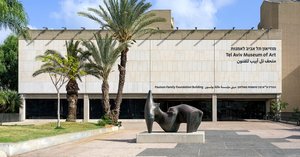
Tel Aviv Museum of Art, Tel AvivTel Aviv Museum of Art Tel Aviv 1 Six Fish and Bird
Metropolitan Sanat Müzesi, New YorkMetropolitan Sanat Müzesi New York 1 Portrait of a Man
Des Moines Art Center, Des MoinesDes Moines Art Center Des Moines 1 The Villager with Close-Cropped Hair

Jean Dubuffet decade by decade: one standout piece each

Works per decade

Pick a decade to see its standout piece.

Your questions about Jean Dubuffet's paintings

Which Jean Dubuffet painting is the most famous?See the answer

Top of the list is Grand Maitre of the Outsider (1947). Right behind it: The Cow With The Subtle Nose (1954) and Monsieur Plume with Creases in his Trousers (Portrait of Henri Michaux) (1947).

How old was Jean Dubuffet when Grand Maitre of the Outsider was made?See the answer

46 years old. Jean Dubuffet was born in 1901, and Grand Maitre of the Outsider dates from 1947.

What are the 10 best-known Jean Dubuffet paintings?See the answer

Grand Maitre of the Outsider, The Cow With The Subtle Nose, Monsieur Plume with Creases in his Trousers (Portrait of Henri Michaux), Bodies of Women (Corps de dames), Grand jazz band, Place for Awakenings, Logologie, Head of a Girl from the Assemblages d'empreintes series, Verbal Agreement Six Figures and Arab palm trees. You'll find the year and the museum of each in the list above.

How many paintings did Jean Dubuffet create?See the answer

We have 441 works by Jean Dubuffet in our catalogue, dated 1919 to 1982.

Where can you see Jean Dubuffet's famous paintings?See the answer

You'll find most of them in İsrail Müzesi (Kudüs), Şikago Sanat Enstitüsü (Chicago) and Staatliche Kunsthalle Karlsruhe (Karlsruhe). The museum list above has the full breakdown.

When did Jean Dubuffet paint the best-known pieces?See the answer

In 1940s, more than any other time: 46 of the 100 pieces on this page date from then, Grand Maitre of the Outsider among them.

Which famous Jean Dubuffet paintings came first and last?See the answer

The earliest piece here is Landscape of Algeria (1919); the most recent is Scenic triplex (1982).

What subjects show up most in Jean Dubuffet's paintings?See the answer

Abstract figures (4), Men (3) and Human figures (3), out of the 100 pieces on this page.

What materials did Jean Dubuffet paint with most?See the answer

Oil On Canvas, used in 4 of the 100 pieces on this page.

What art movement was Jean Dubuffet part of?See the answer

Art brut, as you can see in the pieces on this page.

Which Jean Dubuffet pieces can you see at the İsrail Müzesi?See the answer

You can see 4 of the pieces on this page at the İsrail Müzesi, Kudüs, including Logologie, (Turbulent) Texturologie XXXII (Texturologie XXXII (turbulente)) and Statue of a Shadow.

Getting to know Jean Dubuffet

Erken Yaşam, Aile ve Eğitim

Jean Philippe Arthur Dubuffet, 31 Temmuz 1901 tarihinde Fransa'nın Le Havre şehrinde dünyaya geldi. Toptan şarap ticaretiyle uğraşan varlıklı bir burjuva ailesinin oğlu olarak, konforlu bir çevrede büyüdü. Bu istikrarlı ve refah içindeki yetişme süreci, sanatçının ilerleyen yıllarda yaratıcı üretimini tanımlayacak olan o ham ve işlenmemiş dürtülerle sessiz bir tezat oluşturacak olan maddi bir güven ortamı sağladı. Le Havre'daki ilk yılları, başkentin cazibesi onu bambaşka bir varoluş biçimine doğru çekmeden önce, bu evcil istikrarın gölgesinde şekillendi.

1918 yılında Dubuffet, akademik eğitim almak üzere Paris'e taşındı ve Académie Julian'a girdi. Burası, dönemin parlatılmış standartlarını aşılamak için tasarlanmış, akademik geleneğin katı yapılarıyla tanımlanan bir ortamdı. Ancak, kurumun getirdiği bu resmi kısıtlamalar sanatçının ruhuna hitap etmedi. Akademik eğitimin dayattığı yöntemleri itici bulan Dubuffet, sadece altı ay sonra Académie'den ayrılma kararı aldı. Yerleşik pedagojik normların bu erken dönemde reddedilmesi, sanatçının onaylanmış tekniklerin güvenli limanı yerine, bağımsız bir keşif yolunu temel bir tercih olarak benimsediğinin ilk sinyallerini verdi.

Art Brut'un Doğuşu

Jean Dubuffet’nin akademi dünyasının katı kurallarından kopuşu, yerleşik sanat dünyasına duyduğu derin bir memnuniyetsizlikten besleniyordu. Dönemin hakim kültürel kurumlarını, gerçek insani dışavurumu boğan, steril ortamlar olarak görüyordu. Onun gözünde, o dönemin parlatılmış ve kusursuz estetik standartları, insan ruhunun ham ve saf dürtülerini örten yapay birer maskeden ibaretti. Bu sarsılmaz inanç, onu akademik geleneğin sınırlarının tamamen dışında, çok daha otantik bir yaratım biçimi aramaya itti.

Bu arayışı tanımlamak adına, "art brut" yani "ham sanat" terimini literatüre kazandırdı. Bu kavram, yalnızca üslupsal bir tercih değil; sanatın anlam kazanması için akademik eğitime veya toplumsal onaylanmaya ihtiyaç duyduğu düşüncesine karşı geliştirilmiş radikal bir reddedişti. Kültürel normlardan etkilenmemiş olan çocukların, mahkumların ve psikiyatri hastalarının ürettiği spontane ve doğrudan eserler, Dubuffet’yi büyülemeye başladı. Sanatçının ilgisi, geleneğin ağırlığından veya profesyonel bir takdir edilme arzusundan arınmış, bu özgür ruhların sunduğu vizyonun saflığında gizliydi.

Bu felsefeye olan bağlılığı, basit bir gözlemden çok daha öteye geçti. 1948 yılında, bu evcilleştirilmemiş dışavurumların incelenmesini ve korunmasını sağlamak amacıyla Compagnie de l’Art Brut’yu kurdu. Bu organizasyon aracılığıyla, "dışlanmış" olanlara bir platform sunmayı ve eğitimsiz yaratıcıların o işlenmemiş enerjisinin, insan yaratıcılığının hayati bir gücü olarak kabul edilmesini hedefledi. Dubuffet’nin çabaları, sanatın odağını salonların parlatılmış mükemmeliyetinden, aracısız dürtülerin o içgüdüsel ve sarsıcı gücüne doğru kaydırdı.

Teknik ve Sanatsal Üslup

Jean Dubuffet’nin tuvalle kurduğu ilişki, akademik geleneğin o pürüzsüz ve parlatılmış yüzeylerine karşı bir reddedişle şekillenmiştir. 1940’lı ve 1950’li yılların sanat dünyasında eserleri, ağır ve dokunsal bir varlık kazanmaya başladı. Sanatçı, yalnızca bir temsiliyetin ötesine geçmek amacıyla, fiziksel bir dikkat talep eden, yoğun ve malzeme odaklı yüzeyler yaratmaya yöneldi. Bu derinliği yakalamak için doğrudan toprağın kendisine sığındı; boyasına kum, çakıl, asfalt, çamur ve kömür tozu gibi alışılmadık maddeler dahil etti. Bu eklemeler, boyayı basit bir pigment olmaktan çıkarıp, fiziksel dünyanın ham dokularını yansıtan, pürüzlü ve heykelimsi bir maddeye dönüştürdü.

Dokuya duyulan bu yoğun tutku, zamanla yerini bambaşka bir görsel dile bıraktı. 1962 yılında, bir telefon görüşmesi sırasında tesadüfen çizilen bir karalama, Hourloupe üslubunun doğuşuna ilham verdi. Bu dönem, sanatçının erken yıllarındaki o kalın impasto kullanımından bir kopuşu temsil ederek, daha grafiksel ve yapısal bir estetiğe doğru evrildi. Hourloupe döngüsü, birbirinin içinden geçiyormuş gibi görünen, düz ve iç içe geçmiş formlarla karakterize edilir. Bu formlar, ağır siyah kontürlerle tanımlanmış olup, hem mimari bir düzeni hem de kendiliğinden gelişen bir akışı aynı anda hissettiren mekânsal bir karmaşıklık yaratır.

Önemli Eserler ve Büyük Siparişler

Jean Dubuffet'nin görsel dilinin evrimi, ilkel olandan yapısal olana doğru gerçekleşen büyüleyici bir dönüşümle karakterize edilir. 1943 yılında ortaya koyduğu Six Fish and Bird, sanatçının dışlanmış olanın ham enerjisine olan erken dönem bağlılığını yansıtan çarpıcı bir eserdir. 1961 yılına gelindiğinde ise odağı, Figure in Red (Personnage au costume rouge) çalışmasında gördüğümüz daha grafiksel ve sadeleşmiş formlara doğru kaymıştır. Bu litografi, kariyerinin orta dönemindeki keşiflerinin o huzursuz edici ve çıplak özünü somutlaştıran bir figürü sunmak için cesur ve tekil bir renk kullanır.

Sanatçının ilerleyen yılları, kamusal alana ve anıtsal boyutlara doğru bir yönelişe tanıklık etmiştir. 1972 yılında tamamladığı soyut bir açık hava heykeli olan Group of Four Trees, Amerikan bankacı David Rockefeller tarafından Manhattan'daki bir kamusal meydan için sipariş edilmiştir. Bu eser, sanatçının daha önceki yoğun dokularından kopuşunu temsil ederek Hourloupe stiline doğru bir yolculuğu simgeler. Bir telefon görüşmesi sırasında tesadüfen çizilen karalamalardan geliştirdiği bu yöntem, birbirine kenetlenen hücreler oluşturmak için temiz siyah çizgiler kullanır. Bu heykeller, üç boyutlu uzaya taşınmış çizimler olarak algılanacak şekilde tasarlanmıştır.

  • Six Fish and Bird (1943)
  • Figure in Red (Personnage au costume rouge) (1961)
  • Group of Four Trees (1972)

Uluslararası Başarı ve Tanınırlık

Jean Dubuffet'nin kariyerindeki ivme, 1940'ların ortalarında çarpıcı bir değişim yaşadı. 1944 yılında Paris'teki Galerie René Drouin'de açtığı ilk kişisel sergisinin ardından, sanatçının varlığı Fransız başkentinin sınırlarını aşmaya başladı. 1947 yılına gelindiğinde, Pierre Matisse Gallery sayesinde New York'ta ilk solo sergisini açması, onun alışılmadık yaklaşımını Amerikan sanat piyasasıyla tanıştırdı. Bu dönem, yerel bir hareket olmaktan çıkıp Atlantik'in ötesinde de dikkatleri üzerine çeken bir figüre dönüşme sürecini simgeliyordu.

Sanatçının Amerika Birleşik Devletleri ile olan bağı, 1951 ile 1952 yılları arasında New York'ta yaşadığı dönemle birlikte daha da derinleşti. Bu süreç, uluslararası sanat sahnesiyle daha yakın bir bağ kurmasını sağlayarak Avrupa dışındaki şöhretini perçinledi. Gelişen vizyonunun yarattığı yankı on yıl boyunca sürmeye devam etti ve bu durum, 1954 yılında Cercle Volney'de eserlerinden oluşan kapsamlı bir retrospektif sergiye yol açtı. Bu yıllar, Jean Dubuffet'yi hem koleksiyonerler hem de sanat kurumları nezdinde büyük bir ilgi odağı haline getirdi.

Miras ve Sanatsal Etki

Jean Dubuffet’in görsel dünya üzerindeki etkisi, akademik mükemmeliyetçiliğe ve parlatılmış estetiğe karşı sergilediği o kararlı reddiyede kök salar. Art Brut kavramını savunuculuğunu yaparak, sanat dünyasının bakışlarını çocukların, mahkumların ve ruhsal dengesi yerinde olmayan bireylerin o işlenmemiş, saf dışavurumlarına çevirmeyi başarmıştır. İmge yaratımına dair bu daha otantik ve hümanist yaklaşım arayışı, École de Paris'in yapılandırılmış gelenekleri ile dışlanmış olanın o vahşi ve evcilleştirilemez enerjisi arasında bir köprü kurmuştur. O, yerleşik kurumların steril inceliklerinden uzaklaşarak, yaratımın daha içsel ve hayati bir formunu kucaklamak adına, saflığın içindeki hakikati bulmaya çalışmıştır.

Onun etkisi, maddeselliğe karşı geliştirdiği radikal yaklaşım sayesinde günümüzde de varlığını sürdürmektedir. Tuvaline kum, çakıl taşı ve kömür tozu gibi unsurları dahil ederek, bir resmi oluşturan temel sınırları zorlamış ve ona meydan okumuştur. Bu alışılmadık teknikler, tuval yüzeyini dokunsal ve fiziksel bir varlığa dönüştürmüştür. Günlük yaşamın o kaba ve gerçek dokusuyla deney yapma konusundaki bu cesareti, geleneksel güzellik standartlarını bir kenara bırakıp daha ilkel ve köklü bir ifade arayan sanatçılar için hala eşsiz bir yol gösterici olmaya devam etmektedir.

  • Group of Four Trees (1972)
  • Figure in Red (1961)

Son Yılları ve Ölümü

Dubuffet'nin yaşamının son on yılları, Avrupa'daki kökleri ile Amerika'daki güçlü varlığı arasında köprü kuran, üretkenliği hiç azalmayan bir dönem olarak hafızalara kazındı. Uluslararası sergi dünyasının vazgeçilmez bir figürü olmayı sürdüren sanatçı, evrilen vizyonunu her iki kıtadaki farklı izleyici kitlelerine sunmaya devam etti. Üretimindeki bu yüksek tempo, çağdaş sanat dünyasındaki sarsılmaz ve tartışmasız yerini son günlerine kadar korumasını sağladı.

Yaşamının ilerleyen yıllarında odağı, mekânsal ve anıtsal olanın derinliklerine kaydı. Bu dönemde tuvalin sınırlarını aşarak, büyük ölçekli çalışmalarıyla çevresiyle ve mekanla doğrudan etkileşime girmeye başladı. Bir telefon görüşmesi sırasında tesadüfen ortaya çıkan karalamalardan doğan Hourloupe stili, onu önemli mimari ve heykel projelerine taşıdı. Birbirine kenetlenen formlar ve ağır siyah kontürlerle karakterize edilen bu eserler, sanatçının iki boyutlu deneylerini kamusal alanları dolduran üç boyutlu gerçekliklere dönüştürdü.

Jean Dubuffet, 12 Mayıs 1985 tarihinde Paris'te hayata gözlerini yumdu. Geride, güzel sanatlar için kabul edilebilir olanın sınırlarını kökten sarsan devasa bir külliyat bıraktı. Ham olana ve işlenmemiş olana olan sarsılmaz bağlılığı, yaratıcı kimliğinin temel taşı olarak son nefesine kadar varlığını sürdürdü.

All 441 works by Jean Dubuffet →