Portrait of François Boucher

Your Guide to the 100 Most Famous François Boucher Paintings

Updated Ekim 2026 · ranked by our popularity score (searches, visits and orders for each work) · 377 works by François Boucher in our catalogue

In short

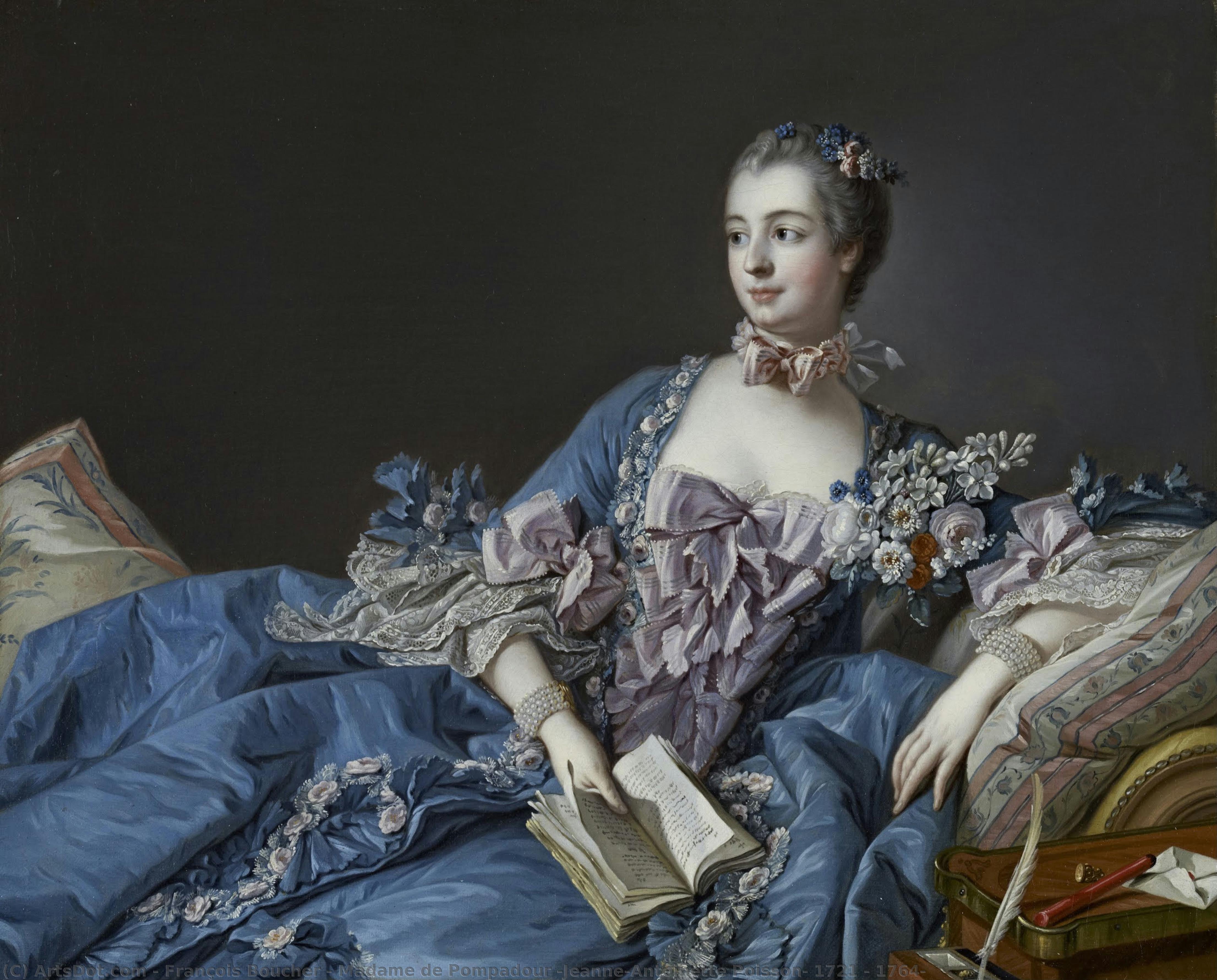
François Boucher's best-known piece is Diana getting out of her bath (1742). Next on the list are Bouguereau Song of the Angels and Madame de Pompadour (Jeanne-Antoinette Poisson, 1721 - 1764) (1758). We have 377 works by François Boucher in our catalogue; this guide picks out the 100 best known, with the year, the museum and the story of each piece.

1703 – 1770, Paris Rokoko Most works: Hermitaj Müzesi

The 10 François Boucher paintings to know first

1
Diana getting out of her bath (1742) by François Boucher

Diana getting out of her bath

1742 · Oil On Canvas

François Boucher created Diana getting out of her bath in 1742. The work centers on the Roman goddess Diana, portrayed in a state of nudity. She is situated within a dense forest setting, a natural environment that provides the backdrop for her emergence from the water.

2
Bouguereau Song of the Angels by François Boucher

Bouguereau Song of the Angels

Oil On Canvas

The air in this 18th-century French Rococo scene vibrates with an invisible melody. At the center, the quiet devotion of Mary and the infant Jesus anchors the composition. Around them, a choir of heavenly beings gathers to perform. One angel rests on the left, another occupies the middle, while two more flank the right side. They hold lyres, flutes, and strings, their movements precise and graceful. The music of the…

3
Madame de Pompadour (Jeanne-Antoinette Poisson, 1721 - 1764) (1758) by François Boucher

Madame de Pompadour (Jeanne-Antoinette Poisson, 1721 - 1764)

1758 · Oil On Canvas · Scottish National Gallery, Edinburgh

To gaze upon this portrait of Madame de Pompadour is to step directly into the gilded salons of 18th-century France, a world steeped in exquisite taste and whispered intrigue. Painted around 1758 by the master hand of François Boucher, this work transcends mere likeness; it captures an ephemeral moment of cultivated grace. The subject, Jeanne-Antoinette Poisson, is presented not just as a woman of high standing, but as an embodiment…

4
Madame Bergeret (1766) by François Boucher

Madame Bergeret

1766 · Oil On Canvas · National Gallery of Art, Washington

François Boucher’s “Madame Bergeret,” completed in 1766, stands as a quintessential exemplar of Rococo artistry—a style synonymous with aristocratic refinement and sensual beauty. More than just a depiction of a woman, it's an immersive experience into the opulent aesthetic sensibilities of Louis XV’s court, capturing not merely likeness but also an idealized vision of feminine grace.

5
The Interrupted Sleep (1750) by François Boucher

The Interrupted Sleep

1750 · Tuval Üzerine Yağlı Boya · Metropolitan Sanat Müzesi, New York

In the heart of the French Rococo era, few works capture the ephemeral magic of a summer afternoon as tenderly as François Boucher’s The Interrupted Sleep. Created in 1750, this masterpiece serves as a window into an idealized world where the rigors of reality are replaced by a soft, melodic dreamscape. The painting invites the viewer to step into a lush, sun-drenched woodland, where the boundaries between music, nature, and…

6
The Setting of the Sun by François Boucher

The Setting of the Sun

Oil On Canvas

In the luminous realm of 18th-century French artistry, few works capture the ephemeral magic of twilight as profoundly as François Boucher’s The Setting of the Sun. This masterpiece serves as a breathtaking window into the Rococo era, an age defined by its pursuit of elegance, pleasure, and a certain dreamlike sensuality. As the sun descends, the canvas erupts into a dramatic and opulent spectacle, where the boundaries between the earthly…

7
Pastoral Scene (1745) by François Boucher

Pastoral Scene

François Boucher’s “Pastoral Scene,” painted in 1745, isn't merely a depiction of a rural landscape; it’s a carefully constructed invitation into an idealized world—a sanctuary of innocence and leisure nestled within the heart of France. The painting immediately draws the viewer in with its soft palette of browns, beiges, and muted greens, evoking a sense of gentle warmth and timeless serenity. Two young figures – a boy and girl –…

8
Venus at Vulcan (1769) by François Boucher

Venus at Vulcan

1769 · Oil On Canvas · Kimbell Art Museum, Fort Worth

François Boucher’s “Venus at Vulcan’s Forge,” painted in 1769, isn't merely a depiction of mythological figures; it’s a vibrant embodiment of reconciliation and the potent dance between opposing forces. Rooted firmly within the opulent Rococo style that defined late 18th-century France, the painting transports us to a dramatic tableau inspired by Virgil’s *Aeneid*. Here, Venus, goddess of love and beauty, and Vulcan, god of fire and craftsmanship, find themselves caught…

9
The Toilette (1742) by François Boucher

The Toilette

1742 · Oil On Canvas · Thyssen-Bornemisza Müzesi, Madrid

In the soft, luminous atmosphere of François Boucher’s 1742 masterpiece, La Toilette, we are invited to step into a world of refined grace and quiet domesticity. This exquisite oil on canvas serves as a quintessential window into the Rococo era—a period defined by its celebration of pleasure, light, and the delicate nuances of everyday life. The scene unfolds within a richly appointed room, where the warmth of a fireplace anchors…

10
Boreas Abducting Oreithyia (1769) by François Boucher

Boreas Abducting Oreithyia

1769 · Oil On Canvas · Kimbell Art Museum, Fort Worth

François Boucher’s “Boreas Abducting Oreithyia,” completed in 1769, is a captivating distillation of classical mythology rendered with the characteristic exuberance and sensual grace that defined the Rococo style. This painting, measuring an impressive 273 x 205 cm, transports us to a moment of violent disruption – a dramatic retelling of Ovid’s tale from the *Metamorphoses*, where the icy North Wind god, Boreas, forcibly claims the Athenian princess Oreithyia.

Numbers 11 to 100: more François Boucher paintings

11Juno Asking Aeolus to Release the Winds (1769) by François BoucherJuno Asking Aeolus to Release the Winds1769 · Kimbell Art Museum 12Study for The Bath of Venus (1751) by François BoucherStudy for The Bath of Venus1751 · Hermitaj Müzesi 13Painter in his Studio by François BoucherPainter in his StudioLouvre Müzesi 14The Setting of the Sun (1752) by François BoucherThe Setting of the Sun1752 · Wallace Collection 15Young Woman Sleeping (1760) by François BoucherYoung Woman Sleeping1760 · Hermitaj Müzesi 16The Forest (1740) by François BoucherThe Forest1740 · Louvre Müzesi 17Vertumnus and Pomona by François BoucherVertumnus and PomonaBavarian State Painting Collections 18Madame de Pompadour (1754) by François BoucherMadame de Pompadour1754 · National Gallery of Victoria 19Mill at Charenton (1758) by François BoucherMill at Charenton1758 · Toledo Sanat Müzesi 20Madame de Pompadour (1758) by François BoucherMadame de Pompadour1758 · Victoria and Albert Museum 21Young Country Girl Dancing (1770) by François BoucherYoung Country Girl Dancing1770 · Art Gallery of Ontario 22Blond Odalisque (L'Odalisque Blonde) (1752) by François BoucherBlond Odalisque (L'Odalisque Blonde)1752 · Alte Pinakothek 23The Mill (1751) by François BoucherThe Mill1751 · Louvre Müzesi 24The Afternoon Meal (1739) by François BoucherThe Afternoon Meal1739 · Louvre Müzesi 25Imaginary Landscape with the Palatine Hill from Campo Vaccino (1730) by François BoucherImaginary Landscape with the Palatine Hill from Campo Vaccino1730 · Metropolitan Sanat Müzesi 26Pastorale (1760) by François BoucherPastorale1760 · Staatliche Kunsthalle Karlsruhe 27Vertumnus and Pomona (1757) by François BoucherVertumnus and Pomona1757 · Fine Arts Museums of San Francisco 28Death of Meleager (1727) by François BoucherDeath of Meleager1727 · Los Angeles County Museum of Art 29Venus in the Workshop of Vulcan (1757) by François BoucherVenus in the Workshop of Vulcan1757 · Yale University Art Gallery 30Standing Nude Girl by François BoucherStanding Nude GirlAlbertina 31Arcadian Nymphs Making Music (1770) by François BoucherArcadian Nymphs Making Music1770 · Victoria and Albert Museum 32Triumph of Venus by François BoucherTriumph of VenusHermitaj Müzesi 33Landscape with a Pond (1746) by François BoucherLandscape with a Pond1746 · Hermitaj Müzesi 34Washerwomen (1768) by François BoucherWasherwomen1768 · Metropolitan Sanat Müzesi 35The Billet-Doux by François BoucherThe Billet-Doux 36Venus and Mercury Instructing Cupid (1738) by François BoucherVenus and Mercury Instructing Cupid1738 · Los Angeles County Museum of Art 37Monument to Mignard (1735) by François BoucherMonument to Mignard1735 · Los Angeles County Museum of Art 38Venus Demanding Arms from Vulcan for Aeneas (1732) by François BoucherVenus Demanding Arms from Vulcan for Aeneas1732 · Louvre Müzesi 39Young Girl and Eros (1750) by François BoucherYoung Girl and Eros1750 · Detroit Institute of Arts 40The Rising of the Sun (1750) by François BoucherThe Rising of the Sun1750 · Plantin-Moretus Müzesi 41Hercules and Omphale (1735) by François BoucherHercules and Omphale1735 · Pushkin Devlet Güzel Sanatlar Müzesi 42Project for a Cartouche: An Allegory of Minerva, Fame, History and Faith Overcoming Ignorance and Time (1727) by François BoucherProject for a Cartouche: An Allegory of Minerva, Fame, History and Faith Overcoming Ignorance and Time1727 · Los Angeles County Museum of Art 43A young lady holding a pug dog (1745) by François BoucherA young lady holding a pug dog1745 · Art Gallery of New South Wales 44Saint John the Baptist (1755) by François BoucherSaint John the Baptist1755 · Minneapolis Institute of Art 45Bathing Nymph (1747) by François BoucherBathing Nymph1747 · Şikago Sanat Enstitüsü 46River Landscape with an Antique Temple (1762) by François BoucherRiver Landscape with an Antique Temple1762 · Thyssen-Bornemisza Müzesi 47The Modiste (1746) by François BoucherThe Modiste1746 · Wallace Collection 48Head of a Young Girl (1750) by François BoucherHead of a Young Girl1750 · Hermitaj Müzesi 49The Beautiful Country Woman (1732) by François BoucherThe Beautiful Country Woman1732 · Norton Simon Müzesi 50The Distorted Child (1742) by François BoucherThe Distorted Child1742 · Staatliche Kunsthalle Karlsruhe 51Breakfast by François BoucherBreakfast 52Diana and Callisto (1760) by François BoucherDiana and Callisto1760 · Slovak National Gallery 53Cupids. Allegory of Painting (1760) by François BoucherCupids. Allegory of Painting1760 · Hermitaj Müzesi 54Pastoral (1730) by François BoucherPastoral1730 · Walters Art Museum 55A Pastoral Scene ('La Jardiniere Endormie') (1762) by François BoucherA Pastoral Scene ('La Jardiniere Endormie')1762 · Scottish National Gallery 56Virgin and Child with the Young Saint John the Baptist and Angels (1765) by François BoucherVirgin and Child with the Young Saint John the Baptist and Angels1765 · Metropolitan Sanat Müzesi 57The Cherry Gatherers (1768) by François BoucherThe Cherry Gatherers1768 · Kenwood House 58A Pastoral Scene ('L'Offrande a la Villageoise') (1761) by François BoucherA Pastoral Scene ('L'Offrande a la Villageoise')1761 · Scottish National Gallery 59Allegory of Autumn (1753) by François BoucherAllegory of Autumn1753 · Metropolitan Sanat Müzesi 60The Education of Cupid (1742) by François BoucherThe Education of Cupid1742 · Charlottenburg Sarayı 61The Birth of Venus (1740) by François BoucherThe Birth of Venus1740 · Nationalmuseum 62The Judgement of Susannah (1720) by François BoucherThe Judgement of Susannah1720 · Kanada Ulusal Galerisi 63The Sleep of Loves (1725) by François BoucherThe Sleep of Loves1725 64Rebecca Receiving from the Hands of Eliezer the Gifts of Abraham (1728) by François BoucherRebecca Receiving from the Hands of Eliezer the Gifts of Abraham1728 65The Sacrifice of Gideon (1728) by François BoucherThe Sacrifice of Gideon1728 66Rest at the Fountain (1730) by François BoucherRest at the Fountain1730 · Bavarian State Painting Collections 67The Hunting Breakfast, Sketch. (1733) by François BoucherThe Hunting Breakfast, Sketch.1733 68"La Fontaine", Rococo Scene at the Fountain (1728) by François Boucher"La Fontaine", Rococo Scene at the Fountain1728 69Rebecca receives Abraham's gifts from Eliezer (1725) by François BoucherRebecca receives Abraham's gifts from Eliezer1725 · Musée des Beaux-Arts de Strasbourg 70Mercury Confiding the Infant Bacchus to the Nymphs (1733) by François BoucherMercury Confiding the Infant Bacchus to the Nymphs1733 · Wallace Collection 71Bacchus and Erigone (1745) by François BoucherBacchus and Erigone1745 · Wallace Collection 72Bird-Catching Cherubs (1732) by François BoucherBird-Catching Cherubs1732 · Rhode Island School of Design Museum of Art 73Head of a Young Woman (1732) by François BoucherHead of a Young Woman1732 · Cleveland Museum of Art 74'La vie champêtre' (1728) by François Boucher'La vie champêtre'1728 · Belton House 75La Femme au Chat: Les caresses dangereuses (1731) by François BoucherLa Femme au Chat: Les caresses dangereuses1731 · Fine Arts Museums of San Francisco 76The Bird Catchers (1748) by François BoucherThe Bird Catchers1748 · J. Paul Getty Müzesi 77Putti with Birds (1730) by François BoucherPutti with Birds1730 · Honolulu Museum of Art 78sleeping Amor (1728) by François Bouchersleeping Amor1728 79boy playing with a dog (1728) by François Boucherboy playing with a dog1728 · Musée d'Art et d'Histoire de Cholet Native Name 80Allegory of Autumn: Putti Playing with a Goat (1730) by François BoucherAllegory of Autumn: Putti Playing with a Goat1730 81Five Naked Children Playing by a Rocky Pool (1732) by François BoucherFive Naked Children Playing by a Rocky Pool1732 · National Trust 82The Forges of Vulcan (1737) by François BoucherThe Forges of Vulcan1737 83Pastoral Subject. The Sleeping Shepherdess (1743) by François BoucherPastoral Subject. The Sleeping Shepherdess1743 · Palais Bourbon 84The Marriage of Cupid and Psyche (1744) by François BoucherThe Marriage of Cupid and Psyche1744 · Musée des Beaux-Arts de Rouen 85Stable interior with amorous scene (1735) by François BoucherStable interior with amorous scene1735 · Musée Cognacq-Jay 86Air: Three Putti with Birds (1741) by François BoucherAir: Three Putti with Birds1741 · Victoria and Albert Museum 87The Egg Seller (1734) by François BoucherThe Egg Seller1734 · Wadsworth Atheneum 88Cupid and the Three Graces (1738) by François BoucherCupid and the Three Graces1738 · Calouste Gulbenkian Museum 89Cupids in Conspiracy (1740) by François BoucherCupids in Conspiracy1740 · Cleveland Museum of Art 90Music and Dance (1740) by François BoucherMusic and Dance1740 · Cleveland Museum of Art 91Mercury Entrusting the Infant Bacchus to the Nymphs of Nysa (1734) by François BoucherMercury Entrusting the Infant Bacchus to the Nymphs of Nysa1734 · Cincinnati Art Museum 92Rural idyll (1735) by François BoucherRural idyll1735 · Bavarian State Painting Collections 93The Nest, also known as the Berger Present (1737) by François BoucherThe Nest, also known as the Berger Present1737 94Young Lady with a Muff (1737) by François BoucherYoung Lady with a Muff1737 95Putti as Fisherman (1744) by François BoucherPutti as Fisherman1744 · Museum of Fine Arts 96Cupid Wounding Psyche (1741) by François BoucherCupid Wounding Psyche1741 · Los Angeles County Museum of Art 97Young Woman with Flowers in Her Hair (1734) by François BoucherYoung Woman with Flowers in Her Hair1734 · Museum of Fine Arts 98The Rest of the Holy Family during the Flight into Egypt (1744) by François BoucherThe Rest of the Holy Family during the Flight into Egypt1744 · Statens Museum For Kunst 99Leopard hunt (1736) by François BoucherLeopard hunt1736 · Musée de Picardie 100Crocodile hunt (1739) by François BoucherCrocodile hunt1739 · Musée de Picardie

François Boucher's paintings, period by period

What François Boucher painted most

The four subjects that come up most often in these pieces, each with its best-known example.

Where you can see François Boucher's paintings

The 8 museums that hold the most of the paintings on this page.

Museum City Works by François Boucher Paintings from this list
Hermitaj Müzesi, Saint PetersburgHermitaj Müzesi Saint Petersburg 12 Study for The Bath of Venus, Young Woman Sleeping, Triumph of Venus
Metropolitan Sanat Müzesi, New YorkMetropolitan Sanat Müzesi New York 13 The Interrupted Sleep, Imaginary Landscape with the Palatine Hill from Campo Vaccino, Washerwomen
Louvre Müzesi, ParisLouvre Müzesi Paris 8 Painter in his Studio, The Forest, The Mill
Los Angeles County Museum of Art, Los AngelesLos Angeles County Museum of Art Los Angeles 6 Death of Meleager, Venus and Mercury Instructing Cupid, Monument to Mignard
Wallace Collection, LondraWallace Collection Londra 21 The Setting of the Sun, The Modiste, Mercury Confiding the Infant Bacchus to the Nymphs
Scottish National Gallery, EdinburghScottish National Gallery Edinburgh 5 Madame de Pompadour (Jeanne-Antoinette Poisson, 1721 - 1764), A Pastoral Scene ('La Jardiniere Endormie'), A Pastoral Scene ('L'Offrande a la Villageoise')
Cleveland Museum of Art, ClevelandCleveland Museum of Art Cleveland 5 Head of a Young Woman, Cupids in Conspiracy, Music and Dance
Kimbell Art Museum, Fort WorthKimbell Art Museum Fort Worth 4 Venus at Vulcan, Boreas Abducting Oreithyia, Juno Asking Aeolus to Release the Winds

Decade by decade: the best-known François Boucher piece of each

Works per decade

Pick a decade to see its standout piece.

François Boucher: quick answers about the paintings

What is François Boucher's best-known painting?See the answer

Top of the list is Diana getting out of her bath (1742). Right behind it: Bouguereau Song of the Angels and Madame de Pompadour (Jeanne-Antoinette Poisson, 1721 - 1764) (1758).

What age was François Boucher when creating Diana getting out of her bath?See the answer

39 years old. François Boucher was born in 1703, and Diana getting out of her bath dates from 1742.

What are François Boucher's top 10 paintings?See the answer

Diana getting out of her bath, Bouguereau Song of the Angels, Madame de Pompadour (Jeanne-Antoinette Poisson, 1721 - 1764), Madame Bergeret, The Interrupted Sleep, The Setting of the Sun, Pastoral Scene, Venus at Vulcan, The Toilette and Boreas Abducting Oreithyia. You'll find the year and the museum of each in the list above.

How many works by François Boucher are in your catalogue?See the answer

We have 377 works by François Boucher in our catalogue, dated 1720 to 1770.

In which museums can you see François Boucher's famous works?See the answer

You'll find most of them in Hermitaj Müzesi (Saint Petersburg), Metropolitan Sanat Müzesi (New York) and Louvre Müzesi (Paris). The museum list above has the full breakdown.

When did François Boucher make the most famous pieces?See the answer

In 1730s, more than any other time: 28 of the 100 pieces on this page date from then, The Afternoon Meal among them.

What are François Boucher's first and last famous pieces?See the answer

The earliest piece here is The Judgement of Susannah (1720); the most recent is Young Country Girl Dancing (1770).

Which subjects did François Boucher paint most often?See the answer

Woman (21), Trees (14) and Man (10), out of the 100 pieces on this page.

Which medium shows up most in François Boucher's paintings?See the answer

Oil On Canvas, used in 45 of the 100 pieces on this page.

What style or movement is François Boucher known for?See the answer

Rokoko, as you can see in the pieces on this page.

Which famous François Boucher paintings are at the Hermitaj Müzesi?See the answer

You can see 6 of the pieces on this page at the Hermitaj Müzesi, Saint Petersburg, including Study for The Bath of Venus, Young Woman Sleeping and Triumph of Venus.

Where can I order a François Boucher reproduction?See the answer

Yes. Every painting on this page is available as a hand-painted oil reproduction or a print, in the size that suits you. Just open the painting's page to order.

François Boucher's story

Erken Yaşam, Aile ve Eğitim

Fransa'nın hareketli Paris sokaklarında, François Boucher'in hikayesi 29 Eylül 1703'te başladı. Görsel sanatların halihazırda bir yaşam biçimi olduğu bir evde, geçimini dantel tasarımcısı olarak sağlayan Nicolas Boucher'in oğlu olarak dünyaya geldi. Desenlerin ve tasarımların karmaşıklığına olan bu erken dönem aşinalığı, muhtemelen genç çocuğun gözündeki detay yeteneğini, henüz eline bir fırça almadan çok önce şekillendirmişti. Babası, ona şehrin rekabetçi sanat çevrelerinde yolunu bulması için gereken temel becerileri aşılayarak ilk derslerini verdi.

Çocuk büyüdükçe, yeteneği sanat dünyasında zaten yer edinmiş olan isimlerin dikkatini çekmeye başladı. On yedi yaşında François Boucher, saygın bir isim olan François Lemoyne'un yanında çıraklığa başladı. Ancak genç sanatçının yolu sadece üç ay sonra ani bir dönüş yaşadığı için bu eğitim süreci kısa sürdü. Lemoyne'un rehberliğinden ayrılarak gravür sanatçısı Jean-François Cars ile çalışmaya başladı; bu geçiş, onun çizgi hassasiyetinde ve baskı sanatının mekaniklerinde ustalaşmasına olanak tanıdı.

Kısa süre sonra hırs ve yetenek, büyük bir zafer anında birleşti. 1720 yılında François Boucher, hayatının akışını değiştirecek bir başarıya imza attı: Prestijli Grand Prix de Rome ödülünü kazandı. Bu zafer, onu akranları arasında yükselen bir güç olarak damgalayan ve Paris'in atölyelerinden Avrupa sanatının daha görkemli sahnelerine doğru ilerlemesi için gereken ivmeyi sağlayan, küçümsenemeyecek bir başarıydı.

Sanatsal Gelişim ve İtalyan Etkisi

Prestijli Grand Prix de Rome ödülünü kazanmanın ardından genç sanatçı, gözlerini İtalya'ya dikti. 1728 yılında Fransız Akademisi'nde eğitim almak üzere Roma'ya varması, sanatsal duyarlılıklarını kökten şekillendirecek bir dönemin başlangıcı oldu. İtalyan ışığında karşılaştığı klasik idealler ve ustaların eserleri, ona yalnızca teknik öğretmekle kalmadı; aynı zamanda ona yepyeni bir bakış açısı kazandırdı. Barok ustalarının dışavurumcu fırça darbelerine ve rustik, resimsel yaklaşımlarına kapılan François Boucher, bu tercihiyle zamanla çağdaşlarının daha katı akademik geleneklerinden ayrışan özgün bir yol çizdi.

Fransa'ya dönüşüyle birlikte, sanat dünyasının zirvesine doğru yükselişi oldukça hızlı oldu. 1731 yılında Académie Royale de Peinture et de Sculpture'a kabul edilen sanatçı, 1734 yılına gelindiğinde Akademi bünyesinde tarih ressamlığı statüsüne ulaşmıştı. Bu resmi tanınırlık, kariyerinin çok yakında klasik formların sessiz çalışmasından, Fransız sarayının hareketli ve görkemli yaşamına evrileceği sağlam bir temel oluşturdu. Onun ilk başarıları, disiplinli bir eğitimin ve yurt dışında geçirdiği yıllarda edindiği coşkulu, dışavurumcu derslerin muazzam bir birleşimi üzerine inşa edilmişti.

Hamiler, Atölyeler ve Sanatsal Siparişler

Fransız sarayında başarı elde etmek, çoğu zaman saf yeteneğin çok ötesinde bir şey gerektiriyordu; bu, kraliyet zevkinin anahtarlarını elinde tutanların teveccühünü kazanmayı zorunlu kılıyordu. François Boucher, bu yolda kendisine çok güçlü bir müttefik buldu: Kral XV. Louis'nin nüfuzlu metresi Madame de Pompadour. Aralarındaki bağ oldukça derindi; Pompadour, Boucher'in en önemli müşterisi haline gelerek, kendi döneminin görsel dilini tanımlamaya yardımcı olan çok çeşitli eserler sipariş etti. Onun desteği sayesinde Boucher'in şöhreti, yetenekli bir ressam olmanın ötesine geçerek, Fransız sarayının kimliğinin tam merkezinde yer alan bir figüre dönüştü.

Sanatçının etkisi, zamanla Fransız sanatını yöneten kurumların derinliklerine kadar işledi. 1755 yılında, vizyonunun dekoratif sanatlar alanına da taşınmasına olanak sağlayan Kraliyet Goblen Fabrikası Direktörlüğü görevine getirildi. Ayrıca, tasarımlarının dokuma eserlere dönüştürüldüğü Beauvais atölyelerine de imzasını attı. Yaratıcılığı sadece tuvalin sınırlarıyla sınırlı kalmadı; tiyatro dünyasında de aktif rol alarak, dramatik gösterileri hayata geçiren kostüm ve sahne tasarımları yaptı. Bu çok yönlülük, onun estetik anlayışının bir saray duvarından bir tiyatro sahnesine kadar aristokrat yaşamın her köşesinde hissedilmesini sağladı.

Resmi olarak en yüksek mertebeye ulaşması ise 1765 yılında, "Premier Peintre du Roi" yani Kral'ın Birinci Ressamı ilan edilmesiyle gerçekleşti. Bu unvan, mesleki kariyerinin zirvesine tırmanışının bir nişanesiydi. Artık ismi bir dönemin eş anlamlısı haline gelmiş, eserleri ülkenin en yüksek makamları tarafından aranan bir yaratıcı olmuştu. Kariyeri, akademide profesörlükten rektörlüğe, oradan da nihayetinde doğrudan kraliyet hizmetine uzanan istikrarlı ve görkemli bir yükseliş hikayesiydi.

Teknik ve Rokoko Üslubu

François Boucher, sanat dünyasında ışığa ve güzelliğe olan tutkusuyla hareket ederken, geçmişin ağır ve karanlık gölgelerine sırtını dönmeyi tercih etti. Onun fırçası, ışıltılı renkleri ve yumuşak, pastel bir paleti besleyen zarif bir dokunuşla yön buluyordu. Sanatında bir haz ve zarafet duygusu yakalamayı amaçlayan sanatçı, hareket ve rahatlık hissi yaratmak için sıklıkla asimetrik kompozisyonlardan yararlanıyordu. Bu yaklaşım, en ciddi mitolojik anlatıları bile tutku ve mahrem bir erotizm içeren sahnelere dönüştürmesine olanak tanıyordu; öyle ki, tanrılar uzak ve heybetli ilahlar olmaktan çıkıp, adeta oyunbaz aşıklar gibi görünmeye başlıyordu.

Doğaya bakış açısında kendine has bir meydan okuma gizliydi. Doğanın "trop verte et mal éclairée" —yani çok yeşil ve yetersiz aydınlatılmış— olduğunu söyleyen o meşhur sözü, çıplak ve işlenmemiş dünyanın kendi sunduğu o rafine estetikten yoksun olduğunu ima ediyordu. Dış dünyanın sert gerçekliği yerine, idealize edilmiş, ütopik bir alem inşa etmeyi seçti. Onun ellerinde manzara, boş zamanın ve güzelliğin sergilendiği bir sahneye dönüşürken; ışık, öznelerinin tenini en kusursuz şekilde yüceltecek şekilde her zaman tam olması gereken açıyla düşer gibi görünüyordu.

Onun ustalığı tuvalin sınırlarını aşarak, tasvir ettiği figürlerin dokusuna kadar uzanıyordu. Özellikle ince kumaşların parıltısını veya insan teninin yumuşaklığını yansıtırken sergilediği titiz detaycılık, hayranlık uyandırıcıydı. Bu teknik hassasiyet, Fransız Rokoko üslubunun görsel dilini tanımlamasına yardımcı olurken, saray zevklerini yansıtan lüks ve incelik dolu bir dünya yarattı. François Boucher için eserleri sadece bir sahnenin tasviri değil, zarafet ve sofistike bir keyif atmosferinin yeniden inşa edilmesiydi.

Temel Yapıtlar ve Başyapıtlar

Akademi salonlarında yeteneği çiçek açtıkça, François Boucher antik çağın görkemli anlatıları aracılığıyla değerini kanıtlamaya çalıştı. 1734 yılında, Rinaldo ve Armida eserini bir morceau de réception olarak sunduğunda, bu çalışma onun çağın ustaları arasındaki yükselişinin habercisi oldu. Bu parça, mitolojik dram üzerine olan hakimiyetini sergilemesine olanak tanıyarak, zarafetin peşinde geçen ve idealize edilmiş güzelliğin tasviriyle şekillenen bir kariyerin temelini attı.

Onun fırçası, en sık ilahi ve duyusal temalarda hayat buldu. 1740 civarında, tanrıçanın deniz köpüklerinden doğuşunu yakalayan Venüs'ün Doğuşu tablosunu tamamladı. Dişil olanla ve mitolojiyle olan bu tutkusu 1750'li yıllarda da devam etti. 1751 yılında, tenin yumuşak dokusunu ve kompozisyonlarının oyunbaz, samimi doğasını vurgulayan Venüs'ün Bakımı ve Venüs, Aşkı Teselli Ediyor eserlerini üretti. Bu tablolar, tanrıların bile rafine bir boş zaman anlayışıyla yaşadığı bir dünyayı yansıtıyordu.

Mitlerin ötesinde, François Boucher'in eli, Fransız nüfuzunun dizginlerini elinde tutanların portrelerini yakalamak için sık sık yardıma çağrıldı. 1756 tarihli Marquise de Pompadour Portresi, sanatçının en önemli hamisi için bıraktığı önemli bir kayıt olarak kalmaya devam etmektedir. Bu tür portreler aracılığıyla, sarayın zarafetini pastel tonlar ve sofistike bir duruşla görsel bir dile dönüştürdü.

  • Rinaldo ve Armida (1734)
  • Venüs'ün Doğuşu (yaklaşık 1740)
  • Venüs'ün Bakımı (1751)
  • Venüs, Aşkı Teselli Ediyor (1751)
  • Marquise de Pompadour Portresi (1756)

Eserlerini Bugün Nerede Görebilirsiniz?

Bu ressamın bıraktığı mirasa tanıklık etmek için pek çok diyarı aşmak gerekir; zira onun fırçası Fransa sınırlarının çok ötesine uzanmıştır. Paris'te, Louvre Müzesi, onun özenle resmettiği saray yaşamının ruhunu koruyarak birkaç tuvaline ev sahipliği yapmaktadır. Amerika kıtasında onun dokunuşunu arayanlar, boş zaman ve mitoloji sahnelerinin halkın beğenisine sunulmaya devam ettiği New York'taki Metropolitan Sanat Müzesi'nde eserlerinin bir kısmını bulabilirler. Sanatı, fırçasının zarafetine değer veren pek çok kişi tarafından talep görüp görüldüğü için, varlığı birçok müzenin salonlarında hissedilmektedir.

Yetenekli sanatçının etkisi, Doğu ve Batı'nın büyük koleksiyonlarına kadar uzanır. Saint Petersburg'da Hermitage Müzesi, onun vizyonunu devasa galerilerinde dolaşanlar için canlı tutarak sanatına ev sahipliği yapar. Bu sırada Fort Worth'ta, Kimbell Sanat Müzesi, modern izleyicilerin onun kariyerini tanımlayan yumuşak paletler ve mitolojik temalarla buluşmasına olanak sağlayan eserlerini barındırır. Resimleri, meraklı gözlerin kendilerini keşfetmesini bekleyerek bu çeşitli kutsal mekanlarda yaşamaya devam etmektedir.

All 377 works by François Boucher →