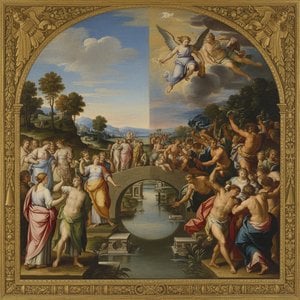
Natüralizmin Mimarı: Agostino Carracci'nin Yaşamı ve Mirası
Agostino Carracci, İtalya'nın Bologna kentinde filizlenen Barok hareketinin en kilit figürlerinden biri olarak tarihe geçmiştir. Çoğu zaman daha ünlü kardeşi Annibale'nin gölgesinde kalmış olsa da, Agostino’nun sanatsallık vizyonu —Maniyerist formalizmi bilinçli bir reddediş ve klasik ideallere sarsılmaz bir bağlılıkla karakterize edilir— onu Bolognese resim sanatının üslup rotasını derinden etkileyen hayati bir yenilikçi kılmıştır. O, yalnızca bir zanaatkâr değil; Annibale ve Ludovico Carracci ile birlikte kurduğu Accademia degli Incamminati aracılığıyla gelecek nesil sanatçıları şekillendiren vizyoner bir eğitimciydi. Bu akademi, geç Rönesans'ın yapaylığından uzaklaşarak gerçeklikle daha derin bir bağ kuran yeni bir sanat çağının potası haline geldi. 1557 yılında Bologna'da Giovanni Battista Carracci ve Lucrezia Panciatichi çiftinin evladı olarak dünyaya gelen Agostino’nun sanatsal yolculuğu, Domenico Tiberiadi'nin rehberliğinde başladı. Bu erken dönem eğitimi, ona klasik oranlar ve perspektifte ustalaşmak için elzem olan disegno —hümanist çizim kavramı— konusunda temel bir anlayış kazandırdı. Çağdaşları genellikle Maniyerizm'in stilize edilmiş formlarına ve abartılı pozlarına yönelirken, Agostino ilhamını antik çağın kalıcı gücünden aradı. Sanatsal mükemmelliğe ulaşmak için Roma heykelini ve mimarisini nihai modeller olarak gördü; çünkü gerçek güzelliğin, idealize edilmiş form ile doğal hakikat arasındaki dengede yattığına inanıyordu.Çizgi ve Işığın Ustalığı
Carracci, anıtsal freskleri ve portreleriyle ün kazanmadan önce, kariyerinin temellerini gravürün karmaşık dünyasında atmıştır. Bu dönem, Federico Barocci, Tintoretto, Verici ve Correggio gibi devlerin şaheserlerini yeniden üretmek için baskıcılık araçlarını kullandığı dönüştürücü bir süreçti. Agostino için gravür, bir çoğaltma yönteminden çok daha fazlasıydı; sanatsal bilginin Avrupa geneline yayılmasını sağlayan hayati bir entelektüel egzersizdi. Baskıları, daha sonra Barok tarzın alametifarikası haline gelecek olan ton varyasyonlarına ve chiaroscuro —ışık ve gölgenin dramatik etkileşimi— konusundaki keskin duyarlılığını sergiliyordu. Bu titiz çizgiler aracılığıyla, boyanın akışkan dokularını mürekkebin kalıcı diline tercüme ederek, baskı sanatının güzel sanatlar içindeki statüsünü yükseltti. Teknik becerisi, belki de en samimi şekilde, çalışma ile şaheser arasındaki sınırın eridiği hazırlık çalışmalarında kendini gösterir. Bir Spaniel Köpeği Başının Çalışması gibi eserlerinde, sanatçının natüralizme olan bağlılığına tanıklık etmek mümkündür. Yaklaşık 1598 yılında yaratılan bu çizim, tüm yapaylıklardan kaçınarak konuyu dikkatli gözlerden kulaklardaki dokulu, kıvırcık tüylere kadar olağanüstü bir gerçekçilikle sunar. Bu tür çalışmalar, daha büyük kompozisyonlarının temel yapı taşlarını oluşturmuş; doğal dünyanın en küçük ayrıntılarına olan tutkusunun, daha görkemli ve klasik vizyonlarının üzerine inşa edildiği sağlam bir temel olduğunu kanıtlamıştır.Barok Çağı Üzerindeki Kalıcı İz
Agostino Carracci'nin tarihsel önemi, iki çağ arasında bir köprü görevi görmesinde yatar. Maniyerizm'in entelektüelleştirilmiş karmaşıklığına karşı netlik ve doğal gözleme odaklanan yeni bir bakış açısıyla meydan okuyarak, Bolognese Okulu'nun doğuşuna yardımcı olmuştur. Rönesans'ın klasik zarafetini Barok'un duygusal derinliği ve dramatik ışıklandırmasıyla harmanlama yeteneği, nesiller boyu ressamlar için bir yol haritası sağlamıştır. İster Üç Güzellik eserindeki ruhani güzellikte, ister kendisinin ve kardeşlerinin portrelerindeki ailevi samimiyette olsun, Agostino’nun işleri derin bir geçiş döneminin kanıtı olarak kalmaya devam etmektedir. Hayatı 1602 yılında trajik bir şekilde kısa sürse de, etkisi ömrünün çok ötesine geçti. Accademia degli Incinta aracılığıyla, doğrudan gözlemi ve klasik çalışmayı önceleyen pedagojik bir geleneğin kurulmasına yardım ederek, natüralizm ilkelerinin Batı sanatının temel taşı olmasını sağladı. Mirası sadece tekil tuvallerde değil, ışığı, gölgeyi ve insan formunu algılama biçimimizde yaşamaktadır; bu, hassasiyetin, tutkunun ve sanatta hakikatin sarsılmaz arayışının bir mirasıdır.Soru & Cevap
Agostino Carracci’in tüm eserlerindeki renk kullanımını inceleyebilir miyim?
Agostino Carracci'in bu web sitesi üzerinde listelenen eserlerindeki renk kullanımı, sanatçının Palet Genomu sayfasından incelenebilir.
Agostino Carracci sanatçısının doğum yeri ve yılı nedir?
Agostino Carracci, 1557 yılında Bolonya şehrinde doğdu.
Agostino Carracci adlı sanatçının eserleri hangi duyguları yansıtıyor?
Agostino Carracci'in eserleri, sanat çalışmalarını hissedilen duygulara göre düzenleyen Ruh Haline Göre Oda sayfasında, ruh haline göre incelenebilir.