Introduction: The Unsettling World of Zdzisław Beksiński
 zdislav beksinski
Explore the haunting surrealism of Zdzisław Beksiński – a Polish visionary known for his unsettling dreamscapes, dystopian imagery, & unique artistic style.
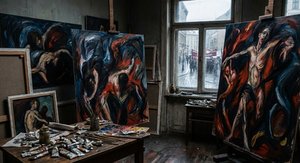
Zdzisław Beksiński remains a singular, profoundly disturbing figure in the landscape of 20th-century art. Unlike many artists who consciously cultivate an aesthetic or pursue a specific message, Beksiński’s work emerged from a deeply personal and often inexplicable source—a relentless exploration of anxiety, decay, and the grotesque. He wasn't interested in offering interpretations; rather, he presented visions, raw and unsettling, leaving their meaning open to the viewer’s own contemplation. Born in Sanok, Poland, in 1929, Beksiński’s artistic journey was one of constant evolution, yet consistently marked by a haunting atmosphere that continues to captivate and disturb audiences decades after his tragic death.
Early Life & Influences: From Architecture to Expressionistic Visions
Art in Poland refers to all forms of visual art in or associated with Poland. == Nineteenth century == Polish art has often reflected European trends while maintaining its unique character. The Kraków school of history painting developed by Jan Ma...
Beksiński initially trained as an architect, graduating from Kraków Polytechnic in 1952. However, the rigid structure of architectural design proved insufficient for his burgeoning creative impulses. He quickly gravitated towards photography and sculpture, experimenting with found materials and developing a keen eye for texture and form. These early explorations laid the groundwork for his distinctive painting style. While he never formally studied art, Beksiński absorbed influences from various sources—the Baroque masters’ dramatic use of light and shadow, the Gothic aesthetic's preoccupation with mortality, and the burgeoning Surrealist movement. Yet, he resisted easy categorization, forging a path uniquely his own. His initial paintings, dating back to the 1960s, reveal an expressionistic bent, characterized by vibrant colors and distorted figures set within unsettling architectural spaces. These works often evoke a sense of claustrophobia and unease, hinting at the darker themes that would come to dominate his later oeuvre. The influence of Polish history painting, particularly the monumental style of Jan Matejko, can be subtly detected in the dramatic compositions, though Beksiński subverted its patriotic fervor with a deeply pessimistic outlook.
The Two Distinct Periods: Baroque Roots and Formalist Abstraction
 Untitled (188)
Explore 'Untitled (188)' by Zdislav Beksinski – a haunting surrealist masterpiece featuring distorted figures & decaying architecture. A unique, unsettling artwork for discerning collectors.
Beksiński’s artistic output is often divided into two distinct periods. The first, spanning roughly from the 1960s to the late 1980s, is characterized by a “utopian realism” infused with surreal elements. These paintings are densely populated with decaying architecture, skeletal figures, and nightmarish landscapes rendered in rich, often somber colors. Untitled (515), for example, exemplifies this period—a chaotic composition of abstract forms and muted tones that evokes a sense of impending doom. The second period, beginning in the 1990s, saw a shift towards greater abstraction and formalism. While still unsettling, these later works are less overtly figurative, focusing instead on texture, color relationships, and spatial dynamics. Untitled (188), with its distorted figures and decaying structures, represents this transition—a haunting masterpiece that showcases Beksiński’s mastery of composition and atmosphere. This period saw a reduction in the use of color, favoring monochromatic palettes and emphasizing the raw physicality of the paint itself.
Recurring Themes: Death, Decay, and the Human Condition
 Untitled (22)
Experience the haunting surrealism of Zdzisław Beksinski’s "Untitled (22)". A dark, abstract head in purple & black, evoking decay & destruction. Hand-painted reproduction available.
Death is arguably the most pervasive theme in Beksiński’s work. It isn't depicted as a dramatic event but rather as an inevitable process—a slow, relentless erosion of form and meaning. Skeletal figures, decaying bodies, and crumbling architecture populate his canvases, serving as memento mori that remind us of our own mortality. This preoccupation with decay extends beyond the physical realm to encompass the disintegration of societal structures and the loss of hope. Untitled (22), a dark abstract head in shades of purple and black, powerfully embodies this sense of destruction. Beyond death, Beksiński explored themes of isolation, alienation, and the fragility of the human psyche. His figures often appear lost and vulnerable within vast, desolate landscapes, reflecting a profound sense of existential dread. He rarely offered explanations for his imagery, preferring to let the viewer grapple with their own interpretations.
Beksiński's Technique & Process: A Journey into the Unconscious
Beksiński’s artistic process was as unconventional as his subject matter. He worked primarily in oil paint on hardboard panels that he meticulously prepared himself, often layering colors and textures to create a sense of depth and complexity. He famously listened to classical music while painting, allowing it to guide his creative impulses. Crucially, Beksiński eschewed preliminary sketches or studies, preferring to work directly onto the canvas in a spontaneous and intuitive manner. This approach allowed him to tap into his subconscious, producing images that felt both deeply personal and strangely universal. He described his paintings as “visualizations of my nightmares,” suggesting that they weren’t consciously planned but rather emerged from a dark and mysterious inner world. He deliberately avoided titles for many of his works, further emphasizing their enigmatic nature.
Legacy and Impact: The Enduring Power of a Dark Visionary
Zdzisław Beksiński's influence continues to resonate with artists and audiences today. His work has been exhibited internationally and remains a source of fascination for those drawn to the darker side of human experience. He challenged conventional notions of beauty and representation, creating images that are both repulsive and strangely compelling. While he never sought fame or recognition, his art has achieved a cult following, inspiring countless artists in various disciplines. His legacy lies not only in his unique aesthetic but also in his unflinching exploration of existential themes—themes that remain as relevant today as they were during his lifetime. For those seeking to delve into the unsettling beauty of the human psyche, Beksiński’s work offers a profound and unforgettable journey. Explore high-quality reproductions of his masterpieces at ArtsDot.com and experience the enduring power of a dark visionary.