


 Önizleme yap
 Paylaş
 Paylaş
 Detayları Gör

 İndir
İndir
 Benzerlerini gör
 X-Işını
 Slayt Gösterisi
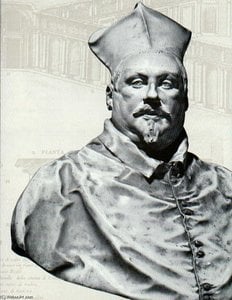
Gian Carlo Kardinal Medici Bustu


 Tümünü Gör
El Yapımı Yağlı Boya Reproduksiyon
Sanatçılarımız tarafından sipariş üzerine hazırlanan; istediğiniz boyut ve çerçevede, tuval üzerine el boyaması yağlı boya. ( Baskı satın al Görsel satın al)




P118B $10

P118H $10

P118W $10

P438Z $10

P508JH $12

P508YH $12

P805H $10

P805Z $10

P919BZ $10

P919G $10

P919XJ $10

P959ZH $10

P968JZ $12

W106C $8

W218G $10

W218JH $8

W218Y $10

W307PJ $10

W316G $10

W316PJ $8

W316Y $10

W398PJ $8

W4111J $10

W500HY $15

W500JH $15

W692G $12

W849H $8

W940BG $15

W953PJ $8




Eserin orijinal oranlarıyla uyumlu, önceden belirlenmiş boyutlarımız arasından seçim yapın.

Belirli bir çerçeveye veya alana uyması için kendi boyutlarınızı girebilirsiniz. Seçtiğiniz boyut orijinal görüntünün oranlarıyla eşleşmiyorsa, sanat eserini kırparak veya ek el boyaması öğelerle resmi uzatarak ayarlayacağız. Üretim başlamadan önce onayınız için dijital bir taslak gönderilecektir.
Lütfen ekrandaki önizlemenin gerçek kırpmayı veya uzatmayı yansıtmadığını unutmayın. Nihai kompozisyonu yalnızca hazırlanan taslak doğru şekilde gösterecektir.
Özel boyutlar mevcut olsa da, orijinal oranları korumak adına önceden tanımlanmış listeden bir boyut seçmenizi öneririz.
Siparişten sonra, ArtsDot.com ekibi talimatlar için müşteriye e-posta gönderecek ve bir taslak önizleme sunacaktır
Dünya Çapında Teslimat (); standart 5 hafta yerine 3/4 haftada. (12 Ağustos). Kaliteden ödün verilmez.

Dünya Çapında Ücretsiz Ekspres Kargo

Yüksek Kaliteli Keten Tuval

Tam Kapsamlı Nakliye Sigortası

Gümrük Vergisi İade Garantisi

Gerçek Renk Uyumu Garantisi

60 Günlük İade Politikası (Sadece Kusurlu Ürünler İçin)

%100 Para İade Garantisi

Toplu Alım İndirimi
 Cam seçeneği yalnızca 110 cm altındaki boyutlar için mevcuttur.

Gian Carlo Kardinal Medici Bustu
Reproduksiyon Tekniği
Reproduksiyon Boyutu
-


Toplam Tutar
$ 263
Eser Açıklaması
Bust of Cardinal Gian Carlo de' Medici – A Baroque Masterpiece Revisited
Giovanni Battista Foggini’s “Bust of Cardinal Gian Carlo de' Medici” stands as a testament to the grandeur and meticulous artistry of Florentine Baroque sculpture. Created in 1680, this monochrome portrait transcends mere representation; it embodies the spirit of its era and captures the essence of a pivotal figure within the Medici dynasty—Gian Carlo himself. The artwork’s enduring appeal lies not only in its technical brilliance but also in its ability to convey profound emotion and status through masterful sculpting techniques.The Sculptor's Vision: Alessandro Ludovico Borghese’s Influence
Giovanni Battista Foggini’s artistic journey was profoundly shaped by the tutelage of Alessandro Ludovico Borghese, a celebrated sculptor whose influence permeated Foggini’s stylistic sensibilities. Borghese championed realism and dramatic expression—principles that would become hallmarks of Foggini's oeuvre. This formative experience instilled within him an unwavering dedication to capturing human form with unparalleled accuracy and conveying psychological depth through sculptural detail.Technique & Material: Subtracting Stone for Perfection
Foggini’s sculpting prowess is evident in the meticulous execution of “Bust of Cardinal Gian Carlo de' Medici.” Employing subtractive sculpting—a technique favored during the Baroque period—he skillfully removed material from a larger block of marble or stone to reveal the desired likeness. This painstaking process demanded immense patience and precision, resulting in an astonishingly textured surface that faithfully replicates the nuances of fabric folds, hair strands, and skin contours. The medium itself – sculpted marble – speaks volumes about the artist’s commitment to permanence and beauty.Baroque Aesthetics: Light, Drama & Monumental Presence
The artwork adheres rigorously to Baroque aesthetic principles. Notice the directional lighting—a characteristic feature of Baroque sculpture—which accentuates highlights and shadows, creating a palpable sense of three-dimensionality. The composition centers on the bust itself, set against a stark black background that amplifies its visual impact. Lines are smooth and flowing, delineating anatomical forms with grace and elegance. Shapes mimic the human body, prioritizing organic contours to achieve an impression of monumental presence—a deliberate aim to convey power and dignity.Symbolism & Context: The Cardinal’s Attire – A Reflection of Faith
Beyond its technical mastery, “Bust of Cardinal Gian Carlo de' Medici” is laden with symbolic significance. The cardinal’s attire—the mitre (a tall hat symbolizing ecclesiastical authority) and the clerical robes—underscores his role as a religious leader within the Catholic Church. These visual cues communicate not only status but also spiritual devotion—a core value of the Baroque period. Furthermore, the bust's creation coincided with Gian Carlo’s ascension to Cardinal in 1644, marking a significant moment in his life and solidifying his position within the influential Medici family.Legacy & Historical Significance: A Portrait for Eternity
“Bust of Cardinal Gian Carlo de' Medici” remains an iconic representation of Florentine Baroque sculpture. Its enduring fame stems from Foggini’s exceptional skill in translating a complex character into stone—capturing not just physical likeness but also inner contemplation and solemnity. The bust is part of a series commissioned by Francesco Maria de’ Medici, reflecting the patronage of the era and contributing to the artistic heritage of Florence. It continues to inspire admiration for its beauty and technical accomplishment, cementing Foggini's place as one of the foremost sculptors of his time.Benzer Eserler



Sanatçı Özgeçmişi
The Sculptor of Florentine Grandeur
Giovanni Battista Foggini, a name synonymous with the opulent splendor of the Florentine Baroque, stands as a monumental figure in the history of Italian sculpture. Born in 1652 into a lineage of artisans, his very existence was woven into the fabric of artistic tradition. As the son of a sculptor, the language of form, texture, and medium was his first vernacular. His early training, shaped by the rigorous standards of his family and refined under the guidance of masters like Alessandro Ludovico Borghese, allowed him to absorb the technical precision required for the most demanding commissions. Foggini did not merely practice sculpture; he breathed life into stone and bronze, transforming cold materials into narratives of divine and earthly power.
The trajectory of Foggini’s career was inextricably linked to the illustrious Medici court. This prestigious patronage provided him with an unparalleled stage upon which to display his virtuosity. His ability to navigate the complex social and political landscapes of Florence allowed him to secure works that would define the aesthetic of an era. Through his hands, the architectural spaces of the Medici residences and chapels were transformed into theatrical environments where light and shadow danced across meticulously carved surfaces. His mastery extended beyond the singular figure to the very essence of architectural embellishment, making him a central architect of the Florentine Baroque identity.
Mastery of Form and the Roman Influence
While Foggini’s heart remained rooted in the traditions of Florence, his artistic soul was deeply stirred by the dramatic innovations emerging from Rome. The shadow of Gian Lorenzo Bernini loomed large over the Italian peninsula, and Foggini skillfully integrated this Roman dynamism into his local style. He embraced the theatricality of the Baroque, utilizing contrapposto to instill his figures with a sense of kinetic energy and psychological depth. This infusion of movement allowed his sculptures to transcend static representation, capturing moments of profound emotion and spiritual ecstasy that resonated with the fervor of the Counter-Reformation.
His technical repertoire was as diverse as it was impressive. Whether working in the delicate, translucent medium of marble or the robust, enduring strength of bronze, Foggini demonstrated an uncanny ability to manipulate texture. In his bronze statuary, one can observe a breathtaking attention to detail, where every fold of drapery and every anatomical nuance is rendered with startling realism. This skill is perhaps most evident in his portraiture, such as his Bust of Cardinal Gian Carlo de' Medici, where the artist captures not just the likeness, but the very presence and authority of the subject through expressive detail and masterful modeling.
A Lasting Legacy in Stone and Bronze
The achievements of Foggini are etched into the very landscape of Florence. His monumental contributions, such as the Tomb of Galileo Galilei and the intricate decorations within the Corsini Chapel, serve as enduring testaments to his ability to marry scientific reverence with religious devotion. In these works, he achieved a rare synthesis of narrative complexity and aesthetic harmony, creating spaces that invite contemplation of both the celestial and the terrestrial.
Beyond individual masterpieces, Foggini’s historical significance lies in his role as the bridge between the late Renaissance traditions of Florence and the exuberant Baroque movement. He revitalized the Florentine sculptural tradition, ensuring it remained a vibrant and competitive force against the Roman school. His legacy is found in:
- The Elevation of Bronze Casting: His ability to push the boundaries of bronze work set new standards for decorative and commemorative sculpture.
- Architectural Integration: His seamless blending of sculptural reliefs with architectural frameworks, as seen in the Decoration of the Feroni Chapel.
- Portraiture as Narrative: The creation of intimate yet powerful portraits, such as his depiction of Anna Maria Luisa de' Medici as a Child, which captured the human element within the grandiosity of the court.
As we look back upon the life of Giovanni Battista Foggini, we see more than just a skilled craftsman; we see an artist who captured the pulse of an age. His work remains a profound exploration of movement, emotion, and the eternal struggle to immortalize the fleeting beauty of life through the permanence of art.

giambattista foggini
1652 - 1725 , Italy
Kısa Bilgiler
- Artistic Movement Or Style: Baroque Sculpture
- Date Of Birth: Florence, Italy (1652)
- Date Of Death: 1725
- Full Name: Giovanni Battista Foggini
- Nationality: Italian
- Notable Artworks:
- Bust of Cardinal Gian Carlo de' Medici
- Tomb of Galileo
- Time Ravishing Beauty
- Place Of Birth: Florence
İlgili Makaleler
Gian Lorenzo Bernini: Sculpting Baroque Emotion & the Roman Imagination
Explore the life & revolutionary art of Gian Lorenzo Bernini, the master sculptor of the Baroque era. Discover his iconic works like David and Ecstasy of Saint Teresa – a journey into Roman artistic genius.

Theatricality & Triumph: Baroque Drama in Painting & Sculpture
Explore the dramatic world of Baroque art! Discover its history, defining characteristics, & lasting influence on painting & sculpture. Expert insights into Caravaggio, Zurbarán, and Bernini – plus high-quality reproductions at ArtsDot.

The Dramatic Flourish: Exploring the Baroque Movement's Enduring Legacy in Art History
Explore the dramatic world of Baroque art! Discover iconic artists like Caravaggio & Rubens, defining techniques, and its lasting impact on art history. Expert insights for collectors & enthusiasts at ArtsDot.

Barok Sanatın Büyülü Işıltısı: Tarihsel Kökenler, Özellikleri ve Etkisi
Barok sanatın büyüleyici dünyasına adım atın! Tarihsel kökenleri, özellikleri ve etkileri hakkında uzman rehberimizle keşfedin. Sanat tarihine derinlemesine bir yolculuk!

Renaissance Mannerism: Style, Subtlety & the Transition from Harmony to Artifice
Explore the captivating world of Renaissance Mannerism! Discover its key characteristics, pioneering artists like Pontormo & Bronzino, and its pivotal role in art history. Expert insights & museum-quality reproductions at ArtsDot.


