


Görsel seçimlerinize göre şekillenmektedir: , .
Eser Açıklaması
 Tümünü Gör
Sanatçı Biyografisi
Explore the landscapes & Orientalist works of Eugène Cicéri, a 19th-century French painter known for his realistic watercolors & lithographs.
siparişinizi dört basit adımda verin
Acele etmeyin. İstediğiniz yanıtı değiştirebilirsiniz; sipariş kartınızdaki fiyat her seçime göre güncellenir.
1 Dört adımdan biri
Hangi boyutu istersiniz?
Bu boyutlar orijinal tablonun oranlarını korur. Çizim, seçtiğiniz eserin iki metrelik bir koltuğun üzerindeki duvarda nasıl duracağını göstermektedir.
Veya kendi ölçülerinizi girin
Eserin orijinal oranlarıyla uyumlu, önceden belirlenmiş boyutlarımız arasından seçim yapın.

Çerçevenize veya duvarınıza uygun olması için ihtiyacınız olan genişlik ve yüksekliği yazın. Bu eser el boyamasıdır; bu nedenle farklı bir formdaki boyutlar için sanatçı, resmin etrafına biraz daha fazla boya ekleyebilir veya kenarlardan biraz kırpabilir — seçim sizin. Boyama işlemi başlamadan önce onaylamanız için size bir dijital taslak gönderiyoruz. Bu sayfada gösterilen resim gerçek sonucu yansıtmamaktadır; gerçek sonucu yalnızca taslak göstermektedir.
2 Dört adımdan ikincisi
Nasıl hazırlanmalı: rulo halinde mi, gerilmiş mi yoksa çerçeveli mi?
Aşağıdaki fiyatlar, birinci adımda seçtiğiniz boyut içindir.
Gergin kanvasın kenarlarını seçin
Çerçevenizi seçin

Beyaz kenar bitişi ₺1

Bulanık kenar bitişi ₺1

Kenar boyalı ₺1

P118B ₺10

P118H ₺10

P118W ₺10

P438Z ₺10

P508JH ₺12

P508YH ₺12

P805H ₺10

P805Z ₺10

P919BZ ₺10

P919G ₺10

P919XJ ₺10

P959ZH ₺10

P968JZ ₺12

W106C ₺8

W218G ₺10

W218JH ₺8

W218Y ₺10

W307PJ ₺10

W316G ₺10

W316PJ ₺8

W316Y ₺10

W398PJ ₺8

W4111J ₺10

W500HY ₺15

W500JH ₺15

W692G ₺12

W849H ₺8

W940BG ₺15

W953PJ ₺8

H24-GOLD ₺30

H24-SILVER ₺30

H36-GOLD ₺45

H36-SILVER ₺45
Çerçeveli
Çerçeve Kenarlığı: . Çerçeve dahil toplam boyut: .
3 Dört adımdan üçüncüsü
Tabloda herhangi bir değişiklik yapılmasını ister misiniz?
Çoğu kişi hayır cevabını veriyor. Her tablo el yapımı olduğu için sanatçımız eseri sizin için uyarlayabilir.
Siparişten sonra, ArtsDot.com ekibi talimatlar için müşteriye e-posta gönderecek ve bir taslak önizleme sunacaktır
4 Dört adımdan dördüncüsü
Birkaç bitiş seçeneği
Hepsi isteğe bağlıdır. Halihazırda seçilmiş olan yanıtlar ek bir maliyet getirmez.
Kim tarafından yapıldı?
Dünya Çapında Teslimat (); standart 5 hafta yerine 3/4 haftada. (21 Kasım). Kaliteden ödün verilmez.
Müzedekiler gibi bir isimlik mi?
İşlemeli Bronz Plaka Detayları
This elegant plaque features the artist's name and the title of the artwork, finely engraved for a timeless presentation.
It is made from bronze with a refined, elegant finish. The text is precisely laser-engraved for a sharp and permanent result. Measuring 9x2 cm, the plaque is compact yet easy to read. It's built to be durable and scratch-resistant, offering a professional, museum-quality look. Mounting is simple thanks to the included adhesive backing.
Şeffaf Akrilik Plaka Detayları
The plaque includes essential engraved details such as the artist's name, the title of the artwork, the date it was created, the type of media used-like oil on canvas or watercolor-a brief description of the piece, and a QR code that links to the complete artwork information.
It is crafted from clear acrylic, offering a sleek, modern appearance. The text is UV-engraved in black to ensure strong visual contrast. With a size of 10x15 cm, it ensures optimal readability. It comes equipped with two metal hooks for secure wall mounting. The plaque is designed to be weather-resistant, making it suitable for various environments, and it includes interactive features that work seamlessly with smartphone scanning.
Siyah Akrilik Plaka Detayları
This elegant plaque includes engraved information such as the artist's name, the title of the artwork, the date it was created, the type of media used (like oil on canvas or watercolor), a short description of the artwork, and a QR code for quick access to more information.
The plaque itself is made from refined black acrylic with a premium finish. The text is laser-engraved in white for high contrast and readability. Its size is 10x15 cm, designed to be easy to read. It comes with two metal hooks for professional mounting. The design is sleek and fits any interior style. It is also weather-resistant and durable, with built-in digital integration for mobile compatibility.
Koruyucu vernik mi?
Ne zaman ihtiyacınız var?
✓ Kontrol et ve sipariş ver
Sipariş ettiğiniz şekilde, tablonuz

Landscape
Reproduksiyon Tekniği
Reproduksiyon Boyutu
-

Seçkin Kıdemli Sanatçı
Daha fazla detay, incelik ve ek üretim süresi
-

Reproduksiyon Çerçevesi
-
-
Herhangi bir kenarı 105 cm'den (yaklaşık 41 inç) büyük olan sanat eserleri veya reprodüksiyonlar için çerçeve, demonte edilmiş bir kit halinde gönderilecektir. Bu yöntem, güvenli teslimat sağlar ve taşıma sırasında oluşabilecek hasarları önler.
Profesyonel montaj gereklidir; bu ürün kendin yap (DIY) tarzı bir ürün değildir.
Kit; ahşap tutkalı (pakete dahil değildir), kanvas germe pensi ve tutkal kururken çıtaların dik durmasını sağlayacak işkenceler kullanılarak, deneyimli bir profesyonel çerçeveci tarafından monte edilmeli ve kanvas gerilmelidir. Hatalı montaj veya dengesiz kanvas gerginliği sanat eserine kalıcı zarar verebilir ve bu durum garantimiz kapsamında değildir.
 Herhangi bir kenarı 105 cm'den (yaklaşık 41 inç) büyük olan sanat eserleri veya reprodüksiyonlar için çerçeve, demonte edilmiş bir kit halinde gönderilecektir. Bu yöntem, güvenli teslimat sağlar ve taşıma sırasında oluşabilecek hasarları önler.
Tüm masif ahşap çıtalar dahildir, montaj için hassas bir şekilde ölçülmüştür.
Paket içeriğinde bulunan vidalar ve köşe birleşimleri için ustanız tarafından temin edilmesi gereken, ancak pakete dahil olmayan ahşap tutkalı ile monte edilir.
Profesyonel araçlar gereklidir ve pakete dahil değildir: bir tuval germe aparatı (gerdirici) ve yapıştırıcı kururken çıtaların dik durmasını sağlayacak kıskaçlar.
Önemli:
Köşe bağlantıları için ahşap tutkalı gereklidir; tutkal tamamen kuruyana kadar çıtalar işkenceler ile sabitlenmelidir ve monte edilmiş çerçeve üzerindeki kanvasın gerilmesi için bir kanvas germe pensine ihtiyaç duyulur. Bunların hiçbiri kit içerisinde yer almamaktadır. Lütfen bu boyutu sipariş etmeden önce deneyimli bir profesyonel çerçeve ustası ile anlaşın.

Eser Etiketi
-
-

Koruyucu Vernik Katmanı
Parlak Vernik (renkleri canlandırır; ışığa ve neme karşı koruma sağlar)
-

Eserimi Özelleştir
Değiştirilebilecek örneklere göz atın: Yüzü müşteri fotoğrafıyla değiştirin; Evcil hayvan ekleyin (örneğin, kediyi köpek ile değiştirin); Arka plana gizli bir mesaj dahil edin; Arka plan manzarasını veya öğelerini değiştirin.
-

Hızlı Teslimat
Dünya Çapında Teslimat (); standart 5 hafta yerine 3/4 hafta içinde. (21 Kasım). Kaliteden ödün verilmez.
-
Hızlı Gönderim
için dünya çapında 5 haftalık teslimat süresi. (28 Kasım).
Dahil
Toplam Tutar
₺ 13080
Cam seçeneği yalnızca 110 cm altındaki boyutlar için mevcuttur.
Her siparişle birlikte gelir
- Dünya Çapında Ücretsiz Ekspres Kargo
- Yüksek Kaliteli Keten Kanvas
- Tam Nakliye Sigortası
- Gümrük Vergisi İadesi Garantisi
- Gerçek Renk Uyumu Garantisi
- 100 Günlük İade Politikası (Sadece Kusurlu Ürünler İçin)
- %100 Para İade Garantisi
- Toplu Alım İndirimi


Soru ve Cevaplar
Eugène Cicéri başka hangi isimlerle tanınır?
"Landscape" eserinin yaratıcısı Eugène Cicéri için kayıtlı diğer isimler arasında Eugenio Ciceri, E. Ciceri, Eug. Ciceri, Eug. Cicery, Cicery yer almaktadır.
Eugène Cicéri imzalı "Landscape" eserinde hakim olan renk nedir?
Cobalt Violet (#869dc4), Eugène Cicéri imzalı "Landscape" eserinin baskın rengidir.
Eugène Cicéri imzalı "Landscape" için bir slayt gösterisi mevcut mu?
"Landscape" adlı eserin slayt gösterisine esere ait Slayt Gösterisi sayfasından ulaşabilirsiniz.
Bu tablo hakkında daha fazla bilgi
 Gerçek Boyutta Önizle
 Baskı Satışına Geç
 Paylaş
 Paylaş
 Detayları Gör
 Rehber

 İndir
İndir
 Benzer ürünler
 X-Işını
 Slayt Gösterisi
 Soru & Cevap
 İstatistikler
Benzer Eserler


Eugène Cicéri
1813 - 1890, France
Sanatçı Özgeçmişi
Eugène Cicéri: A Painter of Soul and Alpine Landscapes
Eugène Cicéri (1813 – 1890) was a French landscape painter who emerged from the Bourron-Marlotte School, a movement dedicated to capturing the essence of rural life and the sublime beauty of the French Alps. Though overshadowed by his contemporaries like Jean-François Millet and Frédéric Bazille, Cicéri’s distinctive style—characterized by meticulous realism combined with expressive tonal harmonies—earned him recognition within the Barbizon School and established him as a significant contributor to European Romanticism.- Early Life & Training: Born in Paris, Cicéri received his initial artistic training from Jean-Baptiste Camille Bouchardy, a respected teacher known for his academic approach to painting. This grounding in classical principles would profoundly influence his later work, shaping his meticulous observation of nature and his commitment to portraying it with accuracy.
- The Bourron School & Alpine Inspiration: Cicéri joined the Bourron School around 1840, immersing himself in a collective effort to depict the landscapes of Auvergne and Provence. The school’s ethos—rooted in plein air painting and an idealized vision of rural life—provided Cicéri with fertile ground for experimentation and artistic growth. However, it was his fascination with the Alpine region that truly captivated him, becoming the dominant subject of his oeuvre.
- Technique & Style: Cicéri’s technique was marked by painstaking detail and a masterful command of watercolor pigments. He employed subtle gradations of tone—a hallmark of Barbizon painting—to convey atmospheric depth and luminosity. Unlike some of his peers who favored looser brushstrokes, Cicéri meticulously rendered textures and contours, striving to capture the palpable presence of the natural world.
- Notable Works & Recognition: Cicéri’s landscapes gained considerable acclaim during his lifetime, particularly those depicting Alpine vistas bathed in golden light. Among his most celebrated paintings are “Wallachians,” a dramatic depiction of Romanian peasants amidst rugged mountains, and “Lithograph of Mosburg in Wiesbaden,” showcasing the grandeur of Wiesbaden Castle against a backdrop of snow-capped peaks. His prints were exhibited at the Salon and garnered critical praise for their artistic merit.
- Legacy & Influence: Cicéri’s work continues to resonate with viewers today, embodying the Romantic ideal of communion with nature and reflecting the profound impact of topographical illustration on 19th-century art. Although he didn't achieve the fame of some other Barbizon artists, his dedication to realism and tonal harmony cemented his place as a pivotal figure in French landscape painting—a painter who truly captured ‘the soul’ of Alpine scenery.
Connections & Collaborations
Cicéri's artistic journey intersected with the influential Isabey family, particularly Jean-Hippolyte Isabey Sr., who championed his work and encouraged him to explore lithography as a medium for disseminating landscape prints. This collaboration resulted in stunning topographical illustrations that documented Alpine expeditions and contributed significantly to the visual culture of the era. Furthermore, Cicéri’s artistic sensibilities aligned with those of Eugène Carrière and Frédéric Bazille—fellow Bourron School members—creating a vibrant intellectual and aesthetic environment conducive to artistic innovation.Benzer Yazılar
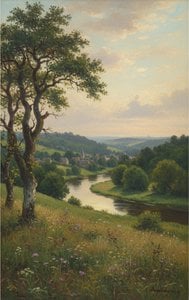
Henri-Joseph Harpignies: Capturing the Poetic Essence of the French Landscape
Explore the serene landscapes of Henri-Joseph Harpignies, a master of the Barbizon School. Discover his atmospheric paintings, recurring themes & enduring legacy in 19th-century French art. Learn more at ArtsDot.

25 Masterpieces by Ernst Ludwig Kirchner: The Soul of German Expressionism
Explore 25 iconic Ernst Ludwig Kirchner masterpieces of German Expressionism. Discover the full collection online at ArtsDot.com.

Masterpieces of the Soil: The Top 25 Artworks by Jean-François Millet
Immerse yourself in the soul of French Realism with our curated guide to the top 25 Jean-François Millet artworks. Explore the profound beauty of Barbizon school masterpieces and find museum-quality art reproductions for your home. Discover all masterpieces on ArtsDot.com.