Tidigt liv, familj och utbildning
Född i Philadelphia, Pennsylvania, år 1870, trädde William James Glackens in i en värld formad av det flitiga arbetet hos hans föräldrar, Elizabeth Finn Glackens och Samuel Glackens, som var tjänsteman vid Pennsylvania Railroad. En konstnärlig fallenhet tycktes löpa genom hela familjen; hans äldre bror Louis, född 1866, skulle så småningom finna sin egen väg som illustratör. Den unge Glackens påbörjade sin formella utbildning vid Central High School, en institution känd för sitt krävande konstprogram, vilket lade grunden för hans utvecklande blick.
Hans formella skolning förde honom från klassrummet till Pennsylvania Academy of the Fine Arts. Det var här han kom under ledning av Thomas Anshutz, en realist vars inflytande var avgörande för att forma riktningen i hans tidiga verk. Denna period av studier var essentiell för att förfina de tekniska färdigheter som senare skulle definiera hans sätt att närma sig det urbana landskapet. Glackens nöjde sig inte med att bara observera världen; genom disciplinerad övning lärde han sig att översätta storstadslivets rörelse och råhet till duken.
Konstnärlig stil och teknik
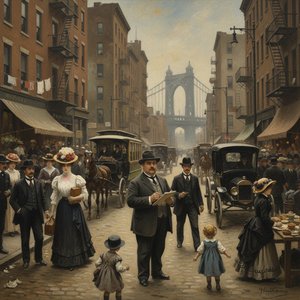
William James Glackens etablerade sig som en pionjär inom Ashcan School, en rörelse som strävade efter att skala bort den traditionella konstens polerade fernissa för att istället blottlägga storstadens råa verklighet. Hans tidiga verk fokuserade på de osminkade sanningarna i ett New York och Paris före första världskriget, ofta genom mörka gatuscener som fångade stadslivets pulserande hjärtslag. Genom att använda djärva färger och expressiva penseldrag lyckades han skildra stadens ständiga rörelse, och fann en unik skönhet i folkmassans vardagliga sysslor. Hans kompositioner kretsade ofta kring gatans energi och porträtterade de dagliga rytmerna hos människor som navigerade genom det urbana landskapet.
I takt med att hans karriär fortskred genomgick hans palett en betydande förvandling. Den tidiga realismens dämpade och tunga toner fick ge vika för ett ljusare och mer luminöst angreppssätt. Detta skifte speglade ett växande intresse för Renoirs lättare penselföring, vilket flyttade hans fokus mot stilleben, studiorum och landskap. Medan hans tidiga rykte byggdes på stadens skuggor, uppvisade hans senare år en mästerlig kontroll över ljuset och en preferens för mer delikata motiv. Han förblev lika skicklig i att fånga ett landskaps stillhet som i att fånga ett porträtts specifika karaktär, där han balanserade intensiteten i sina urbana scener med en mer nyanserad och färgstark känsla.
Professionell karriär och verksamhet
William James Glackens professionella liv fann sin rot i den pulserande energin hos den urbana pressen. Innan han helt etablerade sig inom de fina konsterna arbetade han som tidningsillustratör, där han fann en stadig anställning hos Philadelphia Record. Denna tidiga fördjupning i journalistikens snabbrörliga värld gav honom en unik möjlighet att på nära håll observera stadens föränderliga sociala landskap. Hans färdigheter som illustratör expanderade så småningom till att omfatta uppdrag för en mängd olika tidskrifter i både Philadelphia och New York City, vilket lade en praktisk grund för hans senare utforskningar av det metropolitiska livet.
När hans fokus skiftade mot måleriet blev han en central gestalt i den amerikanska konstscenen under det tidiga tjugotalet. Som medlem i The Eight – en grupp konstnärer som strävade efter att utmana sin tids rådande estetiska normer – spelade han en avgörande roll i konsthistorien. Genom detta sammanslutande och sitt engagemang inom Ashcan School var han med och definierade en ny riktning för amerikansk realism. Hans verk rörde sig bort från de idealiserade motiven och fokuserade istället på gatans osminkade verklighet. Under denna period av sin karriär navigerade han genom en fascinerande övergång, från de mörka och råa skildringarna av stadslivet till en stil som speglade ett bredare och mer färgstarkt perspektiv, djupt influerat av hans resor och personliga observationer.
Milstolpar och mästerverk
William James Glackens pensel fångade det urbana landskapets ständigt skiftande stämningar, i en resa som rörde sig från stadslivets råa och jordnära texturer mot mer fridfulla, intima hemmiljöer. Hans verk från 1905, Central Park in Winter, skildrar en snöig scen från New York där människor samlas på bänkar eller vilar på marken, ackompanjerade av en hund och en häst i fjärran. Under denna period av hans konstnärskap låg fokus ofta på gatans rastlösa rörelse, vilket tydligt framgår i The Green Car, målad år 1910. Dessa verk speglade den enorma energi som fanns i en metropol i snabb förändring.
I takt med att hans stil utvecklades, genomgick hans motivval en förvandling mot mer personliga och förtroliga skildringar. La Villette, skapad 1895, står kvar som ett betydelsefullt exempel på den nya realismen, där en livlig stadsgata i nattljus presenteras med ett tåg som passerar under en bro. Senare skiftade hans blick mot familjelivets och naturens stillhet. År 1919 skapade han Home in New Hampshire, en scen föreställande en familj i en trädgård, inramad av ett mäktigt träd. Vid 1922 års tak hade hans produktion även inkluderat porträtt som Lenna with Rabbit Hound, som med stor känslighet fokuserar på det unika bandet mellan en ung flicka och hennes husdjur.
Hans förmåga att destillera själva essensen av den urbana existensen är kanske som mest uppenbar i The Shoppers, ett verk som förblir centralt för hans samlade konstnärskap. Detta stycke fångar stadslivets rörelse och karaktär med en sådan precision att det kom att definiera hans avgörande bidrag till den amerikanska realismen.
- La Villette (1895)
- Central Park in Winter (1905)
- The Green Car (1910)
- Home in New Hampshire (1919)
- Lenna with Rabbit Hound (1922)
Arv och inflytande
William James Glackens bidrog till att definiera den amerikanska realismens riktning genom att bli en av grundarna till Ashcan School. Denna rörelse strävade efter att skala bort de polerade och idealiserade ytorna från tidigare epoker, och valde istället att dokumentera storstadslivets osminkade verklighet. Genom att rikta konstnärens blick mot stadens råhet och rastlösa rörelse, hjälpte han till att förskjuta det amerikanska konstnärliga fokuset mot den moderna tidsålderns påtagliga och levande erfarenheter.
Hans inflytande sträckte sig långt bortom duken och in i själva fundamentet för amerikanska konstinstitutioner. Han spelade en avgörande roll i att assistera Albert C. Barnes vid förvärvet av europeiska målningar, en process som lade grunden till the Barnes Foundation i Philadelphia. Denna samling har sedan dess blivit en hörnsten i den amerikanska konsthistorien och har säkrat en permanent plats för betydelsefulla verk i det nationella medvetandet.
Var man kan se hans verk idag
William James Glackens närvaro i det offentliga rummet är fortfarande påtaglig genom flera betydelsefulla samlingar över hela USA. I New York rymmer Metropolitan Museum of Art hans stämningsfulla skildring av Central Park in Winter. Hans engagemang för det urbana landskapet återfinns även i Carnegie Museum of Art i USA, där verket La Villette har sitt hem.
Museum of Art i Fort Lauderdale förvaltar också ett anmärkningsvärt urval av hans produktion. Besökare till denna institution kan finna Girl in Black Cape såväl som Lenna with Rabbit Hound. Dessa verk speglar de varierade motiv som han utforskade under sin karriär, från livfulla gatuscener till djupt personliga porträtt.
För dem som söker hans ikoniska skildringar av stadslivet är The Shoppers tillgänglig via den nya realism-samlingen på ArtsDot.com.
Frågor och svar
Vilka färger använde William James Glackens mest frekvent?
Färgprofilen för William James Glackenss verk visas på artistens Palettens genom-sida.
Kan jag bläddra i William James Glackenss verk efter färgpalett?
Sidan Efter färgpalett grupperar William James Glackenss konstverk efter deras färgpaletter.
Var hittar jag William James Glackenss konstverk grupperade efter nyckelord?
Sidan Efter nyckelord för William James Glackens grupperar konstnärens verk efter nyckelord.