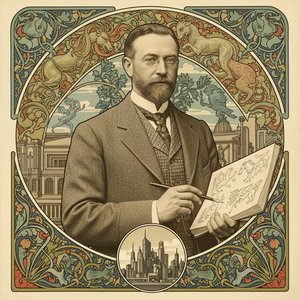
Charles Fraser: En skotsk mästare av ljus och landskap
Charles Fraser föddes i Edinburgh, Skottland, år 1782, och hans liv utspelade sig mot en fond av en nation i genomgripande förvandling. Även om han inte alltid åtnjöt samma omfattande erkännande som vissa av sina samtida – gestalter som Turner eller Constable – lyckades Fraser ändå skapa ett särpräglat och bestående arv inom den brittiska konsten. Hans verk, särskilt under det tidiga 1800-talet, erbjuder en fängslande inblick i det brittiska måleriets utveckling, där klassiska traditioner vävs samman med ett växande intresse för att fånga nyanserna i ljus och atmosfär. Hans historia är en berättelse om stillsam hängivenhet, noggrann observation och en djup samhörighet med det skotska kulturlandskapet.
Frasers tidiga konstnärliga utbildning förblir något höljd i tidens dimmor, men det antas att han påbörjade sin resa som konstnär under ledning av lokala skotska mästare. Dessa formativa år ingöt en djup uppskattning för regionens rika kulturarv och gav honom en grundläggande förståelse för oljemåleriets tekniker – färdigheter som senare skulle prägla hans unika stil. Frånvaron av omfattande biografisk dokumentation bidrar till en känsla av mystik kring hans tidiga liv, vilket tillför ett element av spänning till hans konstnärliga produktion.
En porträttmålare och pionjär av landsbygdsscener
Frasers karriär blomstrade främst genom två distinkta men sammanlänkade vägar: porträttkonst och landskapsmåleri. Han etablerade sig snabbt som en skicklig miniatyrmålare som producerade exquisit detaljerade porträtt som fångade likheterna hos den skotska adeln och framstående lokala personligheter. Dessa miniatyrverk, kännetecknade av sitt delikata penseldrag och subtila tonala variationer, uppvisar en anmärkningsvärd teknisk skicklighet och en akut förmåga att förmedla personlighet genom flyktiga ansiktsuttryck. Porträttsamlingen som förvaras på Blake Museum i Storbritannien står som ett bevis på hans talang inom denna genre.
Det är dock kanske i hans landskap som Fraser verkligen utmärkte sig. Hans målningar av den skotska landsbygden – särskilt de som ingår i Frasburgh Library Collection – är genomsyrade av en anmärkningsvärda känsla av serenitet och autenticitet. Han undvek dramatiska vyer eller storslagna kompositioner och fokuserade istället på att fånga den tysta skönheten i vardagliga scener: böljande kullar, slingrande bäckar och anspråkslösa bondgårdar badande i skymningens mjuka sken. Dessa verk var inte enbart avbildningar av landskap; de var noggrant konstruerade meditationer över ljus, färg och landsbygdslivets rytm.
Betydande verk och museumsamlingar
Flera nyckelverk belyser Frasers konstnärliga utveckling och stilistiska preferenser. ”Landscape with Figures” fungerar som ett utmärkt exempel på hans förmåga att sömlöst integrera mänskliga figurer i vidsträckta landskap, vilket skapar en harmonisk balans mellan komposition och atmosfär. Frasburgh Librarys samlingar – inklusive "Country Road and Kinnaird Head Lighthouse and Wine Tower" – ger ytterligare insikt i hans djupa koppling till det skotska landskapet och hans noggranna öga för detaljer. Dessa målningar är inte bara representationer av platser; de är genomsyrade av en känsla av hemvist som fångar essensen av det rurala Skottland.
Blake Museum i Storbritannien hyser flera betydande verk av Fraser, däribland ”Young Polo Player”, som visar hans skicklighet i att skildra dynamisk rörelse och fånga energin i idrottsevenemang. Vidare fungerar Frasburgh Library både som ett museum och ett folkbibliotek, där man flitigt bevarar och ställer ut Frasers målningar – särskilt "Country Road and Kinnрьеard Head Lighthouse and Wine Tower" – vilket speglar hans bestående band till sitt hemland.
Arv och inflytande
Charles Frasers påverkan på brittisk konst kanske inte är omedelbart uppenbar i epokens stora historiska berättelser, men hans bidrag är ändå betydelsefulla. Han representerar en avgörande länk mellan porträttkonstens klassiska traditioner och det framväxande romantiska intresset för landskapsmåleri. Hans noggranna observationer, subtila användning av ljus och färg samt hans tysta vördnad för den skotska landsbygden etablerade honom som en särpräglad röst inom den brittiska konstvärlden. Trots att han hamnat i skuggan av mer flamboyanta samtida, fortsätter Frasers verk att resonera med betraktare än idag och erbjuder en gripande påminnelse om den skönhet och frid som kan finnas i de enklaste scener.
Vidare sträcker sig hans inflytande bortom Skottlands gränser. Hans tekniker och tillvägagångssätt inom landskapsmåleriet adopterades av senare konstnärer, vilket bidrog till utvecklingen av den brittiska pittoreska traditionen. Hans arv är en berättelse om stillsam konstnärlighet, minutiös observation och en djup uppskattning för den naturliga världens skönhet – egenskaper som fortsätter att inspirera både konstnärer och konstälskare.
Frågor och svar
Hur är Charles Frasers karriär uppdelad i olika perioder?
Charles Frasers karriär presenteras period för period på artistens Karriärlinje-sida: en horisontell tidslinje över konstverken, uppdelade i kapitel efter olika karriärperioder.
Under vilken historisk period verkade Charles Fraser?
Charles Fraser verkade under perioden talet, vilket placerar konstnärens gärning i ett historiskt sammanhang.
Vilka konstinriktningar tillhörde Charles Fraser?
Bläddra bland Charles Frasers verk efter stilriktning på artistens sida för Alla konststilar.