

Henri Le Sidaner: Evoking Atmosphere & Intimacy in Post-Impressionist Landscapes

Innehållsförteckning
A Life Submerged in Light: The Early Influences on Le Sidaner’s Artistic Vision
Henri Eugène Augustin Le Sidaner, born in 1862 in the exotic locale of Port Louis, Mauritius, embarked on an artistic journey that would ultimately define a unique corner of Post-Impressionist painting. Though his birthplace evokes sun-drenched landscapes and vibrant colors, it was not these immediate surroundings that initially shaped his aesthetic sensibility. His family’s return to France in 1872, settling in the northern port city of Dunkirk, proved pivotal. The muted tones of the Northern European coast—the grey skies, the shifting light over the sea—would become foundational elements in Le Sidaner's developing vision. His early education at the École des Beaux-Arts in Paris exposed him to the academic traditions of the time, particularly under Alexandre Cabanel. However, a growing dissatisfaction with the rigid constraints of this classical approach soon led him down a different path, one that prioritized atmosphere and emotional resonance over precise representation.
The influence of Édouard Manet is often cited as a turning point. Le Sidaner’s encounter with Manet's work at the Paris Salon sparked a quiet revolution within his artistic thinking. He began to question the established norms, seeking instead to capture the fleeting impressions of light and color that defined modern life. This nascent desire for authenticity led him towards the burgeoning Impressionist movement, though he would ultimately forge an independent style—one characterized by its introspective quality and subtle symbolism.
From Academic Roots to Intimist Expression: Defining Le Sidaner's Unique Style
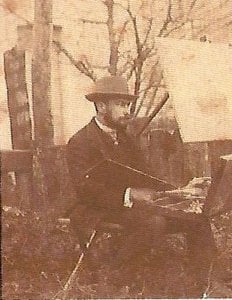 henri eugène le sidaner
Henri Le Sidaner (1862-1939) was a French Intimist painter known for his atmospheric domestic interiors, quiet street scenes, and evocative nocturnes. Influenced by Impressionism & Symbolism, he captured the poetry of light and intimate moments in hi
Le Sidaner’s artistic evolution wasn’t a sudden break from tradition but rather a gradual distillation of various influences. While he initially experimented with the techniques of Impressionism, particularly *en plein air* painting alongside fellow artists at Étaples in 1883, he soon moved beyond simply replicating visual reality. He sought to convey not just what he saw, but how it felt—the emotional weight of a scene, the lingering memory of a moment. This pursuit led him towards Intimism, a style that focused on domestic interiors and quiet street scenes, imbued with a sense of personal reflection.
His palette shifted away from the bright, vibrant hues of Impressionism towards a more subdued range of greys, opals, and nuanced colors. He employed uneven, dappled brushstrokes to create atmosphere and mysticism, softening edges and blurring forms. This technique wasn’t merely about technical skill; it was a deliberate attempt to evoke a sense of dreamlike tranquility. The influence of Pointillism can be detected in his early work, but Le Sidaner quickly abandoned its rigid structure for a more fluid and expressive application of color. He favored complementary colors, not for their scientific accuracy, but for the emotional harmony they created.
The Poetry of Domesticity: Exploring Recurring Themes in Le Sidaner’s Paintings
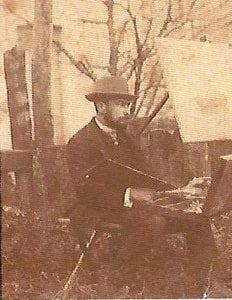 Henri Le Sidaner
Discover Henri Le Sidaner (1862-1939), a French Intimist painter celebrated for evocative domestic scenes & tranquil landscapes. Influenced by Impressionism & Pointillism, his nuanced color creates atmospheric masterpieces.
Le Sidaner's paintings are often described as “intimate” for a reason. They offer glimpses into private worlds—quiet dining rooms bathed in twilight, deserted gardens overflowing with roses, empty streets shrouded in mist. These aren’t scenes of bustling activity but rather moments of stillness and contemplation. Tables set for meals that have just concluded, chairs left unoccupied, flowers beginning to wilt – these details suggest a recent presence, a lingering memory of human connection.
Recurring motifs—tables laden with porcelain, glowing lamps illuminating darkened rooms, white-clad figures glimpsed in the shadows—contribute to the overall sense of mystery and emotional depth. He rarely depicted people directly, preferring instead to hint at their presence through carefully chosen objects and evocative lighting. This absence creates a space for the viewer’s own imagination to fill in the gaps, fostering a personal connection with the artwork. His paintings are not about specific narratives but rather about universal themes of solitude, memory, and the beauty of everyday life.
Gerberoy and the Gardens of Reverie: A Sanctuary for Atmospheric Masterpieces
 Le Portail Niege, Gerberoy
In 1894, Le Sidaner purchased a property in Gerberoy, a medieval village in Picardy, France. This marked a turning point in his career. He transformed the ruins of the old fortress into a magnificent garden—a sanctuary where he could fully realize his artistic vision. The gardens became both subject and inspiration for many of his most celebrated works. Unlike Monet’s Giveroy, which was meticulously planned and vibrant, Le Sidaner's Gerberoy was more wild and romantic, evoking a sense of forgotten beauty.
The paintings created at Gerberoy are characterized by their atmospheric light and subtle color harmonies. He masterfully captured the diffuse luminosity of twilight, transforming ordinary scenes into poetic visions. The recently vacated tables dappled in sunlight, overhung by roses, became iconic images—symbols of tranquility and contemplation. Gerberoy provided Le Sidaner with a consistent source of inspiration for over thirty years, allowing him to refine his style and create a body of work that is instantly recognizable.
Le Sidaner’s Legacy: Influence, Recognition, and a Lasting Appeal
Henri Le Sidaner enjoyed considerable success during his lifetime. He was awarded the Légion d'honneur in 1913 and exhibited widely throughout France and Europe. His paintings were collected by discerning art enthusiasts who appreciated their unique blend of Impressionist technique and Symbolist sensibility. While he resisted easy categorization, preferring to define himself simply as an “intimist,” his work has had a lasting influence on subsequent generations of artists.
Today, Le Sidaner’s paintings continue to captivate audiences with their atmospheric beauty and emotional depth. His ability to evoke a sense of tranquility and contemplation resonates deeply in our fast-paced world. His works are held in numerous public collections, including the Art Institute of Chicago, the Musée d’Orsay in Paris, and the Tate Gallery in London. ArtsDot.com offers high-quality reproductions of Le Sidaner's masterpieces, allowing art lovers to experience the poetry of his vision firsthand. Explore our collection today and discover the enduring appeal of this remarkable artist.
Relaterade artiklar

John Henry Twachtman: Atmospheric Impressionism & the American Landscape
Explore the captivating landscapes of John Henry Twachtman, a pivotal American Impressionist & Tonalist painter. Discover his artistic evolution, key works, and lasting influence on early 20th-century art.


Pierre Bonnard: Intimacy, Colour & the Poetics of Everyday Life
Explore the captivating world of Pierre Bonnard, a master of Post-Impressionism and Intimism. Discover his vibrant use of color, intimate scenes & lasting legacy with ArtsDot.
Maxime Maufra: Capturing Atmospheric Luminosity in Post-Impressionist Landscapes
Discover the captivating landscapes of Maxime Maufra, a key figure in Post-Impressionism. Explore his mastery of light, atmosphere & connection to the Pont-Aven School. Learn about collecting his work at ArtsDot.

